Come again?

Another day, another inquest. George Julian in court in Woking. Her commitment to shedding light on the horrors embedded within our health and social care systems is extraordinary. This week, it’s 41 year old Daniel. Daniel was living in a 16 ‘bed’ place called Ballater House. He died of choking.

Yesterday the witnesses included two nurses and a support worker. The evidence was woeful. Nobody could say anything about Daniel other than he liked folding clothes and trainers. Trainers were used to bribe him to eat. What was that? To bribe him to eat? Yep. He was told he could see pictures of trainers if he ate his food.

Bribing. Connor was told he could go home if he attended a social group in the unit.

For some months before he died, Daniel made noises at meal times. This definitely was not related to swallowing problems said the clinical lead nurse. Definitely not. Daniel was “nauseating”. And how do you know this, asked the coroner. Because it was nauseating.

Alongside the unusual retching type noises which definitely weren’t swallowing related, Daniel refused to eat anything other than sandwiches for a month before he died. Sandwiches for breakfast, lunch and tea. The nauseating continued and nobody cared enough to really do anything.

Virtual appointments were held with GPs, the hospital phoned the ‘home’ on four separate occasions about Daniel’s health. The calls went to a voice machine in the nurses office and no one bothered to listen back to them.

There was the usual lies and bullshit on show. The lead clinician demonstrated next to no knowledge about diabetes care and said he was not on duty the night Daniel died. He seemed to think he had no responsibility if he wasn’t in sight of Daniel. The absence of healthcare was nothing to do with him. He knew about diabetes from back in the day.

The coroner proved herself to be part of the collective (a loosely defined group of people who contribute to the impoverishment of people’s lives) I write about in my book. She slapped down the family barrister for asking the witnesses questions she’d asked. There were no answers though. No answers at all.

Each question was met with fumbled words generating more questions. More bafflement. More rage and more disgust at the shite that passes for care in this country at such a human cost (well and the ££££s these places charge). Local authorities and commissioners are slumbering or simply do not care. Containment is the name of the game here, as each inquest covered by George reveals. And if that containment is lacking in any basic care, so be it. Disrespect was also in the room. Witness phones ringing and a lack of listening to the questions.

Come again?

This is social murder.

Excuses, delays, death and social murder

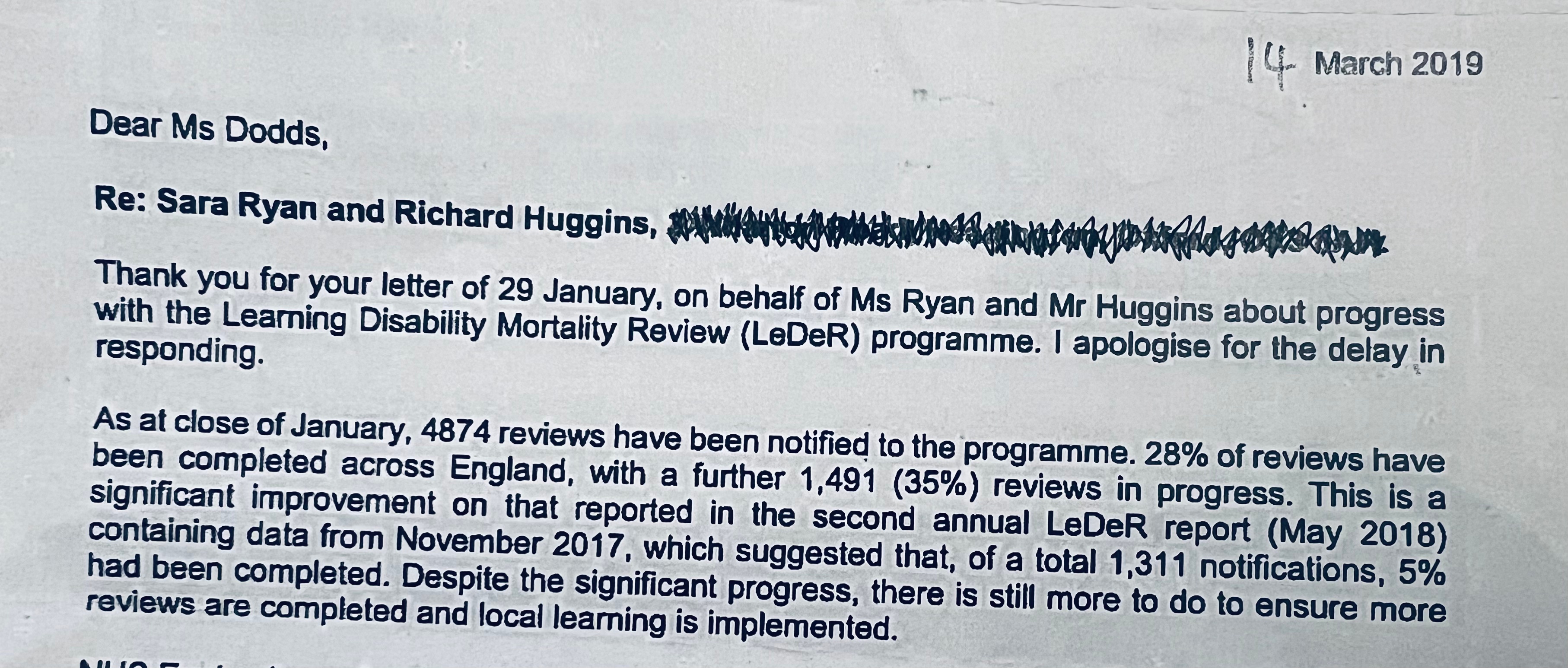
George Julian has taken on the grim task of working her way through responses to Freedom of Information requests she sent to every Integrated Care Board (ICB) in England. [The words ‘integrated care board’ ratchet up my snooze button so I’m trying to stay jiggy writing this, not succumb to the malaise and weariness these terms generate.] George asked them for their latest Leder data and publication plans for their next reports. She was trying to find out the state of play with the data that has been collected by each ICB since the data included in the latest (2023) Leder report (published in Sept). Each ICB feeds its data/reports to the mothership now based at Imperial College under the quiet (silent even) steer of Prof Strydom.

[I took a trip down blog memory lane and found this post about the 2017 Leder review, also published late and covered up. There is form here. Depressing to note the publication of the review generated live national news coverage then. Now it’s as if someone has left the report on the returned book shelves at an unmarked local library.]

So what can we conclude from the ICB responses to the Leder process?

  1. Rumours of changes to the Leder programme.
  2. No dosh to do the work effectively and an associated lack of staff with dedicated time.
  3. Problems with systems, accessing and uploading data. Outages and smoutages.
  4. ICB restructuring has worsened the process. [There’s always a restructure to be had].
  5. Delay, delay, excuses, excuses and a further muddying of report years and deaths reported.

It’s fair to say the Leder process has erased any consideration of the people who died. It’s a clunky, dilapidated conveyor belt of ‘notifications in’, ‘complete reviews’ out and a growing number of unfinished reviews. A dogs dinner. A flawed process which has descended into farce. Hints and whispers of ‘this process is shite’, ‘who cares’, and ‘I don’t want to do this’ foot stamping.

And then chillingly Dorset report: “Approximately 90% of all reviews have identified little or no significant learning in the last year, which raises the question of the value of completing a review for every case.”

Get that sledgehammer out Dorset and smash the remaining bits of humanity, respect and reason for trying to learn from the premature and often avoidable deaths of people with learning disabilities and/or autistic people.

There’s no new learning, people are gonna die cos we ain’t changing shite so let’s just stop reviewing every death.

And there I was, literally a month ago, publishing a book about the social murder of people with learning disabilities.

Suspending what?

Reminded Connor’s inquest finished 10 years ago tomorrow. I gave evidence yesterday in 2015. I rarely, can barely, bear to think back to those days. Even writing this first sentence fills me with an overwhelming sense of dread. Eased in part by remembering the unwavering support we received from so many people. Family, friends, friends of friends, colleagues, and countless others. The courtroom was full daily with people who cared. Who recognised Connor mattered. He matters. 

Memory tattery. The family room packed with fast food smells, intense ‘strategic’ discussions with our legal counsel held perching on the arms of the massive, dark blue settees or lost in the depth of these beasts where it was hard to know where limbs, bodies, warmth, love started or ended in the strangeness and sadness of that room. Its furnishings, safety and the cruelty of the courtroom a few steps beyond.

Looking back now, we collectively owned the space without recognising it. Not just the nosh wrappers. A bank of integrity, George Julian’s live tweeting at the frontline. Amplifying the unspeakable hostility and defensiveness the NHS leans into when it fails people so blinking badly. Rising above quibbles about tweeting interfering with the court recording devices to let people beyond know what unfolds in these processes.

Love, Nintendo distraction, waiting, exhaustion, so much sadness. Rage. Always rage. Dirty, grubby tricks. And love.

The #JusticeforLB collective standing firm against everything thrown at us. The coroner’s officer Beth checking we were ok, making sure Connor’s photos were prominently displayed. My Life My Choice members attending daily, negotiating the dated courtroom setting and rules, learning to stand (why?) when the coroner entered the room. 

The stuff of barrel scraping conducted by legal counsels was all the more remarkable because the death of someone with learning disabilities rarely led to an inquest hearing. Erasure mechanisms worked seamlessly until the likes of a pesky mother wrote a blog providing contemporaneous records that could not be ignored. Leading to intense efforts to discredit, destroy. Howlers and howlings around me daring to work full time and failing to inform health professionals about the very basics in basic health care.

The work of our legal team, Charlotte Haworth Hird, Caoilfhionn Gallagher KC and Paul Bowen KC meant these efforts landed awkwardly, missed the mark. The jury were sharp, attentive and invested in justice. Their consistent questioning of each witness further highlighted the absurdity of the ‘defence’ of those responsible. 

It’s interesting that what I remember now is what was recorded at the time, words and photos. The big story. While so much else went on. Friends picking up dog walking, cooking, everyday life outside of walking into the Oxfordshire County Council building for two weeks. To listen to the unspeakable.

Now, I wonder how or why so much of what unfolded was allowed to go unchallenged by the coroner. Blame blasts fired without comment. At the time, I was focused on the endpoint. Of getting accountability for Connor’s death. That was what mattered. Answer, obey, don’t rise to provocation.

The proceedings were, with hindsight, grotesque. Two years later, at a GMC hearing run by the MPTS that dragged on for over a year, the brutality of the responsible clinician’s legal counsel cross-examination led to me becoming unwell. This was apparently fine. No one stepped up to say stop it at the time, or after. No one. A letter to the chair of the MPTS about the brutality of the questioning was knocked backed with a ‘tsk tsk, if you dare complain about a medic, you should be prepared to be robustly challenged’ answer.

I live with the experience of gripping a witness box edge to look at a jury and answer questions about my failings as a mother when my beautiful boy was left to drown in a hospital bath. I live with the experience of sitting in a room on the fifth floor of a building on the Oxford Road in Manchester, near where I now work, being told that the responsible clinician was upset by my witness statement about her ‘care’. In front of a GMC panel who after nearly two hours of cross examination didn’t ask if I wanted a break as my world visibly spun out of kilter. 

These processes (still) operate by allowing the brutalisation of bereaved families and protecting (certain) health and social care staff.

How is it possible to sit by and allow this to happen? What the hell do you suspend to allow yourself to simply. not. notice?

And what would it take to wake you from this?

PS. He wasn’t late.

Louis Cartwright and the absent blood tests

Louis is the latest young person whose inquest was covered by George Julian. Her posts include family photos of a beautiful young cheeky chappy who looks like he’s on the cusp of taking on the world. Except he can’t. Because a dereliction of anything resembling “health care” led to his death before he could enjoy his 18th birthday trip to the US.

Louis’s inquest lasted one day. There were four witnesses; two doctors from the hospital, a GP and an expert witness. Louis was taken to A&E in January 2023 after being pale and out of sorts to an extent that alarmed his parents, Jackie and Ian. Once there, he was seen by Dr Morelli who was ‘unable’ to do a blood test as Louis did not cooperate. Given he’d sat for 5 hours on a chair in A&E clearly feeling like shite, this is no big surprise. Dr M arranged for him to go home and come back in the morning.

Louis was then seen by Dr Therabandu. He looked at Louis and made the judgement he didn’t look unwell. He did no observations other than ‘looking’ because Louis was sitting on the floor in the corridor. Quite some medical practice there; the monstering of Louis happening in full view and offered as an excuse for medical failings. Monstering underlined by Dr T referring to Louis’s ‘adult size’. It was time for Louis to go home (again) and get the blood sample done in the community.

We knew in Louis’s case many children or adults with learning difficulties, being out of their own surroundings is more harmful than good. 

Louis was very distressed, we were having to hold a big strong man.

Got to keep these people in the wild, in their own surroundings. Not in an emergency hospital department.

So, Dr T, asked the coroner. What would you say the cause of death was? Well natural causes of course. I have a lot of medical experience.

As witnesses were questioned, Jackie occasionally intervened with questions screaming in my head.

I don’t understand the blood tests should have happened, I know I’m just his mum, don’t have any legal background or medical background, but this is just common sense. I’m telling them he’s not well, these are consultants practically, they are very serious doctors. I’m sorry I’m ranting.

Hush now.

Next witness was Dr Ryba, a GP who did a home visit a few days after the failed blood tests. By now, Louis was not well enough to leave home. She described how;

He was placid, he was silent, he didn’t speak to me throughout my visit. He was docile and compliant and seemed at ease and not too anxious or distressed in any way.

Docile and compliant comments again pointing to monstering and fear. Dr R said Louis was “clinically stable” and off she went into the night. He was dead 12 hours later.

What do you think the cause of death was, asked the coroner. Difficult to say without a blood test, Dr R said. Anything else?

I’ve given it an enormous amount of thought, stress how difficult it must have been for his parents, would like to stress what a warm and loving environment he was being cared for in.

Just a reminder, this is a 17 year old school boy, not a rescue chimp from Senegal. Anyway, over to questions from other interested parties:

SD [counsel for the family]: When you saw Louis did you see he was jaundiced?

PR: No.

Jackie: there was no light on.

SD: Did you see him with the light on?

PR: Yes, the bedroom light was on.

Jackie: It wasn’t the big light

The coroner said it was important not to confuse the witness.

This exchange highlights how the coroner leaned into medical witnesses across the day, dismissing Jackie’s expertise. Witnesses were protected while Jackie was left to flounder, trying to correct inaccuracies in evidence. The main light was not on. The GP could not see if Louis was jaundiced just as Dr T could not make informed judgements without formal observations. We are back in the familiar land of nonsense and absurdities. A weaving of a tale about the boy and impossible blood tests. Dr T’s next answer underlines this beautifully. She was asked about a photo showing Louis’s skin colour:

I wouldn’t make a diagnosis of jaundice from looking at those photographs.

And yet three medics made a range of judgements asserting Louis was well based on looking (in the dark).

Finally, expert witness. Dr Habibi. We reached the pinnacle of absurdity with Dr H’s evidence. Dr H stated blood tests would have offered an opportunity to explore why Louis was clearly unwell. He had been fit and well a few weeks before and there was nothing in his postmortem to suggest nasties that could not be recovered from. The absence of blood tests closed this avenue.

You can’t say that, Dr H. There were no blood tests. We cannot know what they would have shown! Er, well yes. Exactly. Without the blood tests we can only assume Louis died of natural causes, there is no other plausible reason. Yes. So blood tests should have been taken. But they weren’t and we’ve heard from three MEDICAL witnesses that Louis didn’t seem unwell.

We should start from the fact obviously tragically Louis did die. Final illness, even though it appeared not particularly concerning, it obviously was because it led to his illness in the end.

When you hear sense among the absurdity it is like watching a single raindrop on a spring bulb.

Louis died. He was clearly ill.

The coroner moved to submissions. Jackie had been told she could ask questions after witness evidence. She splurged a devastating ‘why?’ filling in the answers herself.

Why didn’t he get a blood test? Because he presented as difficult in different settings, have to remember all doctors said what they said because they don’t want to say what didn’t do. Lots of what was said was factually incorrect as we saw at the time. Dr Morelli made the decision to send him home, we did not want to leave. We wanted to stay in the hospital until, pointless going back and coming back, we knew would be more difficult next day to start the process again. It needed to be done. Hospital is the place where blood tests are done, nowhere else to go. […] I think that’s because Louis is boy with Down’s Syndrome, they couldn’t ask him questions, we had to present as best we could, hoping they’d listen to us. He was very, very unwell. Louis would rely on us as his parents, he trusted us more than anyone else. We were the people who he looked at and wanted to help him.

There was no answering these questions because the witnesses were released. The coroner concluded Louis died of unascertained and natural causes. Move on now, nothing to see here.

There was nowhere to take your beautiful and clearly unwell boy to keep him alive.

Imagine.

Social Murder

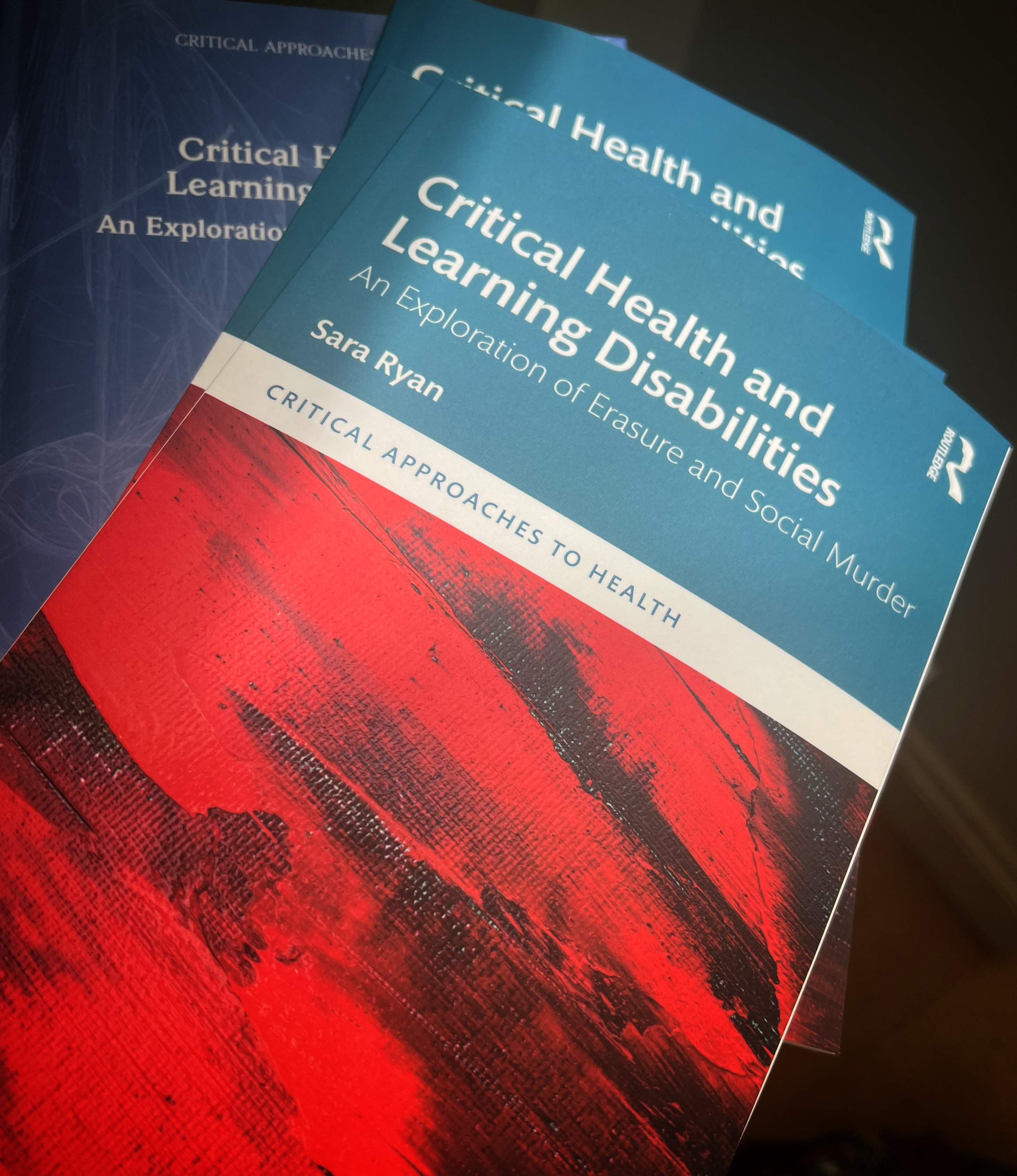
New book is out today which is exciting (terrifying). Full details are here. You can get 20% off with this code 25AFLY2 which is cool.

It’s a grim read. In the preface, the series editors, Antonia Lyons and Kerry Chamberlain write:

This book is at times a distressing read, being ultimately about human rights, who they are and are not afforded to, and who is colluding in human rights abuses. We all – researchers, medical professionals, policymakers, charities and anyone engaged in this field – need to be thinking much more critically about people with learning disabilities and our responsibilities for and towards them, and consider how complicit we are in both disavowing the ordinary aspects of everyday life and other people with learning disabilities.

I spent a year reading research and writing about people with learning disabilities and concluded a whole swathe of people are involved in these entrenched failings, either wilfully or ignorantly. Until this group wake up to this and act, people will continue to die years earlier than their non-disabled peers.

The book is dense with references so I’ve produced a summary which is more accessible. Many thanks to those who fed back on earlier drafts of this. It is a nifty document that should be shared with all those I mention in the previous paragraph.

Myles Scriven’s inquest judgement

Assistant Coroner Crispin Oliver today read out his judgement in the inquest of 31 year old Myles Scriven who died of a pulmonary embolism on April 16 2023 at Huddersfield Royal Infirmary. The full judgement can be read here: https://www.georgejulian.co.uk/2025/07/11/myless-inquest-coroners-conclusion/

This fifteen page judgement is an excoriating and devastating read. The coroner’s meticulous engagement with the evidence (which included witness statements and spoken evidence, hospital and GP medical records going back two years before Myles died, four expert witness reports and the recordings of earlier parts of the inquest) is clear. The judgement reads like an intensely plotted narrative with every word underpinned by evidence sources, the workings out carefully documented. It ends with an unexpected and beautifully sharp twist.

It is also a refreshing read, shot through with common sense and hints of incredulity. Myles should not have died, he experienced a bewildering set of failings across primary and secondary healthcare despite the active interventions of a loving family which includes a senior medic.

The coroner discusses how deaths from natural causes can be made unnatural, reminding me of the defence barrister at Connor’s inquest arguing drowning was a natural cause of death. The Oxford coroner sharply rebuked this argument and while largely fair, lacked the understanding Crispin Oliver demonstrated. His understanding was in part due to the commissioning of an expert witness report from learning disability expert Dr Liz Herrievan which offered incontrovertible evidence of the numerous failings. Having an expert witness in autism and learning disability is so obvious, I’m still pondering why it is not done as standard practice. We recently published a paper discussing how the ignorance of coroners can contribute to the harms generated by coronial processes for families, as well as obstruct accountability. Getting an expert in this area is a superb workaround leading to more robust engagement and arguably a knock on effect on outcomes.

Like many of the inquests covered by George Julian, the facts in Myles’ case offer an extraordinary array of failings; blood thinning medication was clearly not working and yet the consultant refused to switch to warfarin, an ECG was performed but the results not communicated to anyone leading to a lack of a follow up appointment and review three months later. The discharge letter from the hospital was “borderline useless”. By this time, despite Myles’ obvious deterioration in health, a phone call with the GP led to a note of ‘sounded ok on the phone’ on his file and an appointment three days later resulted in the incomplete recording of medical notes and safety netting advice. Myles died three weeks later.

What the coroner lays out in this judgement is a) the knowledge about Myles communicated to the hospital by his family (take time, don’t use long words or jargon, listen to the family, etc etc etc) and b) the absence of any engagement with this knowledge by professionals. This can only be wilful. The coroner reported a sense of disbelief earlier in the inquest that the hospital had in place all the necessary adjustment mechanisms, including a learning disability nurse and ongoing training, and yet none of this had any impact on the care Myles received. The lack of a hospital passport was flagged as problematic, though given the (non) actions of most professionals around Myles, I’m not sure they’d have even noticed it through their disinterested and disconnected lenses.

The coroner noted that these adjustments were essential to Myles’ care and should have been followed to the letter. Of course they should. As they should in the case of any autistic person or person with learning disabilities. And yet they aren’t. “The evidence is that this did not happen at any point in the timeline of events”. How is it possible for none of these standards to be adhered to? Again, returning to George’s inquest coverage, how many other deaths were due to failings in the most basic standards of care?

The coroner states “GPs demonstrated in their evidence that they had very little real grasp of the technical and regulatory requirements” in connection to patients with learning disabilities. Two GP’s who gave evidence did not understand what the Learning Disabilities register was or how it worked. I’m reminded of a study which found GPs didn’t know what the flag was or where to find it. Extraordinary ignorance that you think would be remedied by implicated professionals hastily with some mortification. But no. This is all apparently fine.

[Myles’ death was of so little consequence to the GPs they did not instruct legal representation until forcefully told they should by the coroner.]

In a gruelling paragraph, the coroner described how he’d come to the conclusion that the GP surgery was so woeful in practice that the character of neglect was not present; neglect can only be considered if the person obviously presents as ill. Drs Clownster and Clownstar were too clueless to notice.

I had to read the final pages of the judgement a few times as the coroner’s narrative arc is blistering. Myles died of a pulmonary embolism. The lack of adjustments made in relation to his learning disabilities resulted in incorrect decision making contributing to his death. I question the coroner’s use of ‘incorrect decision making’ here. The Dr who refused to change the medication that clearly wasn’t working couldn’t really account for this ‘decision’ saying he thought Myles had compliance issues around medication. This strikes me as more of a post-hoc rationalisation. The character of medical decision-making seems to involve more gravitas than simply not bothering to do something or ever following it up. 

A Prevention of Future Deaths (PFD) Report was unsurprisingly issued to the GP surgery. In relation to the NHS Trust, there was the usual bullshit about changes implemented since Myles died which generated more words for the continually overflowing learning pot. And then the coroner smacks the judgement out of the park by issuing a second PFD to the Trust:

Tell me how best practice is going to be complied with and by when.

Wow. Yes. Please do. Adjustments (including mandatory training) simply don’t work. Ticking the box is a pointless and dangerous distraction.

I hope this judgement is read by other coroners as well as health (and absent social care) professionals. Myles was let down so blinking badly the report is a devastating, important, even groundbreaking read. Yet another much loved young person treated as disposable by health and social care professionals. Crispin Oliver, however, showed him and his family much respect, listened to their consistent and informed interventions and questions thoughtfully, and shed light on the absurdities woven through our supposedly universal healthcare system.

Thank you.

30 years.

So Connor turned 30 a week ago last Sunday. Thirty years. I look at the word thirty and wonder what it means. 30. Older than I was when I gave birth to him.

He died 11 years ago, aged 18, before his 19th birthday 5 months later. My maths is rubbish.

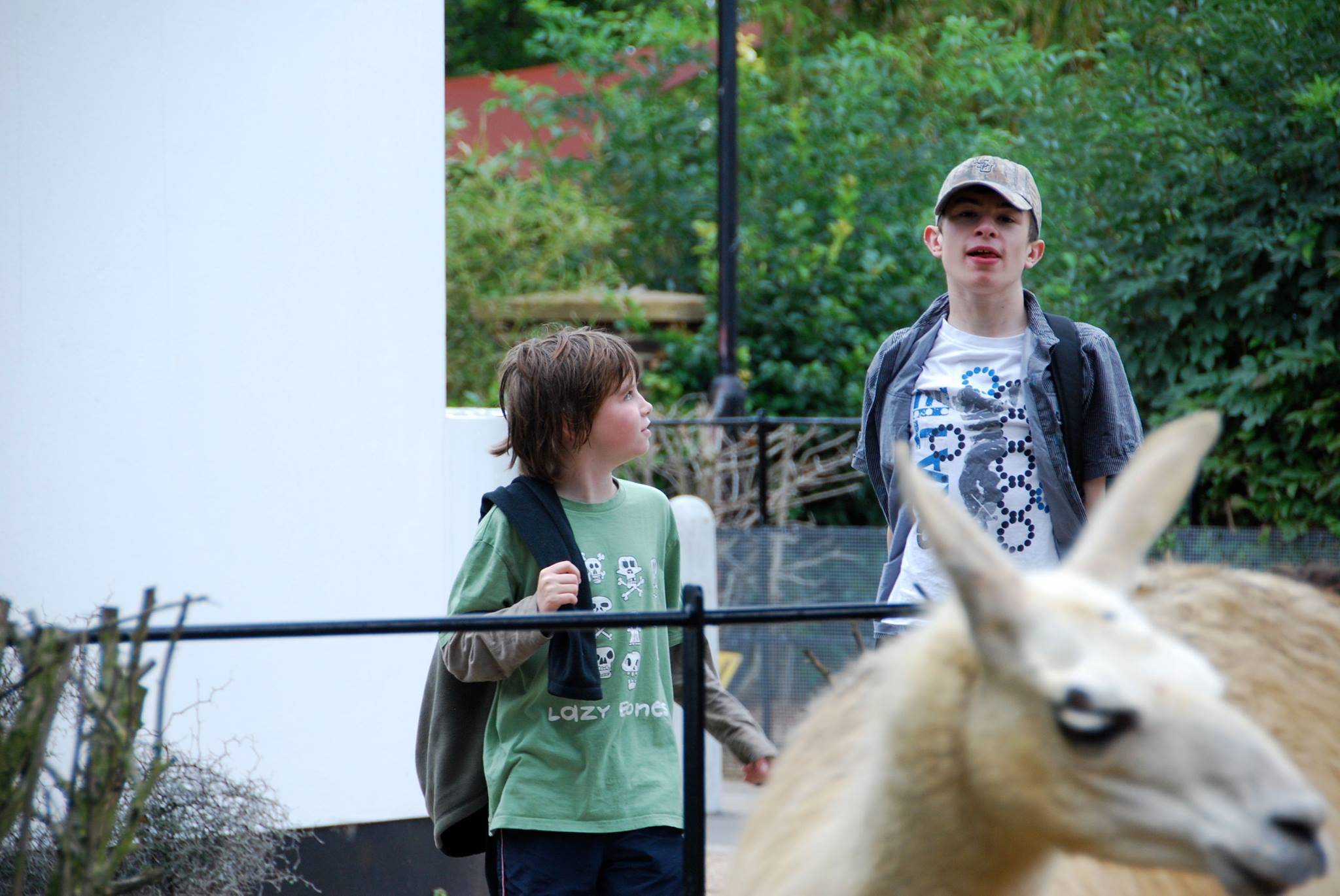
These three photos turned up on Facebook this week. Not sure if they were posted in the moment, in the recording of everyday life or later as memories. The latter probably as they landed around Connor’s birth-day.

Artefacts of moments/minutes/hours/days/weeks/months/years of devastation. Of writing, posting, searching, writing, howling, raging and writing some more. Always some more.

Until there wasn’t.

This is a good thing. You can chuck your models of grief in the nearest bin. There is no model. Instead random, shifting levels of sadness, pain, anger, despair, horror, rage, relief and whatever other emotions and feelings you fucking feel. Anything goes.

Oh. And those tears, the broken tap tears that feel uncontrollable? Lean into them. Cry your socks off. How could you not. At home, on a bus, train, walking here, there or anywhere.

I look at these photos.

Summer holidays, a day out, and so much rain.

Cheekiness. Love. Determination. Movement. A brown caguoule among uniform blue. The warm easiness of together.

British Summer time.

Llamas or alpacas at London Zoo.

When a child dies, you study photos, forensically. Attempt to climb in them almost. To be back there for a moment, for the feels and smells.

My mate Fran sends a random pic or two every so often. From school trips or adventures. This new treasure allows fresh exploration. A forgotten hoodie or lunchbox opens a window to a particular time and the wondrous space around it.

What is Rosie holding? How did that sand feel in bare feet? What’s Connor saying to Tom? Where the hell were we heading on that rainy day?

30 is a big one. We went for a long walk on Great Moor. It rained so hard my eyes filled with water. Rain tears.

30 years.

What if Connor was boring?

Eleven years this week. Since that day. That morning.

I’ve dreamed about Connor two, possibly three times during this time. Fleeting absorption, the tantalising, sadder than sad touching, holding, smelling, holding on to, almost knowing within that dream state it isn’t real. Or knowing so immediately after waking, a scrambling to hold onto disappearing feels, smells, warmth. 

How is it possible he’s dead?

Two, possibly three, clairvoyant type people have been in touch during this time to say Connor’s been knocking about their space with something to say. I’ve not replied. I don’t know what to say and it doesn’t feel comfortable. I kind of think the boy was savvier than a lot of us and would have worked out some way of getting in touch if he could. 

I don’t know how to make sense of his death and as more time passes, I realise words don’t exist to do so. This is probably ok. Well intentioned people talk about models or stages of grief, trying to coax the unsayable into coherence. This maybe important for some. A bit of a roadmap, guidance, perhaps hint of an ending at some point to the searing pain. 

I clamped Connor to my heart. He’s just there. I think I did it a year or so after he died, walking to walk one morning along St Giles in Oxford. Looking at the enormity of an endlessly blue sky along that wide stretch of road. Teasing through the agonies and incomprehensible sadnesses for a billionth time. Knowing his woodland grave lay a mile or so ahead on the edge of town. Bus 2, 2A, S4, X4…

Gotcha matey. As I should have.

I sit in work meetings where we discuss the lives of people with learning disabilities or family carers, with people with learning disabilities and family carers, aching for the days when work meetings happened in person and I had a regular ponder about what Connor was doing at school. Reading his school diary; a mechanism of communicating info and an unrecognised at the time log of his thinking. 

We have been looking at how Hindu’s celebrate for Diwali. Connor said he is a Pagan and Pagan’s worship Stonehenge, Vince Noir and public transport.

The countdown to July 4 seems different this year. Maybe we because we got over the 10 year mark. Instead of doubling down at home with family and friends, we smashed Kinder Scout with a picnic last year. 

Maybe it’s different because of the joy and distraction of Laughing Boy and everything that came with the production. Alfie Friedman (Connor) and Daniel Rainford (Tom), had a joke about what if Connor was boring. Apparently Daniel would say his lines with enthusiasm with Alfie’s lacklustre response;

‘You loved buses didn’t you, Connor?!’

[Silence and a shrug…] ‘They’re ok.’

I chuckled when I heard this. I mean what if Connor was boring…? ‘Mum, am I boring, mum?

That people are talking about Connor in this way all these years later is astonishing. The play did its job in very publicly sloughing off the destructive coating of the learning disability label, presenting Connor as pretty much who he was. A beautiful, funny and thoughtful young person with a strong sense of justice. Once again, thank you to Steve Unwin, the cast and creative teams, and both theatres. Memories of the whole experience are warm and dazzling.

So, I’ve been cooking a storm for a feast tomorrow as the kids/partners head this way. And here’s a photo of Connor and his cousins on holiday in France back in the day. The attire that year, disposable shower cap and turquoise swimming goggles.

Love him.

But does it bollocks?

Connor’s headteacher and two (more) staff members saw the play last week. Sally Withey, now retired, posted on facebook, remembering ‘that call’ in her office nearly eleven years ago. She commented “and of course […] love for our Connor – we shared lots of stories of him during our day together.”

‘Our Connor…’

Connor sprinkled more than his share of stories across his school years and beyond. I don’t think there was a ‘formal’ meeting which didn’t include a right old belly laugh relating to something he’d done or said. This blog became a mechanism for capturing some of this magic, his humour, his righteous, beautiful ‘outlandishness’. Tales of teaching staff and Connor chuckling at the latest mydaftlife blog post at lunchtime, the absorption of school diary entries and more.

On Saturday, Rich and I were tromping in the peaks with Sid when the matinee was about to start. We bumped into a couple (doubling the number of people we’d seen in two hours of walking) on Revidge hill and got chatting. A semi retired journalist and headteacher. With a 21 year old autistic son now in a supported living gig after an unspeakable spell of sectioning. Talked about against a backdrop of impossible beauty, space. And sadness.

I’ve developed a Laughing Boy ritual before each performance (when possible). I listen to songs from LB’s mixtape (played to the audience pre-show), watch the #107days intermezzo and look forward to the daily show report/post-show comments a couple of hours later. Descriptions of rapturous, warm and tearful applause in the report and more detailed personal accounts on social media…

Then there are the selfie opportunities. Last night, Caoilfhionn Gallagher KC and Molly Osborne added to Michael Buchanan and Norman Lamb’s Daniel Rainford hall of selfie fame photos.

I don’t want to preempt a final London performance selfie with Lee Braithwaite and a certain silver fox… or Charlie Ives and George Julian at Bath. Let’s see what unfolds.

Tonight, listening to Chumbawamba’s Tubthumping from LB’s mix tape before the second performance of the day, I finally listened to the words spoken at the start of the song. Turns out it’s Pete Postlethwaite from Brassed Off:

“Truth is I thought it mattered, I thought that music mattered. But does it bollocks! Not compared to how people matter”.

Connor was clearly writing the script way back then.

Love him beyond words.

Laughing Boy, Crunchie the support dog and more…

Extraordinary responses to Laughing Boy continue post performance by performance. Some of this captured by two kickass posts by George yesterday; Witnessing solidarity: the power of Laughing Boy and Evidencing Difference: beyond Laughing Boy. I’ve seen the play four times now and the moment when this beautifully crafted and devastating photo montage by Matt Powell (with London Transport font) and Holly Khan’s haunting melody is shown, is the stuff of pin drop silence.

The audience and cast share intense horror with respect too often brutally absent.

The juxtaposition of JusticeforLB magic alongside this horror continues. The London South Bank University Annual Lecture was organised to celebrate the play with Rosemary Garland Thompson as an extraordinary guest speaker alongside Peter Cronin, who generated more pin drop moments in a chilling exercise in understatement.

A coach trip organised by the Manchester Met Department of Social Care and Social Work ferried students, self-advocates and staff down to London in a mammoth 10 hour round trip. Feedback included “I had an absolutely brilliant time yesterday, aside from the river of tears that went along.”

Theatre attendees continue to be cheerfully photographed with cast members outside the theatre, while documenting their awe of the play. As Michael Buchanan tweeted;

The play is magnificent – funny, moving & infuriating. If you are in London or Bath, I thoroughly recommend seeing it. As for my fleeting appearance – what an honour. It’s not often you hear a Hebridean accent on a West End stage – well done

My mate Ulla flew over from Finland to see it with me and George. A Danish colleague who randomly sat next to her said (when I ‘properly’ met her at work yesterday), Ulla watched the play with such raw and audible emotions adding further authenticity to the performance. She began sobbing at Alfie Friedman’s opening line and continued between laughter exclamations that reverberated around the tiny space, almost flattening the indefatigable cast.

We fell into the nearest pub after joined by cast members and jabbered till closing time.

‘We need another drink’, Ulla, George and I chorused and moments later were transported to a basement club in Soho with Charlie Ives, Daniel Rainford, Alfie and Rose Quentin, the sweetest enabler. George’s suitcase stashed in a cupboard by the hoover.

People are tweeting their journey to the play, their position in the theatre and more.

I bumped into this bunch in Euston Underground hours after this photo was tweeted. And there, waving in the background is Lloyd Page who also spoke at the London South Bank event. A couple of spare tickets were shared on twitter and Lloyd attended with Steve Hardy (in the blue and green t-shirt).

The daily show rehearsal reports continue though we are on a countdown now with only a week left at Jermyn Street, and four days at the Bath Theatre Royal. [Sob] Apparently the cast, and I suspect theatre staff, are loving the relaxed performances.

Audience participation involved Crunchie the support dog wandering on stage at a matinee performance on Tuesday.

Life. As it should be.