Jelly bean tears

Overheard, from the front room:

“Can you get our sweet day sweets when you go out Dad?”
“No. You had them yesterday.”
“No we didn’t! We didn’t get any in the end!”
“Oh.”
“And we haven’t had them for weeks.”
“Tom, we’re like getting a bit old for “sweet day sweets” bro…”
“I’m THIRTEEN!”
“Well it ain’t “sweet day” now.”
“You’re 19 and saying we’re too old for sweets when you had them till you were at least 16???”
“Yeah. Well, come on, you did get a lot of added benefits being the youngest…”
“Yeah, like playing ’15’ games when you’re only THIRTEEN..”
“Yeah! And the rest!”
WHAHAHAHAHAHAAHAA…
“Er, what you doing Tom?”
“I need some tears.”
“Eh, what?”
WHAHAHAHAHAHAAAA… I need to test my tears.”
“What?”
“I need to test my tears for sweet stuff. Kids’ tears should taste like jelly beans. And sweet stuff.”
“Eh?”
“Not vegetables.”

Hilarious.

But I’m right back with Willy Wonka… singing Pure Imagination.

Unashamedly.


Mind your language

Tom was teaching Will some Spanish this morning. He’s off to Valencia on Wednesday to stay with his girlfriend’s family.

“Pretty impressive Spanish Tom. Where’d you learn that?”
“Er, Spanish lessons.”
“Spanish lessons? What in school?”
“Er, yeah. I’m doing Spanish GCSE in Year 10…”
“Ah cool. Do you speak any other languages LB?”
“Yes.”
“What ones?”
“Irish.”
“Wow! Say something in Irish.”
“Top of the morning to you.”

Louise Casey, Problem Tsar

Louise Casey, who calls herself Director General, Troubled Families, published a report this week; ‘Listening to troubled families’. This report generated headlines and television news coverage across the UK. There has been some criticism. Zoe Williams provides a good summary here.

So why am I bothering to write anything? I suppose because I feel incensed. Because I’m a researcher and I hate to see fake ‘research’. Especially published fake ‘research’. Especially in a government publication. And most importantly, because this sort of toxic bile sticks. I can imagine how it’s been reported in the Daily Mail and Telegraph. Middle class people across the country turning their noses up at these ‘feral families’ over their breakfast tea and toast. It’s wrong.

So, where shall I start? Well, Casey’s certainly overstretched herself with the report. It’s poorly written, repetitive and drips with judgemental statements. Even the foreword (written by herself) is rambling, repetitive nonsense. I keep coming back to ‘why did she do it’? She ain’t no researcher. There’s a ton of up to the minute, well researched studies the government could have drawn on. I can only think she was given the ‘problem families’ gig (why?) and took it upon herself (in a self important way) to go and ‘interview’ some families, select extracts from the interviews (bypassing the essential stage of analysis) and vomit text around them. Text that reeks of her own fears,anxieties, assumptions and prejudice. The random referencing of academic study underlines a woeful lack of engagement in this area.

A bug bear of mine when providing student feedback is meaningless, throwaway statements. Louise has got a real handle on these;

In some cases there are clearly negative consequences for children growing up in these structurally unstable families, especially where the instability is accompanied by violence. [You don’t say..]

She also shines at lobbing in unsubstantiated, judgemental statements;

Some of the families reported being able to cope with the children when they were younger but as they got older found it more difficult, as they often started to display more challenging behaviour – often borne of their early experiences.

Many of the people interviewed were just not very good at relationships –  unsurprising perhaps in light of their own upbringing.

There is a leaning towards a Mills and Boon type style of writing. Not your usual government report lingo;

For example, as soon as the relationship between the parents breaks down, the father disappears from the family never to be heard of again.

But mostly it’s meaningless nonsense, again openly framed by Casey’s view of ‘good’ (middle class) parenting;

In some cases the mother’s idea of protecting their children seemed extremely far away from what most would consider acceptable. “Yeah so Owen left and then I think Clare must have been probably the age of going up to secondary school herself and she was fine in her first year. She got to 12 and I don’t know what happened. She changed completely. Horrible child…she basically took over the house…” Jill

In the next extract, Louise seems to equate living in the same area for a long time as isolating. But I think she probably means living in the kind of area these families live in means they don’t mix with ‘normal’ people and this leads to some sort of interbreeding and more problems.

The impression of families’ isolation from more ‘normal’ or positive friends or networks came across strongly. While many families moved around from one place to another fleeing violence, others had never left the area they had grown up in. Their partners came from the same street or moved between women in the area. They tended to stick within a network of other dysfunctional peers.

She gets herself in a bit of a mess in the next section. When it comes to parents blaming services, she suddenly tries to inject some objectivity into the report and spouts gibberish;

Many of the families complained about professionals or agencies involved with them, and in particular, social services. However it would not be fair to always lay the blame there when looked at dispassionately [???]. Undoubtedly, some families have reason to feel let down. But there were often unwarranted feelings that their problems were not of their making, and that they had no control over the problem or its solution; that it was they that had highlighted problems, with services simply failing to intervene and do what they were entitled to expect of them.

She manages to slip in that some families want larger council houses and makes it clear that while the mothers raise challenges they face, such as overcrowding, unsupportive schooling and a lack of effective support, the problem is firmly located within the family. To the extent that she refuses to acknowledge that some of the kids had learning difficulties. This is kind of hilarious in a way. But of course it’s not.

In certain cases there were undoubtedly problems with children that any parent would find difficult to deal with. But for many it was clear that the reasons for that behaviour had come from the household itself – the poor parenting skills, the constant changes in the home, family and partners, and the ongoing verbal and physical violence (among many other factors no doubt).

Yep, she actually added that last bit in brackets..

The conclusion is firmly within Mills and Boon territory with “starkest messages” about these dysfunctional families “who are not beyond help and hope”. I am not going to even repeat any of her nonsense conclusions because they ain’t worth the paper they are written on.

I’m left with a few questions really;

  • How can this piece of billy bullshit (or bileshit) be presented as a government report?
  • Why is Louise Casey Director General of Troubled Families and what does this mean?
  • Are there any other Director Generals and if so, who are they?

The spreading of such toxic bile is deeply alarming, but so is what it demonstrates about this bunch of chocolate teapots running this country.

The end of year assembly

This morning was LB’s end of year assembly. A time of celebrating and sobbing. This year kicked off with Shine by Gary Barlow. A couple of young girls opened brilliantly with the first line or so then everyone else kicked in with a range of voices, shouts, words and signs. Everyone was rummaging around for tissues within seconds.

It’s the same every year.

I remember one year, when LB was about four, I’d just bought a video camera which I was really looking forward to using. The kids were brought on to the stage dressed in colourful tunics (for the ’round the world’ theme) and stood in a semi circle. I managed to locate LB in my viewfinder, with his angelic little face, pressed record and then they opened with “What a Wonderful World“. The rest of the footage is the floor, feet and chair legs and about 10 seconds of LB and his classmates singing and signing;

I hear babies cry, I watch them grow,
You know their gonna learn
A whole lot more than I’ll never know…

Not a dry eye in the house.

I think some of the emotion is about seeing such a diverse group of kids performing their socks off but it’s also seeing the staff interacting with them. They are an exceptional bunch who offer unending support and encouragement.  In this setting, unlike most others, our kids have no limits.

Remploy and “loss making”

I’m in favour of inclusive work places. Of course I am. But in terms of inclusive work practices developing in the UK, I’d say we were at a similar stage really (ignoring the unsustainable fluff introduced every now and again) to 30 years ago. Nothing has really changed.  Yes, there has been a shift away from institutionalisation but there is plenty of evidence that despite living ‘in’ the community, learning disabled people remain outside of the community, isolated, often victims of hate crime and not in, or even close to, employment.

And employment, or work, is one of the central features of our lives.  Something this pig ignorant coalition government wilfully misunderstand, misinterpret and use as a political tool for their own purposes.

Today Remploy employees are striking against the proposed closure of 27 “loss making” factories putting 1421 people at risk redundancy.

Remploy provides employment opportunities for learning disabled people (and so much more).  Remploy employees go to work, work and earn money. Ok, it’s an exclusive setting, but, for the time being, the rest of the UK workplaces are exclusive too.  Exclusive to people without learning disabilities. Until these workspaces become inclusive, closing Remploy is going to leave most, if not all, of the current employees unemployed.

Many or most Remploy employees will no longer go to work. Structured everyday life, use of space outside of the  homes, journey to and from work and social experiences gained on a daily basis will be removed.  Many employees will be left with the option of day centres, staying at home or using direct payments to pay someone to take them out somewhere. We all like going out, but as a part of our lives, not as a sole feature.  There are also implications for family members who will have to readjust their own lives accordingly.

Many or most Remploy employees will no longer work. The benefits of working are documented in a ton of evidence gathered over decades. I won’t bother to list them here, but the health consequences of not being able to gain employment are also documented. The lack of structure and activity, and the emotional distress caused by the removal of  working lives, may have serious health implications.

Most or many Remploy employees will no longer ‘earn’ money. Yes, there will be some financial support but it ain’t the same thing. And no doubt there will be some shenannigens about placing Remploy employees in an inappropriate work category, leading to more punitive sanctions in line with current changes to the benefits system.

So what is going on here? Is the government closing these factories because they subscribe to the vision of an inclusive society in which learning disabled people are supported, welcomed and sustained in paid employment?

Bollocks. It’s all about money. The worth and value of learning disabled people is so low, that keeping (financially) unprofitable factories open, even if they offer some people employment and everything that comes with that, is not an option.  But “loss making” in this situation, cannot and should not be measured financially.

The DWP commissioned report into the viability of Remploy opens with the statement;

The views expressed in this report have been based on discussion with Central Management only.

Sums it up really.

“Dear Wilbur…”

Rosie and Owen said they’d sort out the clutter in the loft today. They pulled everything out of cupboards into a huge mess of stuff (and more stuff). When I got back from work we sorted through it.

Well.

What a load of rubbish. And memories.

A few (of so many) highlights; my Kate Bush fan club card, 500 francs from the Central African Republic, a load of charcoal life drawings, my autograph book (including Arthur Askey and Daley Thompson), old school textbooks covered in waxed paper and an old laptop we decided to keep for comedy value. The LOL Laptop as it was renamed.

Then there was my battered old case of birthday cards and letters. We chucked the cards. Well apart from 18th and 21st birthdays. And handmade ones from the kids.

Various diaries also turned up spanning several years. Didn’t realise I was such a diarist to be honest.

“OMG Mum, you’re so lame..” muttered Rosie, leafing through them. “Woke up. Washed my hair. Walked to school…Watched Angels, went to bed…

1982 quickly became the favourite. From March 2nd, I started writing it as though I was writing to a mate from my old school.  I’ll save the details for another day other than to say this shift meant there were a lot of exclamation marks and I signed off entries “TTFN, Sara!”  On May 5th I switched to writing to an imaginary person, ‘Wilbur’, ending each entry with “Well that’s about it for now! Sara.” By the end of May, I reverted back to type. Thank goodness.

Rosie read out several entries, howling with laughter. Then we got back on with the job. Head first in dirty boxes.

OMG Mum. Stamps!!! You.were.a.stamp collector?????

Nuff said.


My diary (2); Christmas Day

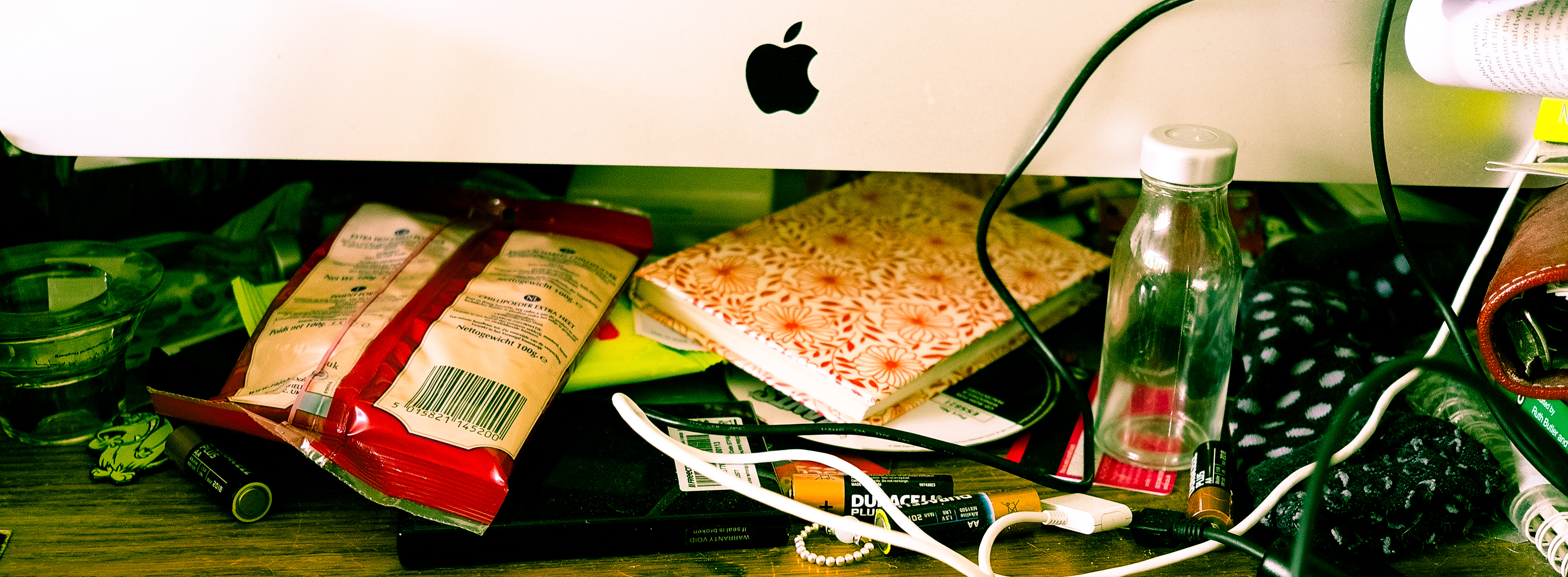
Browsed a bit more of my diary this afternoon. I was waiting to upload some photos and it sort of called to me from its recent position under my computer screen. Next to the packet of Rajah Extra Hot Chilli Powder and the spotty sock.

The page fell open at ‘Christmas Day’. Wow. Now this should be a cracking entry. We always had a great Christmas Day as kids. All that excitement, atmosphere, lovely food and fun. Always fun times.

The verbatim entry;

Christmas Day

Up at 6.30. Opened stocking – Yorkie, tic tacs, book, paper clip, piggy bank, make up, biro, rubber, Abbey National notebook.

Went downstairs. Cup of tea. Unwrapped pressies – cardi, Parker pen and biro, Barry Manilow* LP, Ludlum book, Neil Diamond single, record cleaner, Bogeyman book, Pooh calendar.

Brekky. Got dressed. Listened to Barry Manilow LP. Read book. Had orange drink then Florida Orange. Listened to Beach Boys, Paul Simon, The Police. Tracey worked.

Christmas dinner. Afterwards watched TOTP with No.1s. Bit of George and Mildred, Putting on the Ritz (Fred Astaire), James Bond (Man with the Golden Gun). Went upstairs to my room. Downstairs. Watched Airport 75 -terrible. Bed.

Eh? Where is everyone? Where’s the excitement? The drama? The interaction? The fun?

Why did I keep a daily record of my life based on stuff, the TV I watched and daily activities like waking up and going to bed?

Mind boggling and hilariously, weirdly, odd.

*I ain’t gonna apologise for Bazza. I loved him then and I still do. Mr Ultimate Cheese with the mysterious background. I do wonder about the Abbey National notebook and Neil Diamond single though.