Kicking off the Social Murder Festival, July 6, Manchester Met.

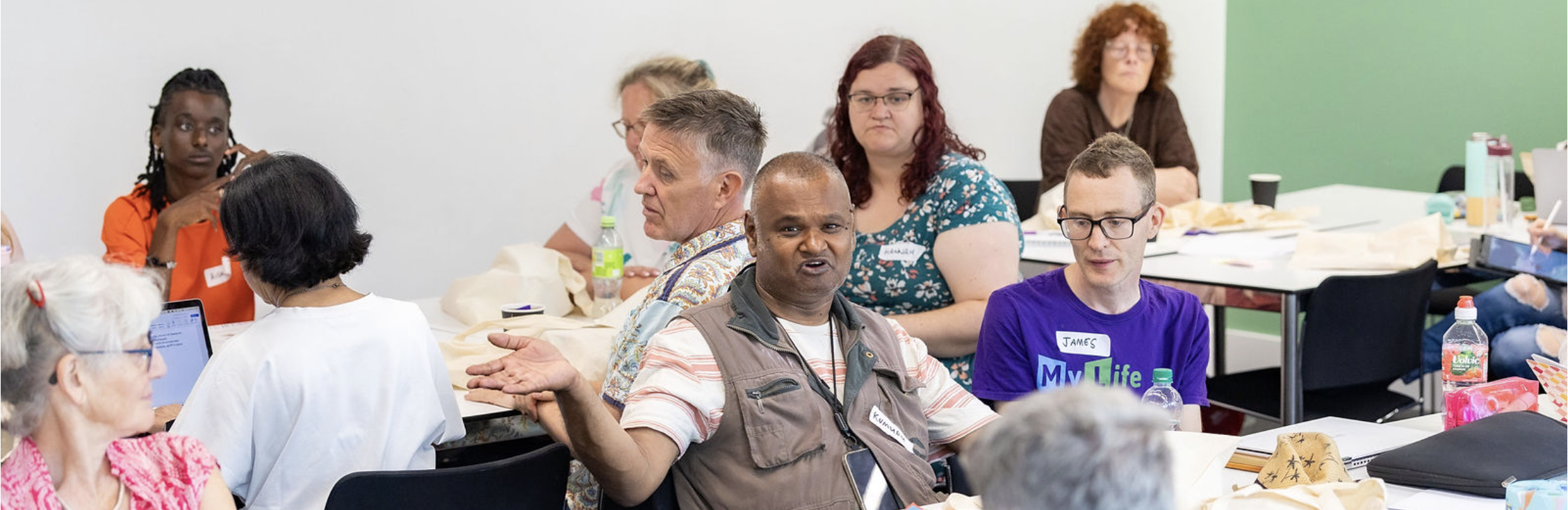
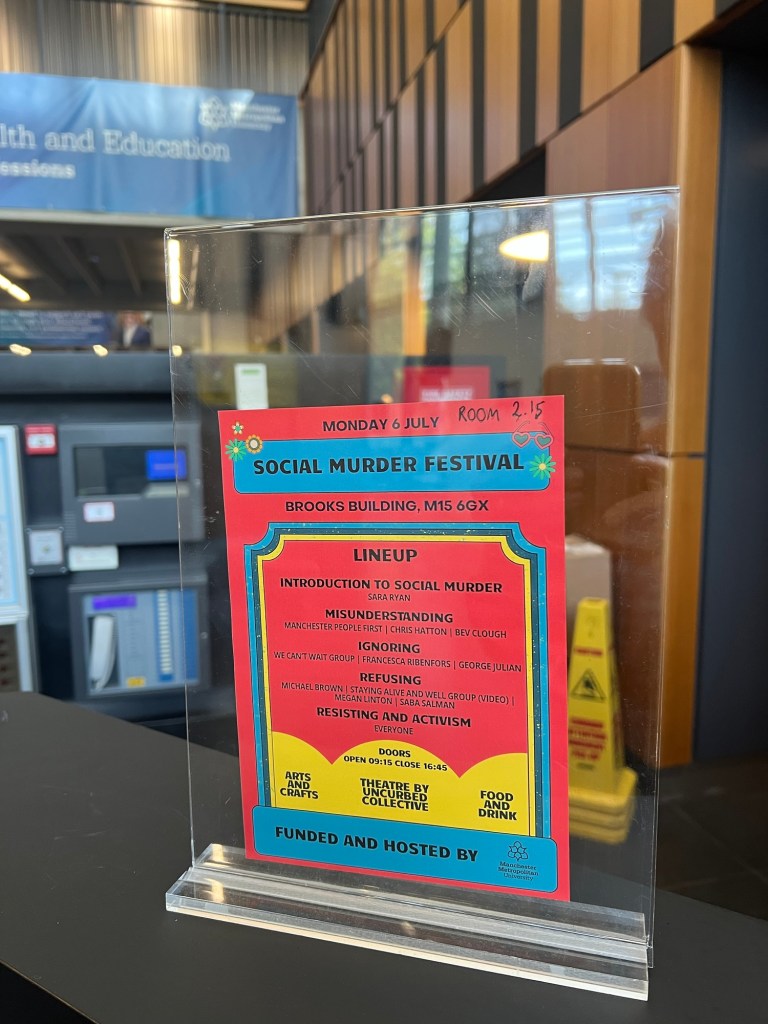
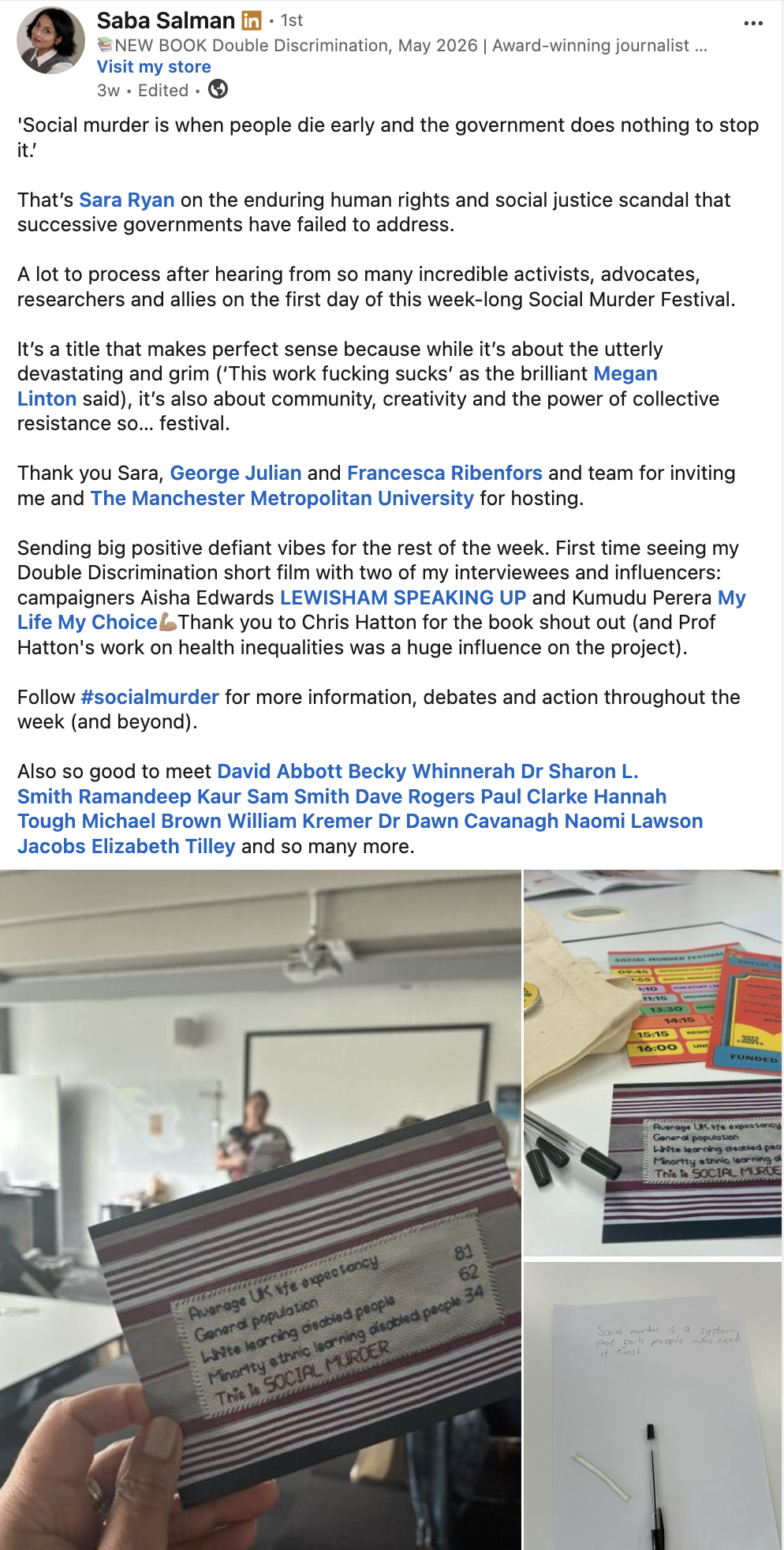
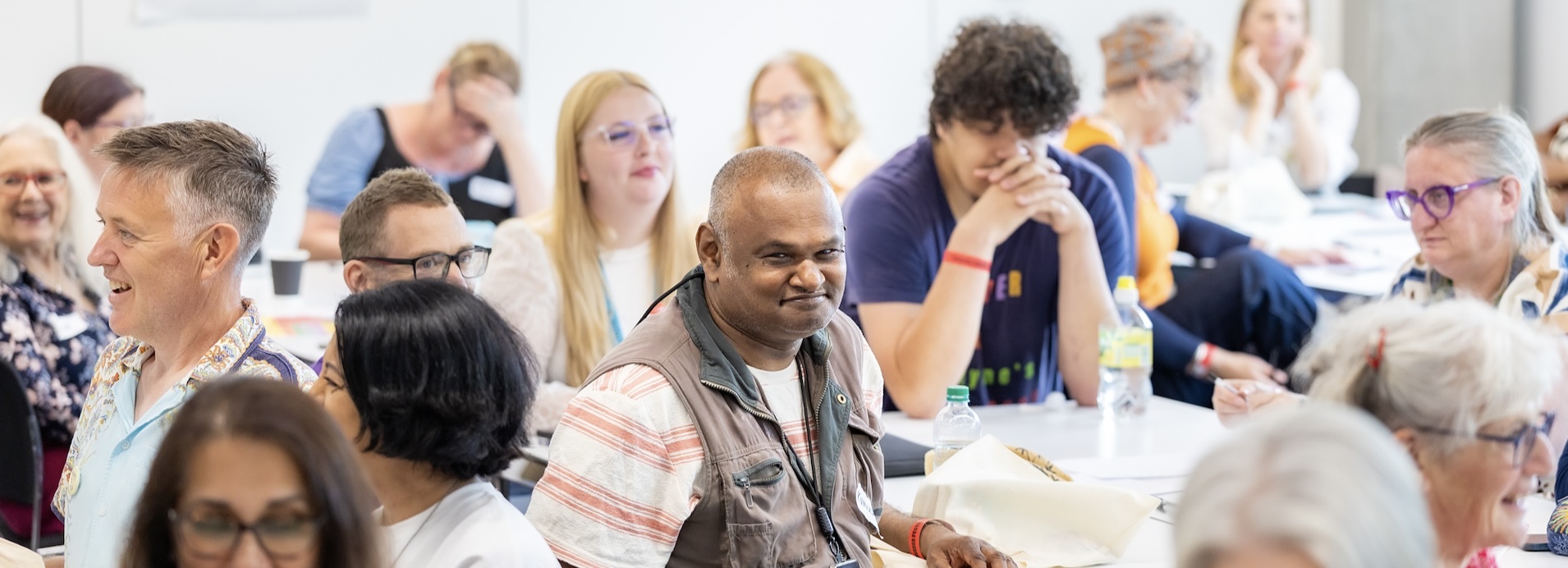
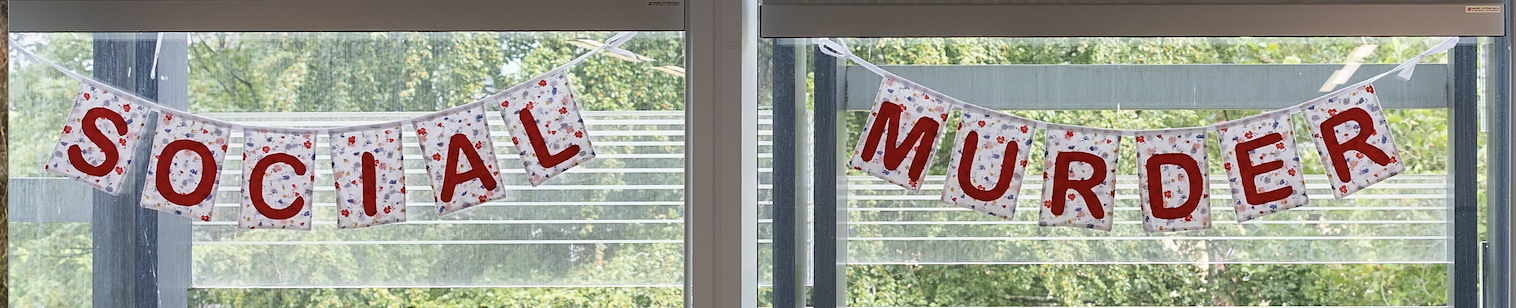
On July 6 around 60 people gathered at Manchester Met to celebrate the start of the one week Social Murder Festival. Self-advocates, family carers, academics, journalists, artists, third sector organisation representatives came together to discuss the social murder of people with learning disabilities. A day spent in solidarity, urgency, community and action.

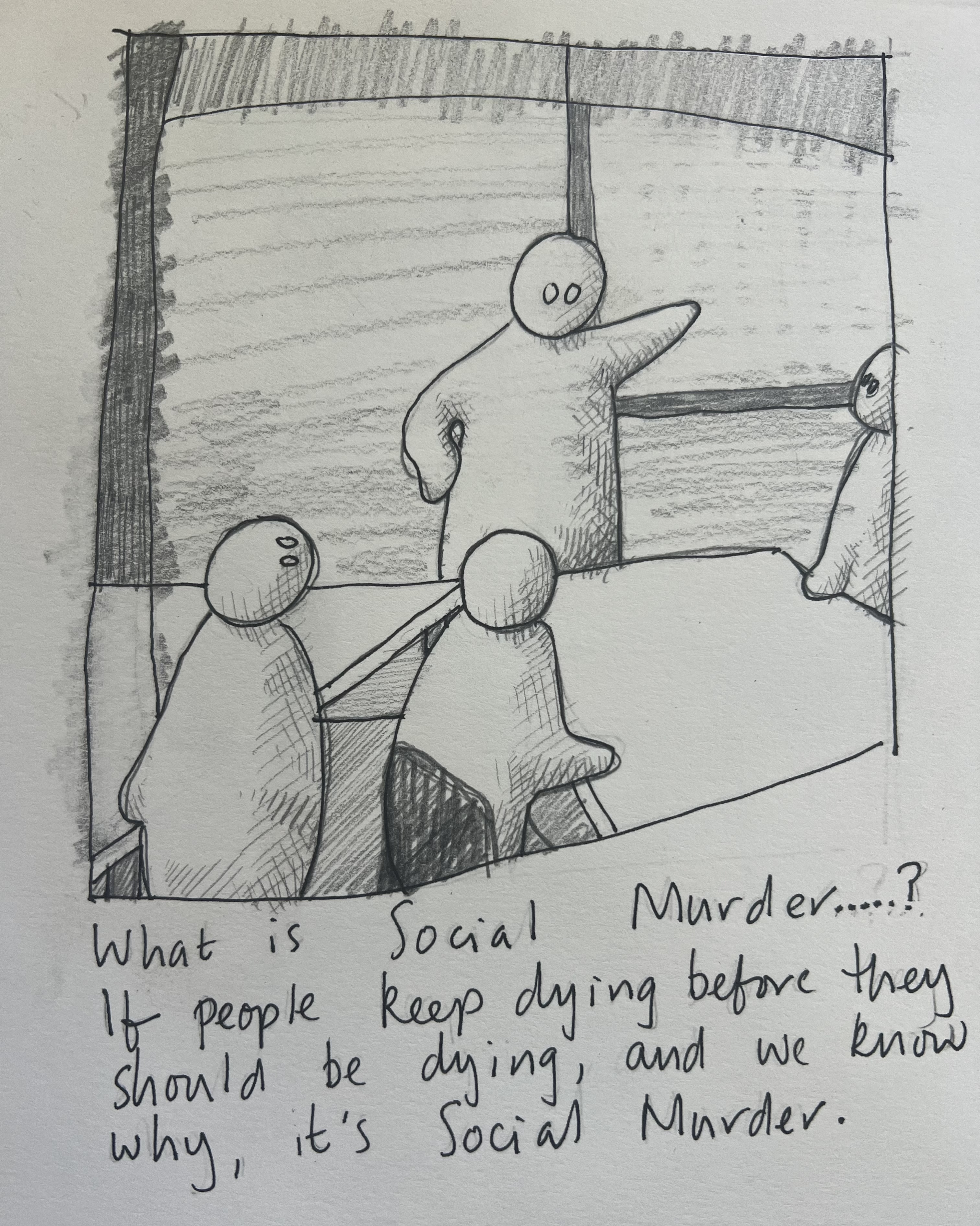
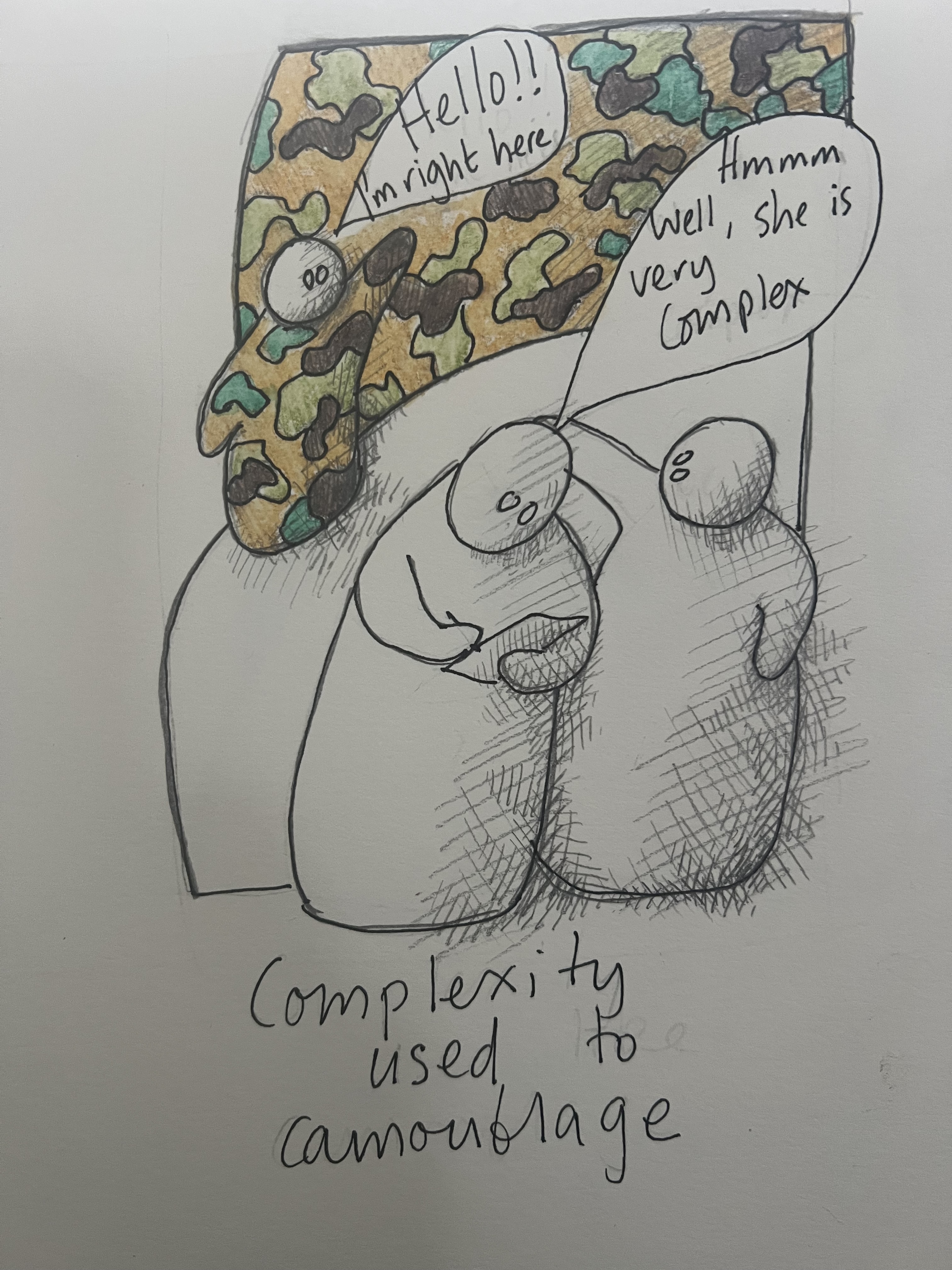
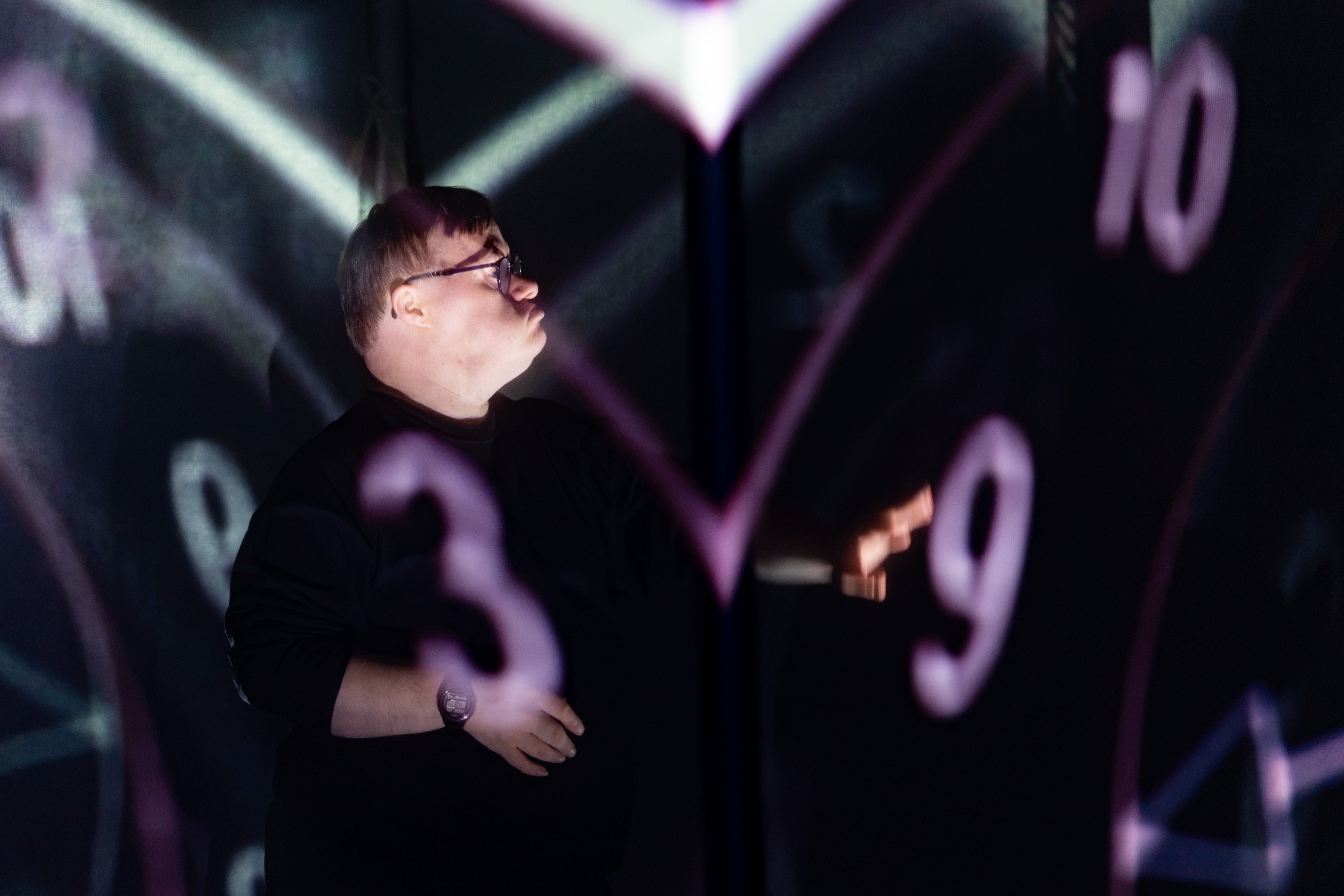
George Julian has written a comprehensive summary of the week here with key takeaway points. A beautiful set of photographs were taken by Paul Clarke, and Lil, a filmmaker with TAPE is completing a smasher of a film about the Festival. Becky Whinnerah spent the day sketching.

Here I want to talk about that first day. I’ll write about the remaining days over the next week or so. It’s been much to absorb.

The week was funded by Man Met with additional funding from our Reigniting Debate project led by David Abbott. The Festival was arranged at short notice which meant that the help the organising team of George, Francesca Ribenfors and myself received was very much appreciated. It was an extraordinary experience to have the space, place and funding to be together, talk and make action plans.

It was also extraordinary only three invitees couldn’t come. We wondered if there would be some discomfort about the event name. Instead the term social murder was welcomed as empowering, strangely liberating even, and while it was hard to hear self advocates and family carers talk about the relevance of the term to them, it was good to have language that cuts through the bullshit in this area. People understand it. Angeli, a family carer who chaired the day with self-advocates Beth Richards and Nathaniel Lawford, said her 70 year old dad got it straightaway.

We know and nothing happens.

The term ‘Festival’ was initially questioned by one or two people online which was ironic given social murder was accepted. This discomfort seemed to ease as the week unfolded.

Day 1 was divided into three sections about what we know, don’t know or refuse to know about the preventable deaths of people with learning disabilities. Speakers included the ‘We Can’t Wait’ group, Manchester People First, Michael Brown, Francesca, George, Megan Linton, Saba Salman and Chris Hatton. Everyone smashed their 10 minutes and the discussion time was filled to bursting with powerful contributions. The Festival spill over space where Naomi Jacobs and Georgia Rivers were ready to make zines, crafts and more remained largely empty.

The day ended with a performance from the unapologetic and uncompromising Uncurbed Collective. After a day of so much (unexpected) energy, anger, laughter, discussion, rage and hope, we watched a mesmerising and harrowing performance that was almost too much to bear.

Though of course it wasn’t.

As people headed off to the station and home, we readied ourselves for Day 2.

Without wanting to give any spoilers away before writing about the rest of the week, we produced a strong set of action points to work on over the next few months. I don’t think we could be any more mindful that very little lands in this space with real impact (while acknowledging we now have a Prime Minister prioritising social care with promising words).

Onwards and upwards.

Social murder July 2026

I’ve followed the inquests of over 30 people with learning disabilities for a decade now through George Julian’s meticulous reporting. These began as live tweets, magnificent threads dripping with horror then shifted to lengthy daily summaries of proceedings. Each inquest, involving a much loved person who was revoltingly failed, is a difficult read, sometimes wincingly so. Daniel Lindsay’s inquest which ended on Friday was near impossible to follow. Daniel was a quiet, gentle 41 year old man who loved playing on his Playstation. George has written a comprehensive commentary about his inquest here.

In my book about social murder I write about a loose collective of people (health and social care professionals, politicians, policymakers, national charity staff, sometimes family members etc) who are implicated in these premature deaths. Loose collective members have varying layers of ignorance which relate to misunderstanding, ignoring or refusing to know what is happening, and where failings lie. The collective is loose because people can move in and out of it. Enlightened people who remove themselves from the collective are probably some of the best allies and activists in this area.

Daniel’s inquest had quite the cast of collective members. The most important being the coroner whose ignorance about people with learning disabilities made the skin on the back of my hands prickle. She insisted Daniel could not communicate despite evidence he was trying to communicate about his throat pain and discomfort over time from various witnesses. She accepted woeful evidence from a range of ‘experts’ who knew nothing about people with learning disabilities all of whom said nothing could have been done to change what happened.

That someone can die from choking because their undiagnosed throat cancer is so advanced is grotesque and can only be a massive red failure flag in terms of the provision of health and social care. The coroner went on to record her ignorance on public record by determining the cause of Daniel’s death as 1a) choking 1b) locally advanced oesophageal cancer and 2) Down syndrome and learning disabilities.

People cannot die from Down Syndrome and learning disabilities. That would be like dying from having curly hair or size 6 feet. Gruelling, unacceptable ignorance which blames Daniel for his death and absolves the myriad failings that led to it.

The government states coroners must ensure relevant facts are fully and fairly investigated and are the subject of public scrutiny during the inquest hearing. Coroners can’t be an expert in everything. That is why they call expert witnesses, to fill gaps with knowledge and experience. The coroner did not call an expert in learning disabilities despite stating she knows little about this area. She is an example of refusing to know which comes with chilling consequences given her role. Daniel’s family are devastated and crucial failings in his care have been left unchallenged.

Yet more evidence in the bulging evidence bank of social murder.

One of the action points of our recent Social Murder Festival is to contact the Chief Coroner about ignorance among coroners which urgently needs addressing. That this inquest unfolded at the same time as the festival speaks to how far we have to go. The festival itself, however, was a force for change, empowerment, hope and anger.

Onwards and upwards.

Accessing health and social care for people with learning disabilities: sense, commitment and passion in the Lords

A one hour debate in the Lords on Thursday blew some dusty old cobwebs away with blistering contributions from members. The film can be watched here and transcription here. It’s well worth making a brew and having a watch or a read. Personal experiences underpinned the debate with respectful and sensitive acknowledgement of the deaths of Patsy, Myles, David Lodge, Connor and many other people with learning disabilities.

Lord Paul Scriven was the force behind organising the debate and set the tone, stating the current situation is simply not acceptable. “Saying that tweaks will be made to a fundamentally broken system is an acceptance of the status quo that killed Connor a decade ago, and it is the same status quo that killed my nephew.” He referenced social murder arguing “state-sanctioned erasure whereby those very institutions aware of the risks to life choose to maintain the status quo rather than dismantle it”. Carefully dismantling current interventions that are often used to suggests a job is being done well, he listed the safeguards and reasonable adjustments Myles was supposed to have which failed. At Myles’ inquest, the coroner “found a culture stuck in another era where clinicians had only a superficial grasp of regulations and communication was unsafe”.

Why has the machinery of oversight failed so spectacularly, asked Lord S, as he described the CQC as a regulator of process and the Leder review a toothless archive of tragedy. I felt like punching the air as processes, interventions and programmes were punctured with intense sense and clarity. The government is acting in “a startling vacuum of oversight”. We are propping up what is a death making system. “We need a systematic reform of the implementation, accountability and regulatory framework that moves beyond paper policy and puts the actual safety and survival of human beings at the very heart of the system.”

Baroness Ramsey described the woeful health experiences of her sister Patsy while Baroness Hollins focused on the death of David Lodge which was again dense with failings. Digital flags, and patchy annual health checks were discussed with sadness as Baroness Hollins has been a central figure for decades, as a medic and a parent, involved in myriad initiatives while little has changed. “The question is no longer what needs to be done to ensure the safety of people with learning disabilities in health and social care settings, but why is it not being done?”

There is zero accountability.

Subsequent speakers raised the lack of accountability, the presence of interventions with no ‘heft’. As Lord Addington said “it is great having a flag, but what do we do when we see it?” There is some irony that the focus is on ‘flags’ while social murder happens in full view.

Hearing these words spoken in Parliament was refreshing. There was an energy set by Lord Scriven’s refusal to allow white noise to cloud the area, to allow empty words – annual health checks/digital flags/mandatory training/annual death review – to fill space. Human rights breaches are documented, evidenced and seemingly unstoppable. In the room yesterday, broadcast and laid on record, were determined, evidence-based, passionate words. As Lord S beautifully reminded us, Myles is “a citizen, with an inalienable right to safe care and an equal right to long life”.

He is indeedy. Thank you.