Enough.

There I was. Reflecting on grief, music and summer. When a mate bounced the CQC Review of Learning Disability Services into my inbox. The core gist cut and pasted below in italics.

About the inspections This review focused on services that provide care for people with learning disabilities and challenging behaviours. Our inspectors carried out 150 unannounced inspections that looked at two national standards. These standards related to:

  • care and welfare.
  • safeguarding (protecting people’s health and wellbeing, and enabling them to live free from harm).

The inspections took place at 71 NHS Trusts, 47 private services and 32 care homes. Our inspectors were supported by 51 professional advisors and 53 Experts by experience (people who receive care or carers).

Our findings

Five of the 150 inspections were pilots and were not included in the overall analysis. Therefore, of 145 inspections:

  • 35 met both standards.
  • 41 met both standards with minor concerns.
  • 69 failed to meet one or both standards.

Many failings are a direct result of care that is not centred on the individual or tailored to their needs. Our findings show that some assessment and treatment services are admitting people for long spells of time, and discharge arrangements are taking too long to arrange. Commissioners now need to review the care plans for people receiving this type of care so that people can move on to community-based services.

  • Almost 50 per cent of hospitals and care homes that were inspected did not meet national standards.
  • Staff needed to be given appropriate training in restraint techniques.
  • Safeguarding concerns were identified in 27 care services.

Follow up inspections

Our inspectors have returned to 34 services where we found most serious concerns. These services have provided us with action plans on how they will meet national standards. We have also followed up on all 27 concerns relating to people’s safety and have confirmed that these services have contacted their safeguarding team in their local authority.

Deep breath.

Please read (and re-read) the above carefully. And then take another deep breath.

How can such damning statistics, reporting on the lives of people, be so carelessly presented and, at the same time, dismissed?

35/145 services were doing what they should be doing. Eh? Less than 25%. People ‘accessing’ these services are those who typically need looking out for, care,  encouragement and, often (don’t shudder), protection. Society incorporates (or should incorporate) a diverse range of people with different abilities, capacities and capabilities but state organised services are failing to provide ‘good enough’ support in 75% services reviewed?

The CQC state that ‘Commissioners now need to review care plans for people’ so they can move on to effective services’. Wow. Can there be a greater exercise in blandness? Ineffectiveness?

Did you get that commissioners? You all busy at it? Reviewing these care plans?

As if.

What a load of billy bullshit. Learning disabled people are so off the radar when it comes to commissioners I don’t suppose many of them would have any idea this review exists. Total farce.

But from the CQC perspective, the ball has been chucked elsewhere. Into next door’s garden. Never to be retrieved. Doesn’t matter really. Because it doesn’t really matter. These are learning disabled people we’re talking about.

More damning statistics before the close of the statement; 50% of hospitals didn’t meet national standards, restraining training is lacking (sob) and 27 services had safeguarding issues.

Then the last bit that I’ve re-cut and pasted below. It’s such a masterpiece in billy bullshit and prevarication it deserves a second reading and highlighting:

Our inspectors have returned to 34 services where we found most serious concerns. [Eh? Not all 69? How was this whittled down? Geographical location of inspectors? Availability of inspectors? What was the criteria?]

These services have provided us with action plans on how they will meet national standards. [Er, what does this mean in practice? Is it going to be followed up? Are the action plans appropriate? How soon will these services be of an acceptable quality for the people receiving them?]

We have also followed up on all 27 concerns relating to people’s safety and have confirmed that these services have contacted their safeguarding team in their local authority. [Mmm. That’s a relief then. Are the safeguarding team any good? Is anyone going to check on what they do? Is there a timescale attached to this?]

People are ‘living’ in these settings. On the receiving end of the sub-standard practices identified (over and over again). Practices that no one with any power to effect change is going to do anything about. Harrowing. My heart is broken by what happened to LB in one of these hellholes. I can’t bear to think of those who are enduring similar treatment and misery, at the hands of a care-less system. Monitored by a gutless organisation with seemingly no power to effect any change.

I can’t understand how we can be in 2013 and this unacceptable practice continues. Nonsense reviews published, publicly, without outrage.

Surely someone is going to do something to stop it?
‘This Summer’

During hours spent outside, or awake at night, I’ve been listening to music. Trying to find music that fits. Ironically, in the early days of LB’s ‘diagnosis’, when he was a just a pup, Faure’s Requiem was the soundtrack to my sadness.  This shifted substantially over time and I can no longer listen to it. It didn’t fit. I was wrong. So much was wrong. LB wasn’t. And we certainly weren’t mourning him. Then*.

The weather’s been so unusual it’s created an almost film-like backdrop to our devastation. Consistently baking sunshine transforming mundane suburbia into a different world. I remark on this remarkable summer constantly. To pretty much everyone I talk to. It’s important that the sun has shone so unusually since LB died. It’s a summer that will be remembered. And the sunshine theme, with the ‘do’ soundtrack of summer songs, the late evenings sitting outside, the sunflowers, both shop bought and planted in our tatty garden, has a positive feel to it.

ryan5-451

The day of the ‘do’.

So. Where am I at with the sounds? Anthony and the Johnsons were a stalwart companion for the first couple of weeks. Capturing the sadness exquisitely. But then they became a tiny bit annoying. And irrelevant. I listen to ‘Toast‘ by Tori Amos. Written in memory of her brother who died. And ‘Coral Room‘ by Kate Bush. About the loss of a mother. But ‘This Summer’ is creeping in as an unexpected frontrunner. A song I used to listen to on my commute home from Royal Holloway where I led five seminars every Friday on a contemporary social theory module. A regularly fraught experience of scrabbling to understand and make sense of the favourite theorists of the course leader (a white male-centric bunch) probably inches ahead of the students.

I’d sit on the train from Reading to Oxford, early evening, frazzled by the full on intensity of the day and the speed reading that built up to it. And I’d listen to this song. It was sad, calming and peaceful. A kind of vicarious insight into loss experienced by others. Always others.

Until a moment, a split second, one sunny early July morning, when I became ‘one of the broken hearted’.  Without warning.

 *Trying hard to celebrate, not ‘mourn’ LB now. Tough gig.


Looping the loop

Gearing up for the inevitable/seemingly obligatory ‘x weeks ago…’ countdown. The screaming ‘If only…’ The relentless, grinding background loop of ‘Wha?? Eh???? LB??? How could this happen?..’

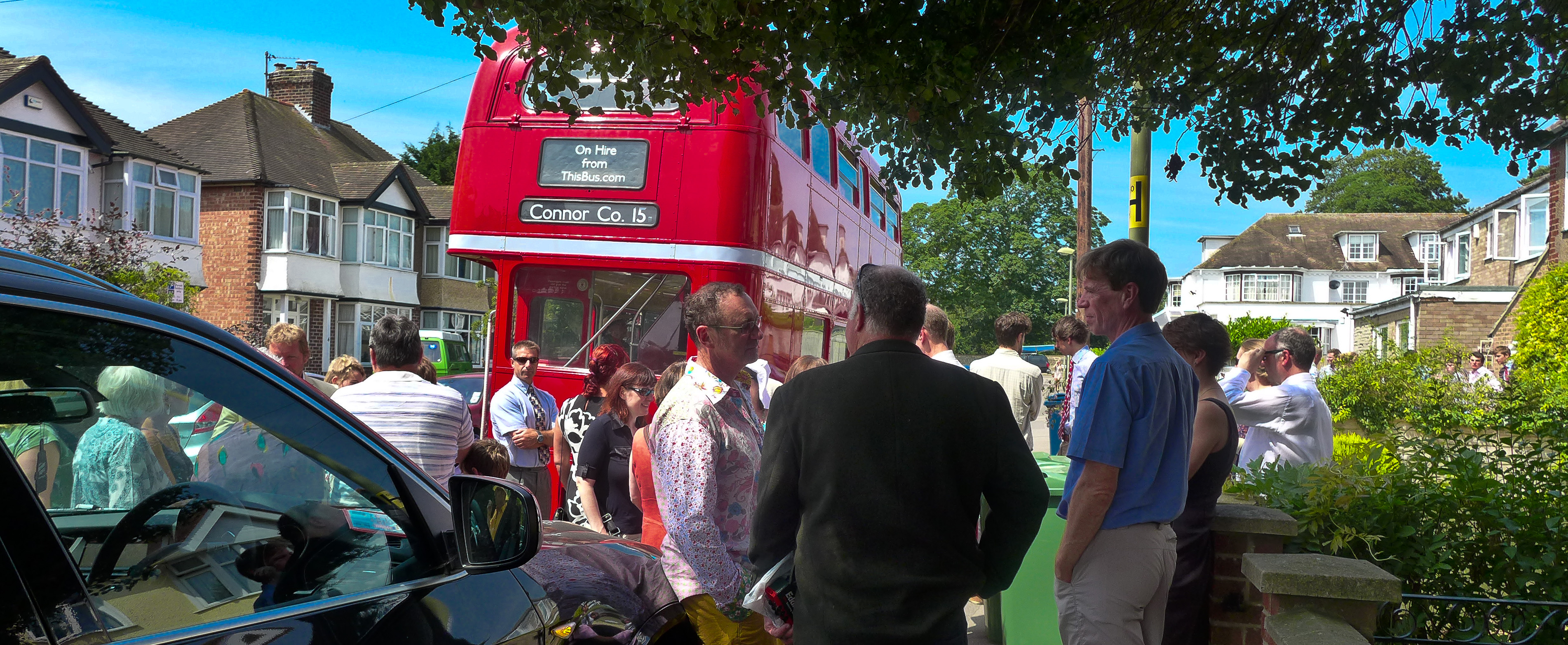
OLYMPUS DIGITAL CAMERAI feel an intense sadness that he had a visit to the Oxford Bus Company planned that day. A trip that Sue (Charlie’s Angel, pallbearer, mermaid facilitator, teaching assistant extraordinaire) had magicked months earlier. In the same way she managed to get lorry drivers/AA mechanics and the like to give LB a tour of their trucks/vans/equipment on the roadside. With accompanying photos. One of life’s understated, gold plated doers.

The Oxford Bus Company. An outing that never happened because we lazed around. Careless with the time we had. Time that was eaten up with nonsense (and ultimately pointless) meetings/interactions about (non) care, (non) support, non anything. With a dose of full time work and broader family life. We lost sight of what was important to LB. And then we lost the opportunity to make this happen.

I feel anger about the way in which families/carers are typically pitched into this space of opposition to any sniff of support and services because these services are so rationed/difficult to access/inappropriate/pointless/inaccessible or any one of a hundred other reasons. This becomes magnified once dudes turn 18 and family love, understanding, knowledge and interactive expertise is sidelined. This space is all consuming, exhausting and unnecessary.

So much energy, effort, emotion goes into ultimately nothing. A wearing dancing, prancing, phoney two step with services that hold the power, the key, the password, potential future and ever present sword of budget cuts. Chuck the nonsense of ‘choice’ into this mix and things become impossible to make any sense of. I don’t know of a single parent who is happy with (and no longer a major actor in, albeit not always a welcomed one from the perspective of ‘service’ providers) the life of their adult learning disabled dude. And I know quite a few.

How can this be? Such an enormous gap between policy and practice. The policy speak talking the talk of choice, autonomy, independence, leading in practice to the sidelining or dismissal of parental expertise and love. And parents/carers walking the walk. Beavering away in the background desperately trying to facilitate, fight for, negotiate and sustain a half decent existence for their dudes.

This is the 21st century? We have enough research, reports and recommendations around this area to fashion a papier mache replica of the Houses of Parliament. How can things still be so bad?

Nine weeks ago today, around this time, our beautiful, exceptional dude got into the bath. Probably up bright and breezy because of his long awaited trip. And there it goes again.

How could this happen?

The world of inquests

Warning. This is an information heavy post. Gotta be done as I’m telling this yarn over and over again. The world of inquests (heavily mugged from inquest.org.uk – a remarkable charity). Apologies if I’ve got anything wrong

As LB died suddenly, there will be an inquest. This is to establish ‘who’, ‘when’, ‘where’ and ‘how’.  Inquests are ‘fact finding missions’ rather than blame apportioning. There are two types of inquest; a ‘standard inquest’ (my interpretation) and an article 2 inquest. The coroner decides which type of inquest will be held. The a2 inquest is more in-depth and carries the power to be critical of the state. From the Inquest handbook;

In some circumstances article 2 of the European Convention on Human Rights, often referred to as the right to life, means that the state has a duty to carry out an effective investigation into a death. The inquest is normally the way which the state carries this out and inquests held in these circumstances are now referred to as article 2 inquests. They are required to be, in many ways, more thorough and far-reaching than inquests into deaths that do not engage this duty. 

Article 2 says that the state must not take someone’s life, except in very limited circumstances, and it imposes a duty on the state to protect life, so there must be a proper and thorough review of how someone died. Examples of article 2 inquests include where individuals died as a result of the use of lethal force by state agents (such as police officers) or while under the care or protection of the state (such as prisoners or other people known to authorities to be at real and immediate risk of harm).

The inquest is an open hearing and various witness will be called (or have statements read out). Sometimes there will be a jury. Families can choose to have legal representation or not. If the case is complicated, this is recommended. The inquest can take place months or sometimes years after the person has died, again depending on the complexity of the ‘case’.

Phew. There. The world of inquests in a few words. All new to us. Shocking that families have to wait so long for this process. Shocking that we have to pay for legal representation while the other interested parties can draw on their state funded legal teams. So hold on to your hats for some whacky ‘crowdsourcing’ fundraising gig. [Er, well, early days and all that, so don’t get too excited too soon].

For all the young dudes.

Startrekkin’ across the choice agenda

Lovely mate, M, came round yesterday. She told me how her son, her funny and engaging son, in his twenties, living in ‘independent supported living’, wasn’t happy. For various reasons largely related to choice. For example, he’d go to the supermarket, choose what to buy, then ring M in the evening to say he’d had no dinner. He hadn’t bought anything he could eat for dinner. She’d ring his support worker who would dig around in the cupboards and find pasta, cheese sauce and frozen vegetables. Again.

‘Choice’ trumping common sense or encouraging/enabling/facilitating a level of mindless engagement on the part of support staff. Either explanation crap. Either explanation completely unacceptable.

Patient choice and shared decision making is an important health policy area in the UK, with an emphasis on fully informed patients making treatment/healthcare decisions. There is recognition that the level of autonomy a patient may want, or be given, is influenced by various factors including the extent/severity of their ailment/illness, their age, social class, gender, ethnicity, sexuality and so. This nuanced consideration doesn’t transfer to learning disabled people, particularly in the social care world. If you’re learning disabled, choice is chucked at you. Prescribed from afar by policymakers both remote and removed from any understanding of what everyday life is like for this group.

Kind of hilariously, although of course it isn’t funny at all, there is no recognition that the experiences of learning disabled people are intersected by the above factors. Learning disabled people are, er, basically learning disabled people. Indistinguishable from each other in the eyes of policymakers, practitioners and probably the bulk of the British public.

So LB, once in hospital (and let’s not call this place a care home, eh?) was presented with choices on a daily basis. To see us, talk to us on the phone, go to the farm, go to Trax,  eat burgers, go to meetings, and so on. This emphasis didn’t involve any consideration of whether LB;

  • wanted to make choices
  • was able to make choices
  • was helped in any way to understand the difference between the various choices and the implications of the choices made

There is no apparent concern over whether enough information has been presented in a particular form to enable informed decision making in the ‘choice space’ for dudes like LB. Hell no. Just good old fashioned choice: ‘Do you want to do x or y, or x or nothing?’ But not z which you ain’t allowed to do because we don’t have the resources, staff or inclination to let you.

LB did consistently make a choice. He chose to go home. But that option wasn’t available to him. Because, as I relentlessly keep banging on, choice isn’t really choice for dudes like LB. It’s choice Jim, but not as we know it.

A total fucking charade.

ryan5-443