Myles Scriven’s inquest judgement

Assistant Coroner Crispin Oliver today read out his judgement in the inquest of 31 year old Myles Scriven who died of a pulmonary embolism on April 16 2023 at Huddersfield Royal Infirmary. The full judgement can be read here: https://www.georgejulian.co.uk/2025/07/11/myless-inquest-coroners-conclusion/

This fifteen page judgement is an excoriating and devastating read. The coroner’s meticulous engagement with the evidence (which included witness statements and spoken evidence, hospital and GP medical records going back two years before Myles died, four expert witness reports and the recordings of earlier parts of the inquest) is clear. The judgement reads like an intensely plotted narrative with every word underpinned by evidence sources, the workings out carefully documented. It ends with an unexpected and beautifully sharp twist.

It is also a refreshing read, shot through with common sense and hints of incredulity. Myles should not have died, he experienced a bewildering set of failings across primary and secondary healthcare despite the active interventions of a loving family which includes a senior medic.

The coroner discusses how deaths from natural causes can be made unnatural, reminding me of the defence barrister at Connor’s inquest arguing drowning was a natural cause of death. The Oxford coroner sharply rebuked this argument and while largely fair, lacked the understanding Crispin Oliver demonstrated. His understanding was in part due to the commissioning of an expert witness report from learning disability expert Dr Liz Herrievan which offered incontrovertible evidence of the numerous failings. Having an expert witness in autism and learning disability is so obvious, I’m still pondering why it is not done as standard practice. We recently published a paper discussing how the ignorance of coroners can contribute to the harms generated by coronial processes for families, as well as obstruct accountability. Getting an expert in this area is a superb workaround leading to more robust engagement and arguably a knock on effect on outcomes.

Like many of the inquests covered by George Julian, the facts in Myles’ case offer an extraordinary array of failings; blood thinning medication was clearly not working and yet the consultant refused to switch to warfarin, an ECG was performed but the results not communicated to anyone leading to a lack of a follow up appointment and review three months later. The discharge letter from the hospital was “borderline useless”. By this time, despite Myles’ obvious deterioration in health, a phone call with the GP led to a note of ‘sounded ok on the phone’ on his file and an appointment three days later resulted in the incomplete recording of medical notes and safety netting advice. Myles died three weeks later.

What the coroner lays out in this judgement is a) the knowledge about Myles communicated to the hospital by his family (take time, don’t use long words or jargon, listen to the family, etc etc etc) and b) the absence of any engagement with this knowledge by professionals. This can only be wilful. The coroner reported a sense of disbelief earlier in the inquest that the hospital had in place all the necessary adjustment mechanisms, including a learning disability nurse and ongoing training, and yet none of this had any impact on the care Myles received. The lack of a hospital passport was flagged as problematic, though given the (non) actions of most professionals around Myles, I’m not sure they’d have even noticed it through their disinterested and disconnected lenses.

The coroner noted that these adjustments were essential to Myles’ care and should have been followed to the letter. Of course they should. As they should in the case of any autistic person or person with learning disabilities. And yet they aren’t. “The evidence is that this did not happen at any point in the timeline of events”. How is it possible for none of these standards to be adhered to? Again, returning to George’s inquest coverage, how many other deaths were due to failings in the most basic standards of care?

The coroner states “GPs demonstrated in their evidence that they had very little real grasp of the technical and regulatory requirements” in connection to patients with learning disabilities. Two GP’s who gave evidence did not understand what the Learning Disabilities register was or how it worked. I’m reminded of a study which found GPs didn’t know what the flag was or where to find it. Extraordinary ignorance that you think would be remedied by implicated professionals hastily with some mortification. But no. This is all apparently fine.

[Myles’ death was of so little consequence to the GPs they did not instruct legal representation until forcefully told they should by the coroner.]

In a gruelling paragraph, the coroner described how he’d come to the conclusion that the GP surgery was so woeful in practice that the character of neglect was not present; neglect can only be considered if the person obviously presents as ill. Drs Clownster and Clownstar were too clueless to notice.

I had to read the final pages of the judgement a few times as the coroner’s narrative arc is blistering. Myles died of a pulmonary embolism. The lack of adjustments made in relation to his learning disabilities resulted in incorrect decision making contributing to his death. I question the coroner’s use of ‘incorrect decision making’ here. The Dr who refused to change the medication that clearly wasn’t working couldn’t really account for this ‘decision’ saying he thought Myles had compliance issues around medication. This strikes me as more of a post-hoc rationalisation. The character of medical decision-making seems to involve more gravitas than simply not bothering to do something or ever following it up. 

A Prevention of Future Deaths (PFD) Report was unsurprisingly issued to the GP surgery. In relation to the NHS Trust, there was the usual bullshit about changes implemented since Myles died which generated more words for the continually overflowing learning pot. And then the coroner smacks the judgement out of the park by issuing a second PFD to the Trust:

Tell me how best practice is going to be complied with and by when.

Wow. Yes. Please do. Adjustments (including mandatory training) simply don’t work. Ticking the box is a pointless and dangerous distraction.

I hope this judgement is read by other coroners as well as health (and absent social care) professionals. Myles was let down so blinking badly the report is a devastating, important, even groundbreaking read. Yet another much loved young person treated as disposable by health and social care professionals. Crispin Oliver, however, showed him and his family much respect, listened to their consistent and informed interventions and questions thoughtfully, and shed light on the absurdities woven through our supposedly universal healthcare system.

Thank you.

30 years.

So Connor turned 30 a week ago last Sunday. Thirty years. I look at the word thirty and wonder what it means. 30. Older than I was when I gave birth to him.

He died 11 years ago, aged 18, before his 19th birthday 5 months later. My maths is rubbish.

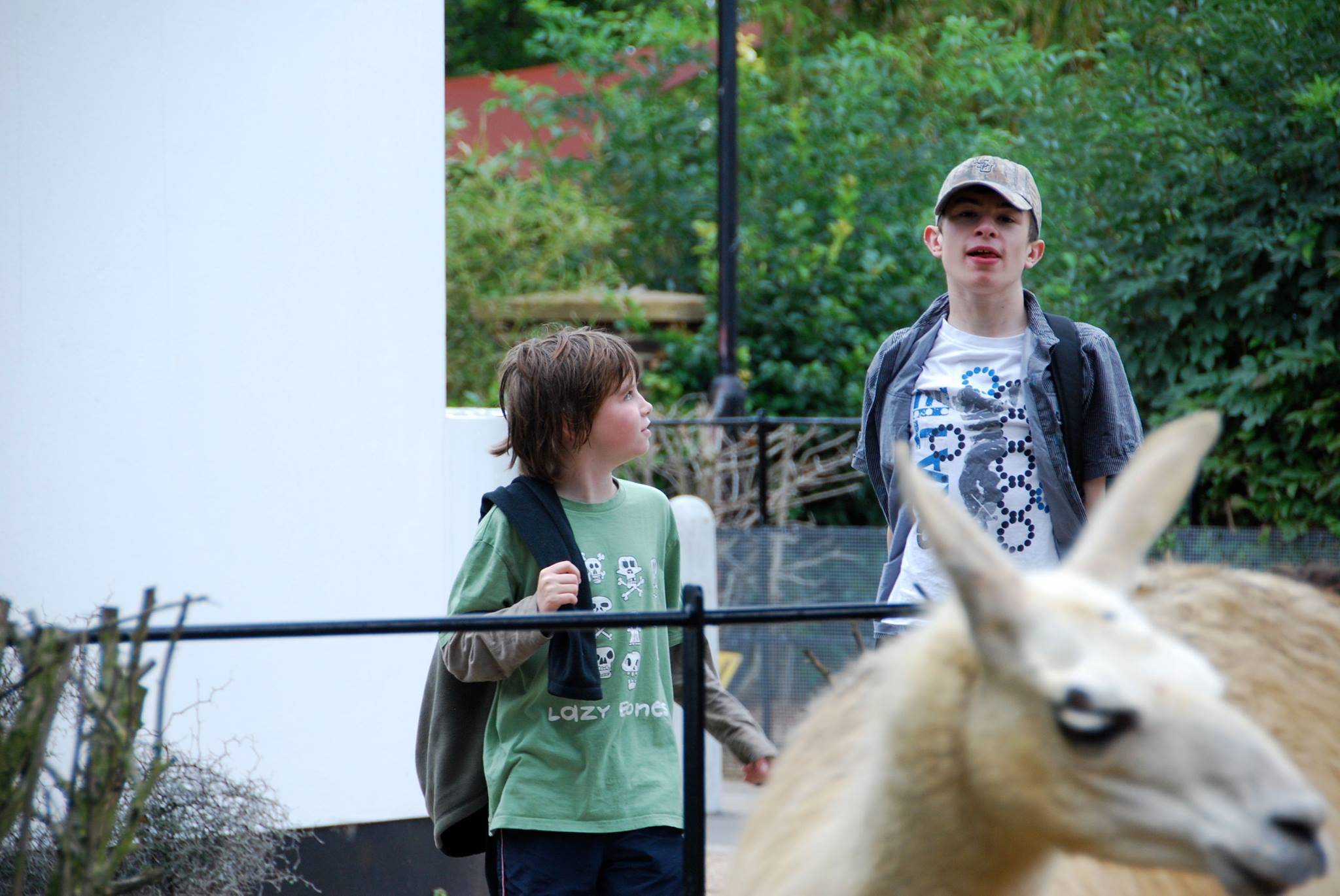
These three photos turned up on Facebook this week. Not sure if they were posted in the moment, in the recording of everyday life or later as memories. The latter probably as they landed around Connor’s birth-day.

Artefacts of moments/minutes/hours/days/weeks/months/years of devastation. Of writing, posting, searching, writing, howling, raging and writing some more. Always some more.

Until there wasn’t.

This is a good thing. You can chuck your models of grief in the nearest bin. There is no model. Instead random, shifting levels of sadness, pain, anger, despair, horror, rage, relief and whatever other emotions and feelings you fucking feel. Anything goes.

Oh. And those tears, the broken tap tears that feel uncontrollable? Lean into them. Cry your socks off. How could you not. At home, on a bus, train, walking here, there or anywhere.

I look at these photos.

Summer holidays, a day out, and so much rain.

Cheekiness. Love. Determination. Movement. A brown caguoule among uniform blue. The warm easiness of together.

British Summer time.

Llamas or alpacas at London Zoo.

When a child dies, you study photos, forensically. Attempt to climb in them almost. To be back there for a moment, for the feels and smells.

My mate Fran sends a random pic or two every so often. From school trips or adventures. This new treasure allows fresh exploration. A forgotten hoodie or lunchbox opens a window to a particular time and the wondrous space around it.

What is Rosie holding? How did that sand feel in bare feet? What’s Connor saying to Tom? Where the hell were we heading on that rainy day?

30 is a big one. We went for a long walk on Great Moor. It rained so hard my eyes filled with water. Rain tears.

30 years.

Laughing Boy: the production

26.3.24

So, rehearsals started yesterday…   

It’s a massive deal. I bounce between sadness, incredulity and awe (I mean what the actual fuck?) and a strange, unformed somethingness I can’t pin down. Maybe there are no words. 

What would Connor say? 

Mum, mum… is there a play, mum? Is it in London, mum?  Does it have buses in it, mum? 

Yes. And yes, it does. And so much more… 

Stephen Unwin and the wider team are deeply committed to the production in ways that are moving and reassuring. He’s also welcomed repeated comment on the script which is comforting. It feels like a collective endeavour, as it should be.

I’ve loved gaining insights into stage production, the mechanics, expertise and magic. Contributions from the casting director, set designer, video designer, sound composer, timings, processes including the daily rehearsal call document which lays out the timetable and attendees. The Rehearsal Room is a space I never considered… And there’s a daily show report.

Who knew? 

#JusticeforLB magic has reawakened from a light slumber/cat nap.  The chaotic and brilliant archive of campaign artwork, screen-grabbed Tweets and outlandish ‘comms’ is being curated and shared by George Julian. Tickets are being bought and other support offered by J4LB campaigners who stepped up a decade ago.  

I spoke with John Harris from the Guardian. We talked about similarities between his son, Connor and our experiences of services. Keep an eye out, I said, when he described the odd turbulent time.  

An eye out for what?  

Not losing sense.  

We didn’t bring Connor home from the unit because we were waiting for The Multi-Disciplinary Team meeting. An ‘important’ meeting with people we naively thought central to Connor’s future in terms of support. It was finally arranged on July 8. Four days after Connor died. This now seems absurd. Though we didn’t know the half of it back then.

The play with its breathtaking pace, humour and searing satire captures the unthinkable, the then, now and in between, with love at the centre.

As it should be.

Tickets are available from Jermyn Street Theatre and Theatre Royal Bath.

A beautiful boy, a book, a play and an ink pad

Connor died. He should be alive.

The book

The book I wrote about what happened was launched at Doughty Street Chambers six years ago with a kick ass panel and audience. I wore a red scarfy thing knitted by the mum of one of Connor’s teaching assistants. My Life My Choice members including their President, Michael Edwards, sat in the front row and cheerfully chipped in.

Writing the book was an exercise in witnessing. I’d written this blog for years. Writing joy, love, laughter, critique, commentary (and devastation). The book was a way of trying to make sense of the responses to Connor’s death, documenting the brutality of the processes and bullshit (or worse) families face when someone dies in state ‘care’. It was written before some of these processes ended [they never end].

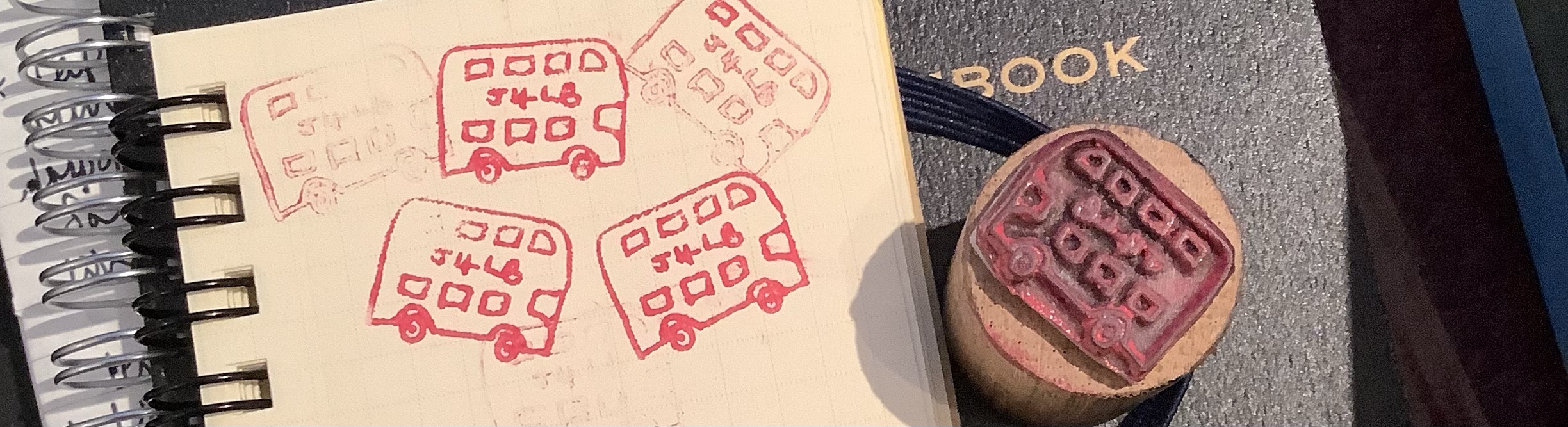
An ink pad

I was uncomfortable at the thought of being asked to sign copies (what do you write?) and made a stamp to avoid this. The tiny ink pad still works. I didn’t stamp or sign many copies in the end. Rich, Rosie, Will, Owen, Tom and George Julian had complimentary copies. I sent a copy to Michael’s sister down Dorset way. He persuaded the publisher to produce a talking book version at the launch.

The play

Steve Unwin began to talk about a play before lockdown. He loved the book and started work to bring it to the stage. We met in Oxford. There was further discussion, draft scripts, potential news, updates and undates. I approached this in the same way I dealt with the book. As a kind of interested bystander with a stamp and an ink pad. Vaguely surprised when the play was mentioned, passing on updates to family and friends with caveats. This may not happen.

A few months ago Steve shared the most recent version of the script (a corker) and news the play, Laughing Boy, is on next spring at Jermyn Street Theatre followed by a week at Bath. Wow. A meeting was held with Stella Powell-Jones and David Doyle (Artistic Director and Executive Producer) in a London pub to talk about the important stuff.

How to get this right. That was the discussion. With Thai curry.

Earlier this week, the copy and image was shared for comment. The reassurance I felt after the meeting was cemented. The image is inspired by a #JusticeforLB quilt patch and the text spot on.

The announcement was made on Thursday lunchtime. The Lonely Londoners in Feb/March followed by Laughing Boy in April/May. I was at a writing retreat at Gladstone’s Library distracted by the beauty of the mushrooms as details bounced around social media.

So many messages and posts. A buzz of action, excitement and anticipation despite everything else going on. Would it go up North? Highlight of next year! My Life My Choice are bussing to Bath. Brilliant said Norman Lamb. Becca got her clipboard back out to organise the life raft trip to London. Booked. Booked. Booked.

Someone prosaically tweeted, ‘Lots of time to do something remarkable’.

It’s already remarkable. A beautiful boy dismissed in life matters. His quirkiness, love of life and buses, humour, irreverence and courage to stick two fingers up at adversity count.

I’m setting aside my stamp and ink pad. There will be tears. So many tears, alongside laughter, bafflement and kick ass brilliance.

Thank you Steve Unwin.

Tickets are available here with relaxed and captioned performances.

The bathroom renovation

Part 1

The bathroom renovation. An extension built fifteen or so years ago thinking about LB’s long term future. A downstairs bedroom and bathroom (always surprisingly) reached through a door under the stairs into what was a narrow garage.  A never quite [don’t ask] finished space steeped in emotion and history. ‘Valuing People’ an unformed kernel of an idea back then. ‘Still Valuing People’ to come. Still.

A failed attempt to complete it a few years after LB’s death. And silence.

Now. The clear out. Shelves of untouched stuff. Dust art installations to fascinate, intrigue, repulse. How does undisturbed dust work? Shake down, replenish and/or pile up?

Who is this little fella in a glass?

“The glass is from the Queen’s coronation” offered Rich.

A 68 year old glass. Seven years of dust. A mystery figure. [And 107 days…]

Sadness and excitement about reclaiming the space.

Part 2

This morning. Just after 7.30am. Shaken awake from strike slumber in a panic of door knocking and dog barking.

Christ. It’s the builder.

You go.

You go.

We grub around for bits of clothing in the dark.

He’s early.

Yeah. That’s a good sign.

Yeah.

I run downstairs and open the door.

Paul.

Sara.

Sorry, I’ve not been well. I may have to leave to get to the hospital quickly.

Crumbs, sorry to hear this. You shouldn’t be at work.

I’d rather be working to be honest. I’m fed up with doing nothing at home. I just can’t lift anything heavy. 

I offer him a cuppa. He’s not allowed fluids other than water before 10am. He’s brought water with him.

“What’s that face for?” asked Rich coming into the kitchen.

Nothing.

Part 3

We learn fragments of Paul’s life across the day. Family, health, (not) stockpiling bog roll and stories from decades of renovating bathrooms. A second builder pitches up to help. His wife texts to check on him. I learn about the technical background to the extension and plumbing failings. No damp stone is left unturned.

Love, quiet graft and commitment fills the space. And, with no whiff of cheesiness, hope.

Stolen time, mother blame and writing back


Gawd. Not written a blog post for what seems like yonks. I think this is a good thing. I’ve also been on strike for what feels about a decade which is generating unusual space to think and reflect about stuff.

This morning crafting vintage crochet squares my eyes/thoughts drifted to beautiful, beautiful photos of our kids. And reflections about stolen time. Time spent enduring accountability processes, on fighting, meeting, demanding, researching, reading, raging, reading, raising, howling, meeting, missing, fighting, raging, howling and missing. Missing so bloody much.

I totted up one strand of this stolen time.

It is unnecessary. These processes shouldn’t take years. Or force families to become almost vigilantes in pursuit of justice.

I also thought about the tenacity and strength of the tentacles of mother blame that continue to try to drag me/us down. Me/us flagging here how the ‘mother blame’ stain works to circulate a narrative of ‘unbalanced woman’ disconnected and distinct from a loving family and friends.

Undertones, hints and hammers 

The still busy blame work continues across diverse settings and spaces. Examples from the last few weeks:

A comment in a Hampshire newspaper. Mazars a tool to discredit one trust or just to appease a certain someone?

A Facebook discussion. What worries me is her being in this position of power over very vulnerable people and seemingly completely unaware of what’s she’s saying.

Disproportionate indignation and the personalising of a wider, independent work outcome.

An extract from a draft manuscript in which a senior exec is portrayed as victim in contrast to an obstructive mother who really should have been offered grief counselling early on.

Writing back

A form of writing back, to borrow from post-colonial literature, is part of my/our personal, academic and activist life. Rich and I talk about it. Katherine Runswick-Cole and I have published about it. #JusticeforLB ran with it and, with George Julian’s clear vision, generated new ways of being, doing and acting.

Writing back is about trying to redress oppressive and enduring imbalances. Of reappropriating and resisting harmful discourses. Shades of refrigerator mothers, accusations of hysteria, irrationality and, ironically, imbalance.

The techniques available to public sector bodies wanting to silence people include discrediting, crushing and co-opting. In this order. I was never big on titles or throwing about my business so early attempts to discredit were short lived. Hints of a generic single mother on benefits are hard to sustain when you are married with a senior academic post. From being invisible, the Dr (‘Dr’) title assumed almost comedic proportions as events unfolded.

Attempts to crush are woven into the fabric of accountability processes as well as the everyday actions of senior health and social care figures. No funding for legal representation at inquests without punitive and intrusive scrutiny. Interview transcripts with NHS staff with sub-sections titled ‘My Relationship with Dr Ryan’. The secret review by Oxfordshire County Council in which the author spoke to everyone but us spinning a teeth achingly biased yarn. The commissioner’s letter about the terrible harm ‘my’ campaign was causing. Countless crushing examples.

Co-opting can be an effective tool in terms of maintaining the status quo. Selfie slide shows of families with ministers, politicians, big charities… People sign up to working with different strands of health and social care to generate change, working with and influencing from the inside. Rich and I dipped our toes into the co-opting pool. Both were short lived experiences as futility shone through. Outrage and incredulity this week from long term National Autistic Society supporters as the penny finally dropped. This is a corporate, self-serving beast.

And what if the silencing techniques don’t work?

Mmm. This has been a ponder and a half. The following point all overlap…

If the techniques don’t work you are not playing the game. You are at fault.

If you remain uncrushed you are clearly not assuming the appropriate, culturally ascribed role of grieving mother. You are stripped of feelings, your bereavement stolen.

People you’ve never met develop a strong and irrational (again heavy on the irony) dislike of you. A disproportionate monstering. A danger to others…

If you resist co-opting there is no resolution. And there is no resolution if you don’t. Superficiality of ‘improvement’ efforts continue with an ever ready queue of co-optees while necessary structural and cultural changes remain untouched. From the outside we don’t have the distraction of insider tinkering and remain a nuisance.

Finally, and what gets lost in all of this, is bereaved families are the only interested parties, to use coronial language, who are typically not directly connected to or part of what happened. This makes the attempted silencing and subsequent monstering all the more monstrous.

The end. For now.

[Please chip in with comment, reflections or criticism; these are very much half formed thoughts.]

Quest Craven and the end of a decade

I’ve drafted posts on paper, on this blog and in my head on and off for weeks and months now. And kind of enjoyed not posting them. It feels right. I may revisit some of these ghost posts. Or not. Some (many) are about (malingering) grief. About the intense pain and sadness I feel. And always will. With patches of pretty much happiness. That’s cool. I don’t want to always be Captain Bringdown. I remain in awe of feelings of contentment.

I’ve got a sort of manageable grief gig thing going on that kicks in along my walk to work in St Aldates. A space of enormously wide open sky. Taking in an ever present smorgasbord of coaches outside the Ashmolean. Mentally ticking off the die cast models LB collected while acknowledging post-death models he could only dream of. The road ahead leads to the cemetery.

Tonight I want to write about one atrocity story. Before we leave this decade.

Back in the day I would likely have laid out the pre-story to this. In considerable detail with links, drawings and other illustrations. [This blog with JusticeforLB.org and 107daysofaction produced by George Julian will no doubt provide a weighty and comprehensive account of the utter shite that passes for health and social care for certain people in the 21st century. Ripe pickings for students to unpack in years to come.]

I’ve lost my appetite for up to the minute documenting. For calling out, calling on, demanding, raging and howling at the moon and the stars. Six years on the resounding response in terms of demonstrable action is ‘we really couldn’t give a flying fuck’.

The swears no longer work.

Quest Craven

This is a story about a private provider called Quest Haven who run two ‘care homes’ for learning disabled people in Surrey (amongst other ‘care’ related practices). I strongly urge you to:

  1. Have a graze of the CQC inspection report highlighting the harrowing failings in anything approaching what could be described as ‘care’ in one of the two properties.
  2. Reflect on the longevity of this company (set up in 1997) and the fact that until November 2019 the Directors (three members of the Tagoe family) claimed to be Registered Nurses.
  3. Have a look at the Quest Haven website.
  4. Note that the claimed Registered Nurse status of all three Directors has now been revised to, er, not Registered Nurses. The Directors of this private provider were all faking their credentials.

Apparently the Nursing and Midwifery Council and Care Quality Commission couldn’t give a flying fuck about this fakery. Classy bunches as ever. We have no idea how widespread this practice is and the limp response suggests there is little or no appetite to root it out. Particularly, I suggest, when those receiving the non care are of so little value. Tinned mac n’ cheese on a budget of (an estimated) £3k+ a week is apparently rock and roll.

So, as we enter the third decade of the 21st century the appetite, guts, knowledge and integrity necessary to shift entrenched failings in practice and support remain elusive. Talk is talked. Big salaries are drawn among public and third sector organisation bods. Family members continue to be co-opted and effectively silenced.

Meanwhile in a bungalow in Surrey people continue to be treated like shite by fake nurses who don’t know their care arse from their elbow. Quest Haven rakes in the readies as commissioners across the country remain apparently glad to wash their hands of ‘troublesome people’. A regulatory and commissioning system continuing to choose to look the other way.

Way to go. Way to fucking go. We need a new plan for the next decade. One that does not bolster and help sustain this rot.

What do you do with those tears?

I sat on the Oxford Tube heading to London this morning. Beautiful, beautiful, warm sunshine. Listening to an accidental playlist I don’t remember making. As we approached Lewknor unexpected tears kicked in. Alan Silvestri’s Forrest Gump? Christ. Silent weeping at the back end of a packed coach to London. 

I started the surreptitious eye wiping routine. Left cheek. Swift wipe with the back of the hand. Wait a mo. Right hand, right cheek. Swipe. 

The woman sitting next to me studiously studied a Housing related journal. Two beautiful young boys on the other side of the aisle silently swung their legs, gadgets charging. Absorbed in technologies that weren’t a distant speck when we used to chug up to London on days out. Bus and heavy haulage spotting. Waiting to get there.

Are we nearly there yet?

I stared up at the skylight trying to back the tear flow. A half arsed study of sky through dirty streaked tinted plastic. Forrest Gump. Where did that come from? Those fucking tears. Falling in a space of strangers.

What do you do with those tears?

The Bayswater Road was closed. I got off at Shepherds Bush.

Wave for Change Day. Muswell Hill. Mixing, mingling and fun. Thorny issues around who speaks for who discussed in a space of openness and acceptance. I rolled with the waves. Listening to people talk about lives and experiences. Imagined futures and fears.

My phone ran out of charge on the way home.

Home.

I turn to memories. Dusty photos and love. The kind of love that makes tears tumble at the drop of an unexpected tune.

Pembrokeshire. Circa. the good times. Paddling in the shallow shallows. Orange binoculars. Early Learning Centre police tabard. Baseball cap. Hoofing up your shorts. Living your best life.
I love you.

Beasts, bombs and brilliance

Beasts, bombs…

Last week we witnessed the Care Quality Commission (CQC) prioritise its reputation over the people it’s meant to serve and protect on live television. It was grim viewing. CEO Ian Trentham and Paul Lelliot were hauled in front of the Parliament Human Rights Committee to answer questions about Whorlton Hall (I previously wrote about this here). The Committee published correspondence between Barry Spencer Wilkinson, inspector, and the CQC from 2015 which painfully and painstakingly demonstrates how the Whorlton Hall provider kicked up a stink about Barry’s negative inspection findings complaining the inspection team was too large. Harriet Harman was on blistering form as she picked her way through evidence of a cover up during the session. Lelliot and Trentham blathered on, refusing to answer or chucking blame at pretty much anyone.

‘We have to wait for the findings of the investigation into the 2015 inspection report…’

‘We commissioned two independent investigations into this… TWO’

‘100s of people went in and out over that period and no one spotted abuse. NO ONE…’

After the provider complained, Barry’s report was shelved until a tiny team went in to re-inspect six months later and found lots of good stuff. The published report regraded Whorlton Hall from ‘Requires Improvement’ to ‘Good’. Things like unregulated use of a seclusion room and complaints of staff bullying fell by the wayside until Panorama pitched up three/four years later to record the abuse. [At this point my brain cannot go near what people must have endured in that time or how often this burying of negative inspections happens.]

Barbara Keeley MP has written a cracking letter to the CQC CEO raising numerous concerns.

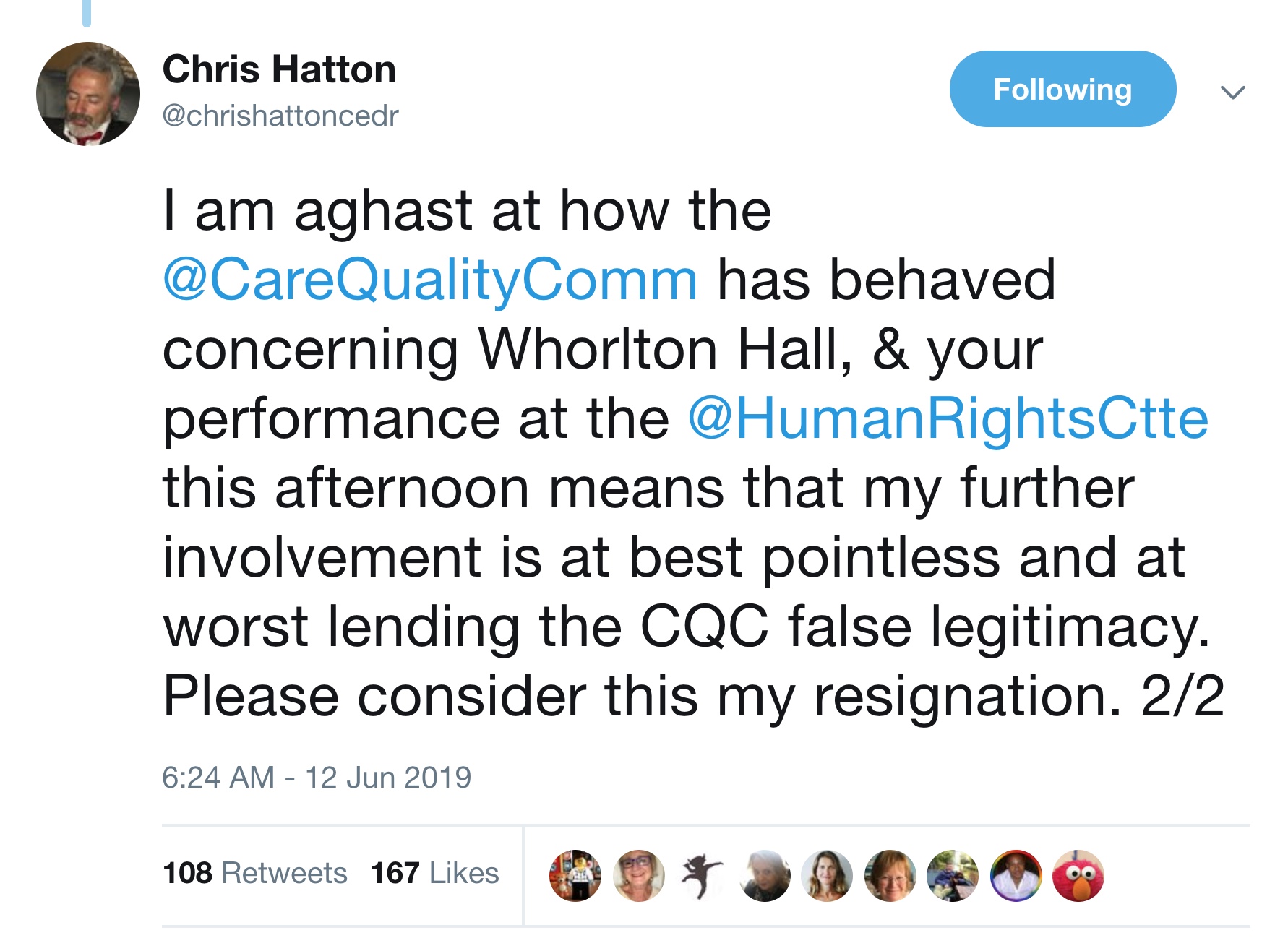
An immediate outcome of that revolting performance was the resignation via Twitter of four members of the Expert Advisory Group for the current CQC restraint review; Chris Hatton, Julie Newcombe, Jeremy (Beth’s dad) and me. Others may have done so.

And Brilliance…

The following day Rich, Tom, my parents, sister Tracey and hub Jeremy set off for Ross on Wye for the naming ceremony of #ConnorsRig. The backstory to this is that Rhiannon Davies works for Safe Lane Global, an organisation which ‘detects, identifies and mitigates potential threats on land and in water’. Rhiannon and Richard’s baby, Kate, died in appalling circumstances in 2009. Rhiannon and I hooked up electronically a few years ago and spent many hours sharing swear and drink drenched messages of pain, rage and despair as we faced obstruction and worse from the respective NHS Trusts responsible for our children’s deaths.

A couple of months ago Rhiannon emailed me saying that Safe Lane was taking delivery of a new rig and ‘everyone from the c-suite to the drillers and workshop staff would like to dedicate the rig to Connor…’ Just wow.

We tipped up late morning to a boardroom full of treats and #ConnorsRig high vis jackets. [Sob]

Over coffee and homemade cake, Adam Ainsworth, CEO, Paddy and other staff explained more about the work of the company. It was fascinating to hear experts in such an unusual and important area talk about their experiences. We walked down to a nearby field where #ConnorsRig [sob] was parked next to an army tent. With rain hammering down, Paddy talked us through various types of bombs including the beast on the floor they’d detected somewhere in the UK. So many stories, so much passion and commitment.

Next it was lunch during which a barrage of further questions were answered then back to the rig for the red ribbon cutting, a toast to Connor and demonstrations. The afternoon finished with Tom driving the rig out of the field, through the carpark and onto the truck for its return to Kent (a six hour journey). There are brilliant photos and a video [tissue warning] of this wonderment here produced by Richard.

I can’t put in to words what this day and rig naming meant and continues to mean to us. The tears started when I saw the high vis jackets and pretty much carried on into the early hours of the following morning as I thought about how much Connor would have loved the whole thing. Heavy haulage, World War Two ordnance, his beloved London (the rig is small to enable it to access narrow spaces), health and safety… saving lives. So many boxes of joy and intense interest ticked.

I also thought about the contrast between the two days. Senior CQC figures posturing, conniving and obfuscating in response to clear questions by the Human Rights Committee. Demonstrating no apparent understanding (or even interest) that people are brutalised as an outcome of limitations and shoddy practice by the CQC. Little or no decency or integrity to be detected.

And Safe Lane Global staff just doing humanity. Treating us with respect, kindness and generosity. Adam, Paddy, Julia, Ian, Jaymie and others spent hours with us, answering a billion and one questions and giving us a day we will never forget. Memories to feast on forever and the wonderful #ConnorsRig to look out for as it makes its way around the UK snaffling out ordnance and more.

Rhiannon and Richard what can I say? Indefatigable decency and love…. You bloody legends, you.

Thank you.


The Whorlton Hall disclosures

My blog is developing a bus theme which would delight a certain cheeky chappy we miss off the planet and to the moon and back. I wrote a CQC related post about the shoddiness of Mencrap provision yesterday evening after a longish gap and then, 24 hours later, comes another CQC related post.

After Panorama exposed brutal and cruel treatment at Whorlton Hall recently, the CQC today published the series of edited reports that begin when Barry Stanley-Wilkinson, a CQC inspector, wrote a report about the provision after an inspection in 2015. He found Whorlton Hall required improvement on all domains inspected. The report was not published until today.

We welcome the disclosure today in the rarely seen spirit of transparency. It offers an insight into an inspection process that should probably be chucked into the nearest skip. Coincidentally there was “a large skip within the hospital car park, which contained debris as well as long planks of wood which had large nails attached” when Barry and team visited.

So today we can trace how a CQC inspector writes a report which goes through layers of review. At each stage meaning is stripped back to bordering on the meaningless, words substituted for more vacuous ones (selected by a ‘word coach’ using a quasi scientific tool). The report then, apparently stripped of the layers of editing (audit trail) bounces to a final review stage which, in the case of this particular report, led to it being punted into the, er, nearest skip.

More evidence was needed apparently though it is not clear where that decision came from in the documents released today. Six months [six months] later, nearly 12 months [12 months…] after Barry’s inspection, Whorlton Hall mysteriously received a good inspection rating. And that was history until the Panorama team went in this year.

So what did Barry’s original report highlight?

  • Environmental risks including the skip and parts of the building in which people couldn’t be observed.
  • Incomplete record keeping (including observations) and lack of risk assessment review.
  • Poor quality reporting of multi disciplinary team meetings.
  • Recordings not legible and no treatment or discharge plans formulated.
  • Out of date medication policies and no rapid tranquillisation policy
  • Lack of plans around sexuality and sexual behaviour and poor take up of annual health checks.
  • Inappropriate staffing levels and poorly trained staff who lacked understanding of the Mental Capacity Act and ways of communicating with people.
  • A low stimulus room used without protocols or procedures.

Basically a cornucopia of potential and chilling human rights abuses which were allowed to flourish for another 4 years. Between the CQC, NHS England, Hancock, ineffectual and careless commissioners, limp processes like Leder and self serving and greedy charities like Mencrap, it really ain’t hard to work out what underpins the stark and devastating disparities in the life outcomes of learning disabled people.

I seriously hope the Human Rights Committee are all over this on Wednesday afternoon.

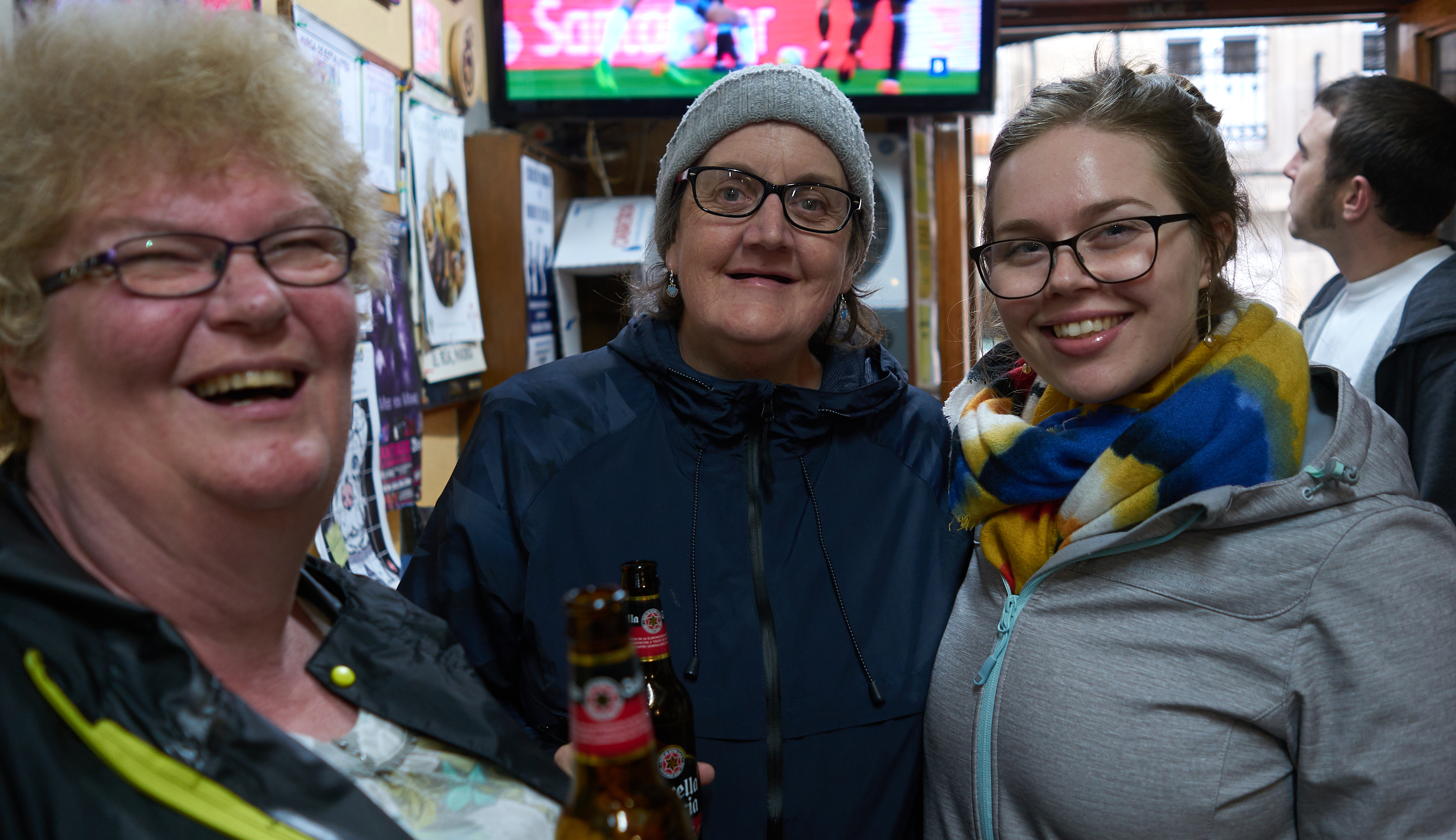
In case readers need reminding of what living lives we all have a right to live look like, here are Dawn, Gina and Jess enjoying a beer after walking 100kms of the Camino de Santiago last March.