Legacy, the long haul and mixing up the plastics

Having a major clear out (again). Stuff in the loft in our old house packed up, moved up north (after several months in storage) and stored in a big old cupboard here in Buxton for four more years.

This work is inevitably charged. Small stories fallen into cardboard box cracks, separate from curated childhood memories. Lego pieces, Playmobile accessories, torn ticket stubs, photos that didn’t make the album cut, newspaper cuttings. Unexpected chuckles, breath-stealing sadness.

It needs sorting because the sentimental value of objects, of stuff, doesn’t necessarily translate. Story/memory-making happens around and beyond things, anchoring them in time and places that aren’t always apparent.
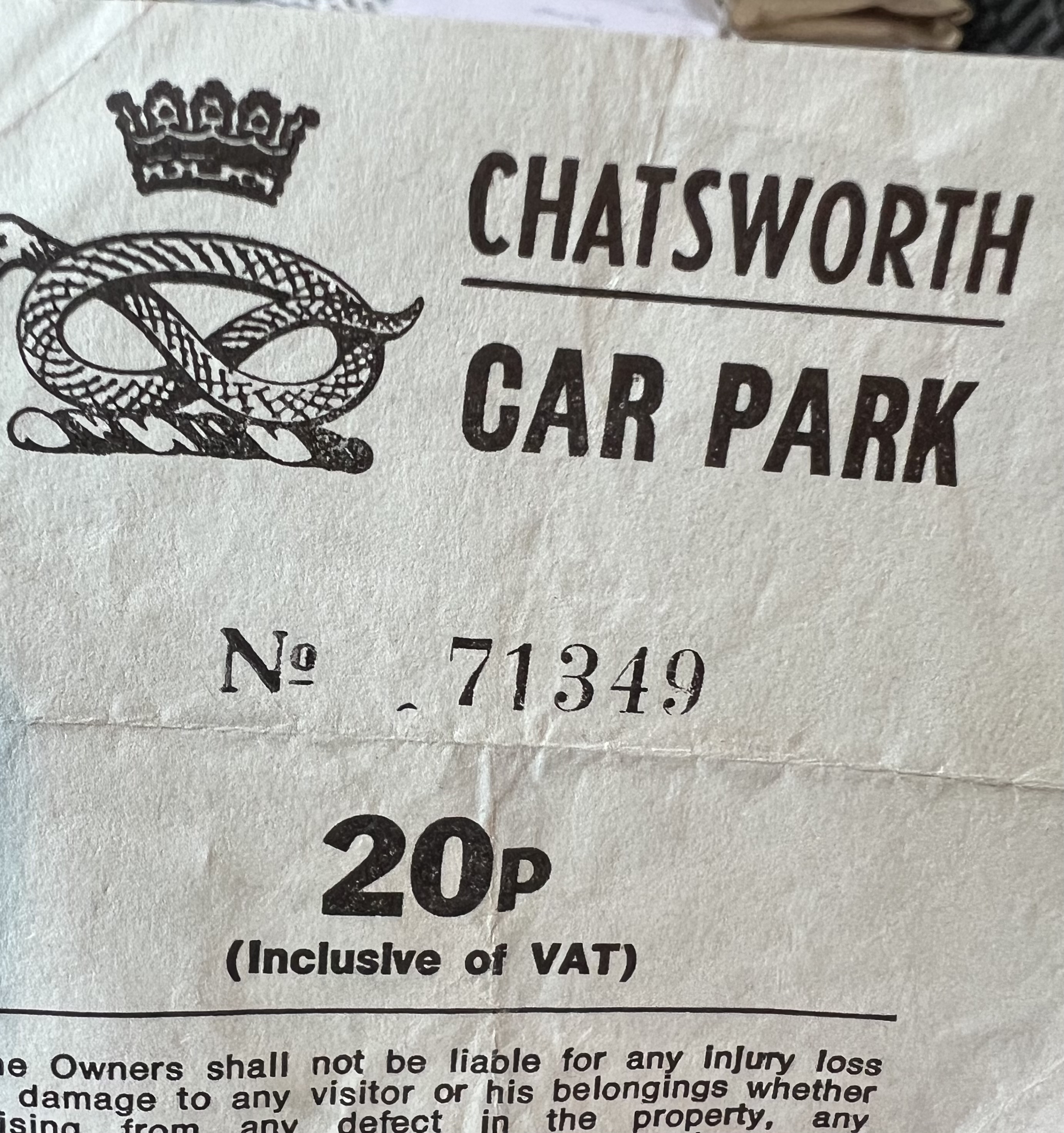
A Chatsworth car park ticket. Peak District holiday as pups. Our dad parked on a grass verge next to a ‘No Parking’ sign the size of the house he wanted to film. He took his camera out of the boot and locked the car keys in it. Oh my childhood days. Waiting, waiting, waiting. The day derailed with awkwardness. Handstands and cartwheels. Passing drivers clearly marking the rule breach. A policeman finally pitched up with a biscuit tin of metal car keys to release us. So much more than a parking ticket.

Some stuff does speak for itself. Protest and protests. Reported, repeated dated events.
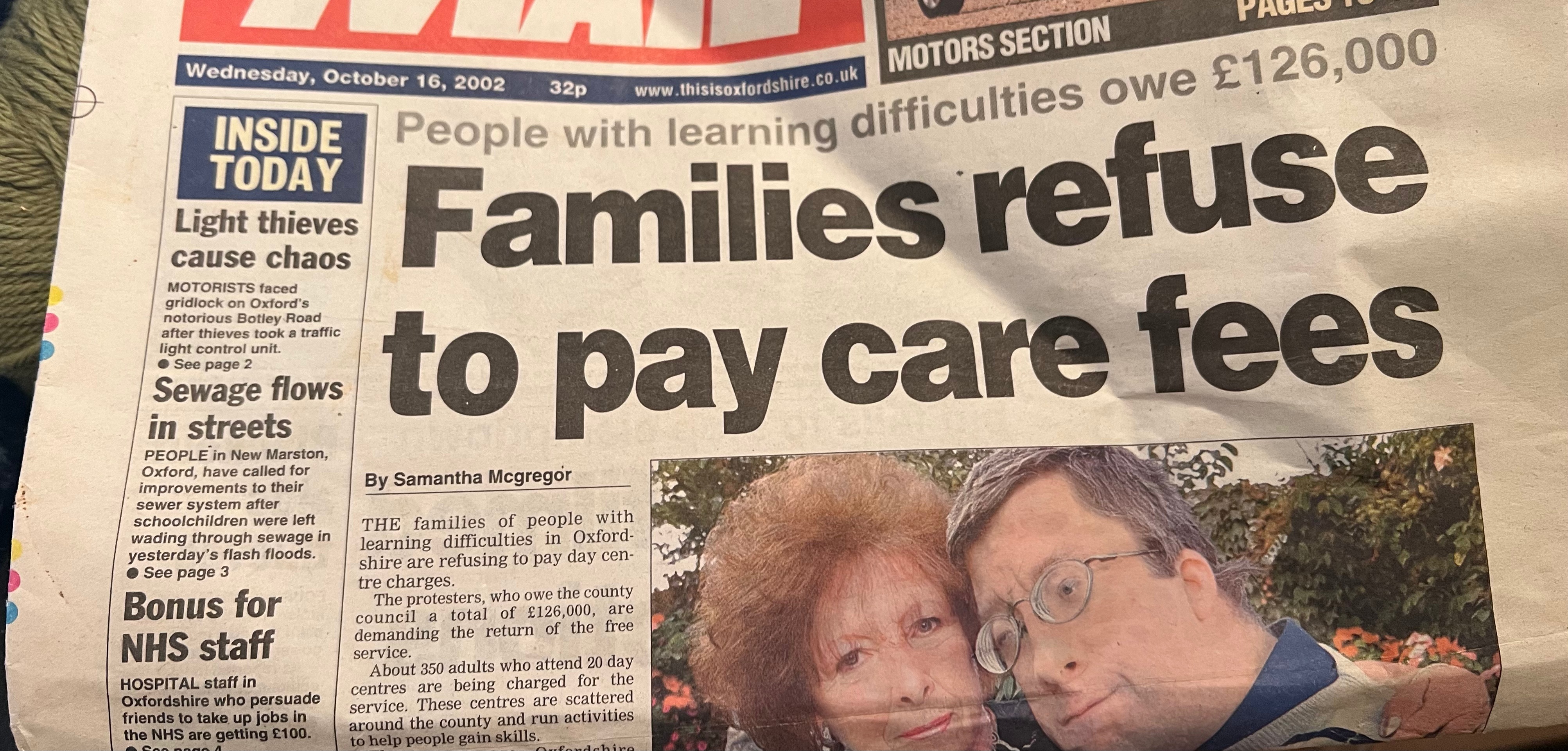
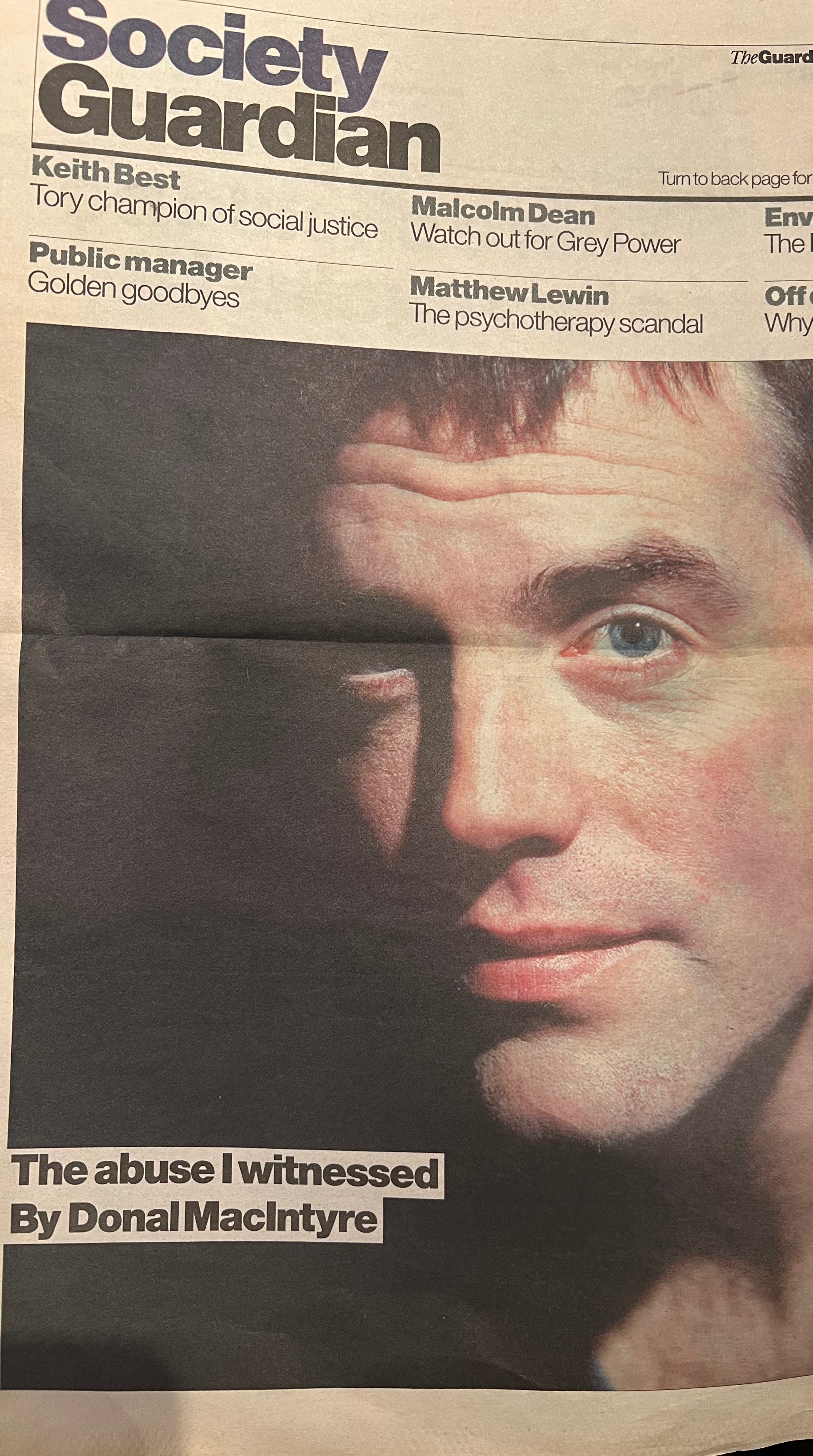
A Guardian Society piece from 2003. Donal MacIntyre arguing for a home assault law to recognise that ‘the deprivation of social contact, denial of food, medicine and care, and infliction of petty humiliations and degradations can constitute abuse and should be liable to prosecution’. He describes the newly created Commission for Social Care Inspection (CCSI) as ‘the future but unless it determinedly disassociates itself from previous passivity, then little will change’.

Prophet Donal. Pre-CQC, Winterbourne View and so much more.

Letters I’d forgotten writing.

Hey, Anneliese Dodds MP, what’s going on with the woeful progress of the Leder programme? (Always receipts when you throw nothing away). Prof Stephen Powis, NHS England, typed the type here. Delays, failings and always more to do.
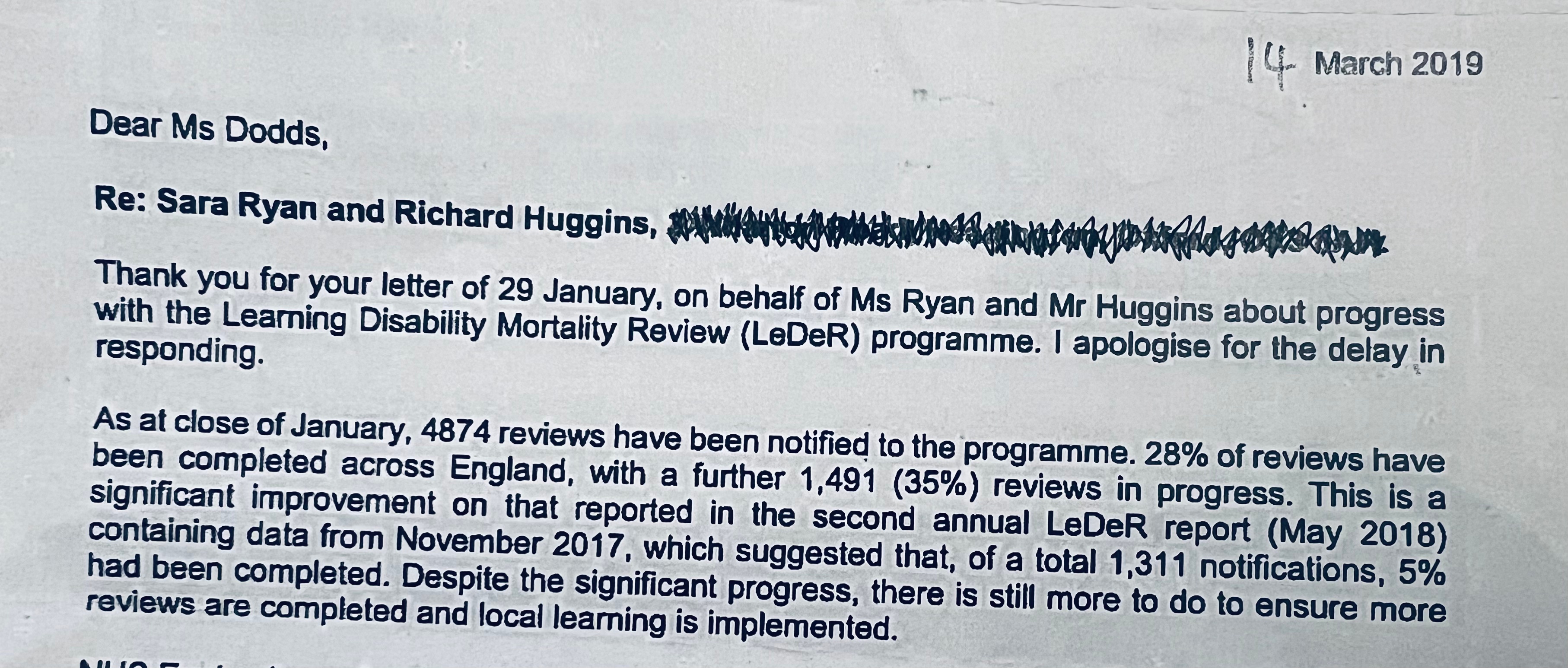
Where’s Prof Powis now? Does he remember writing these words, defending the indefensible, and putting his name to them? What remains of the Leder review seven years on is the stuff of dogs dinners.

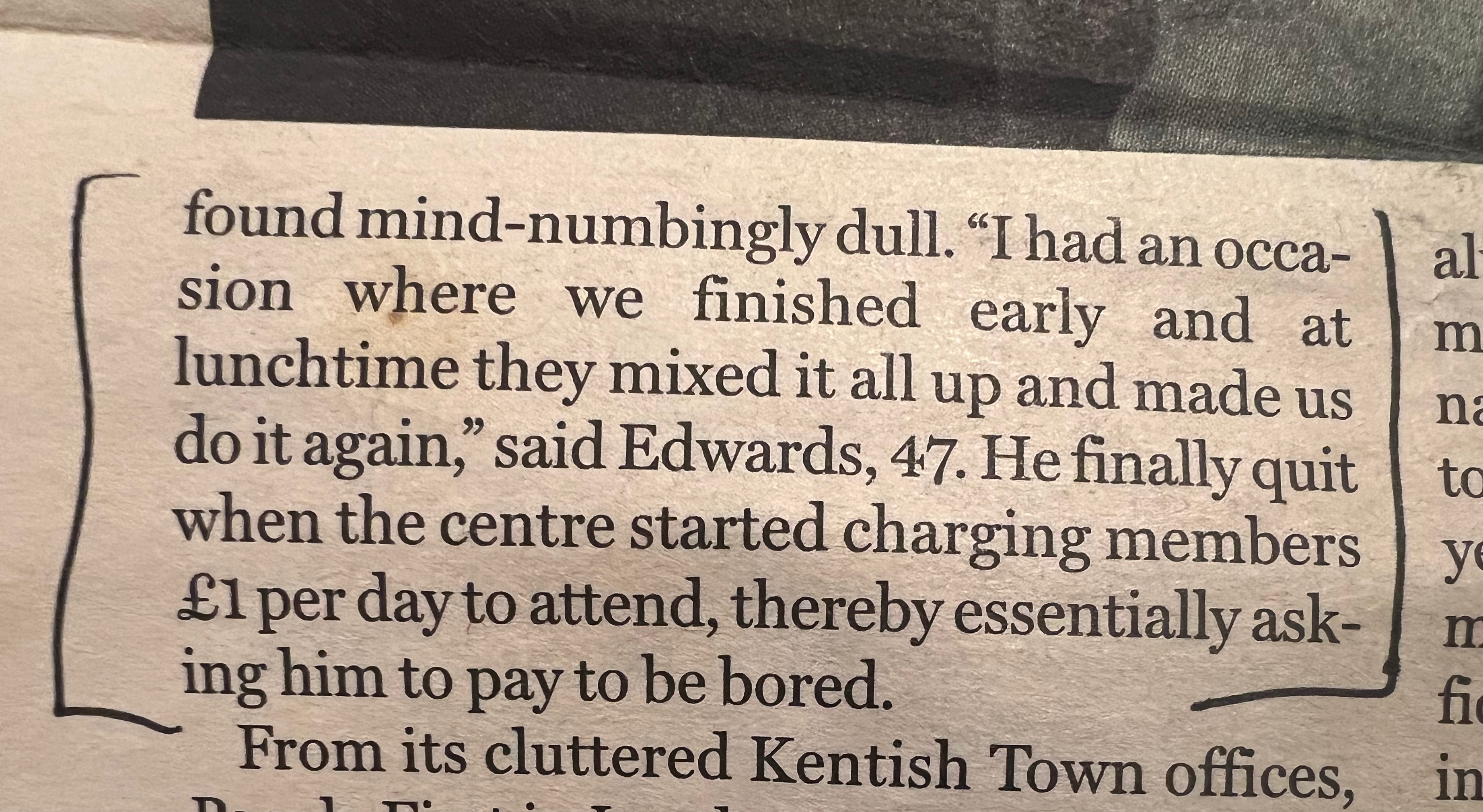
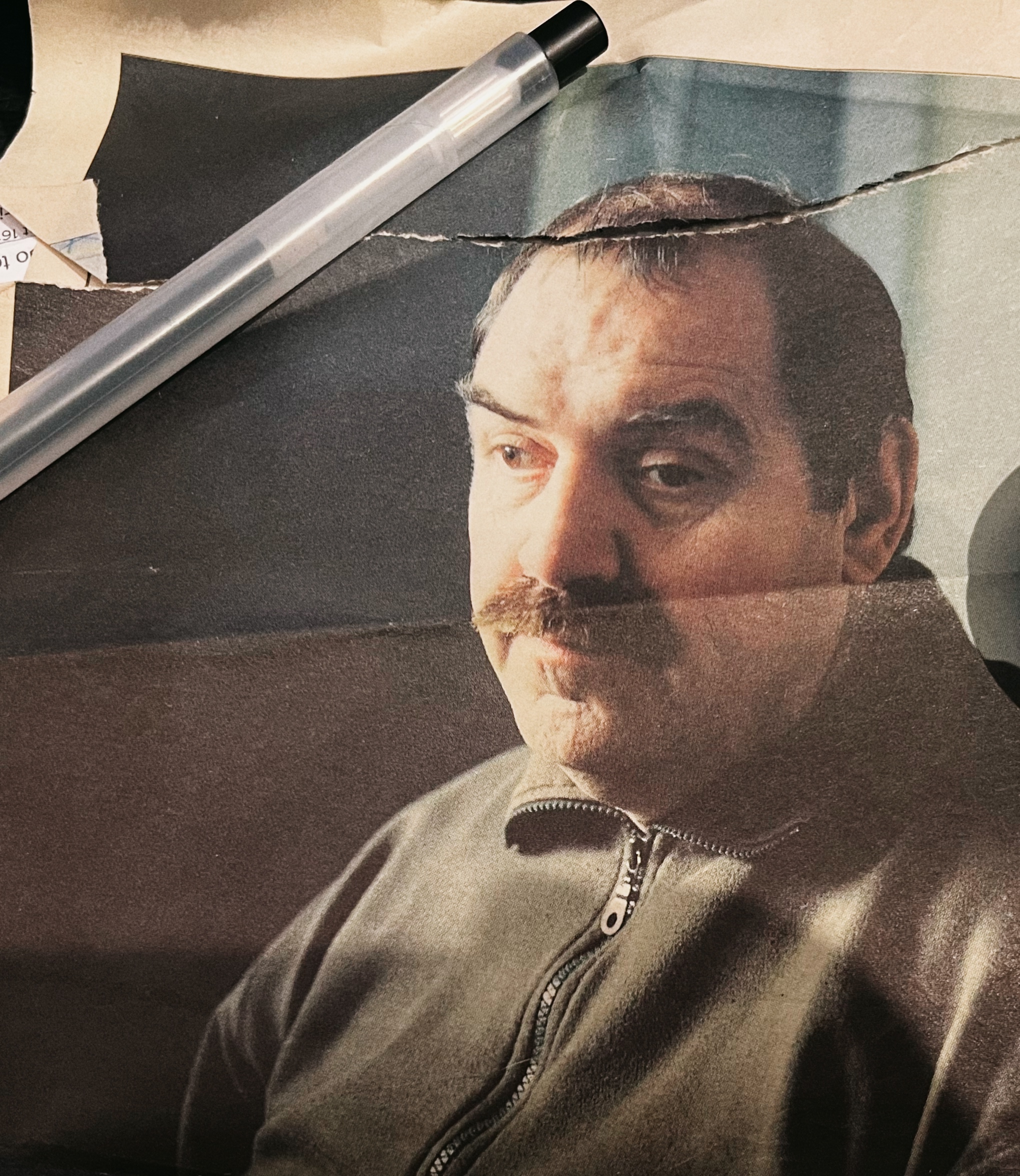
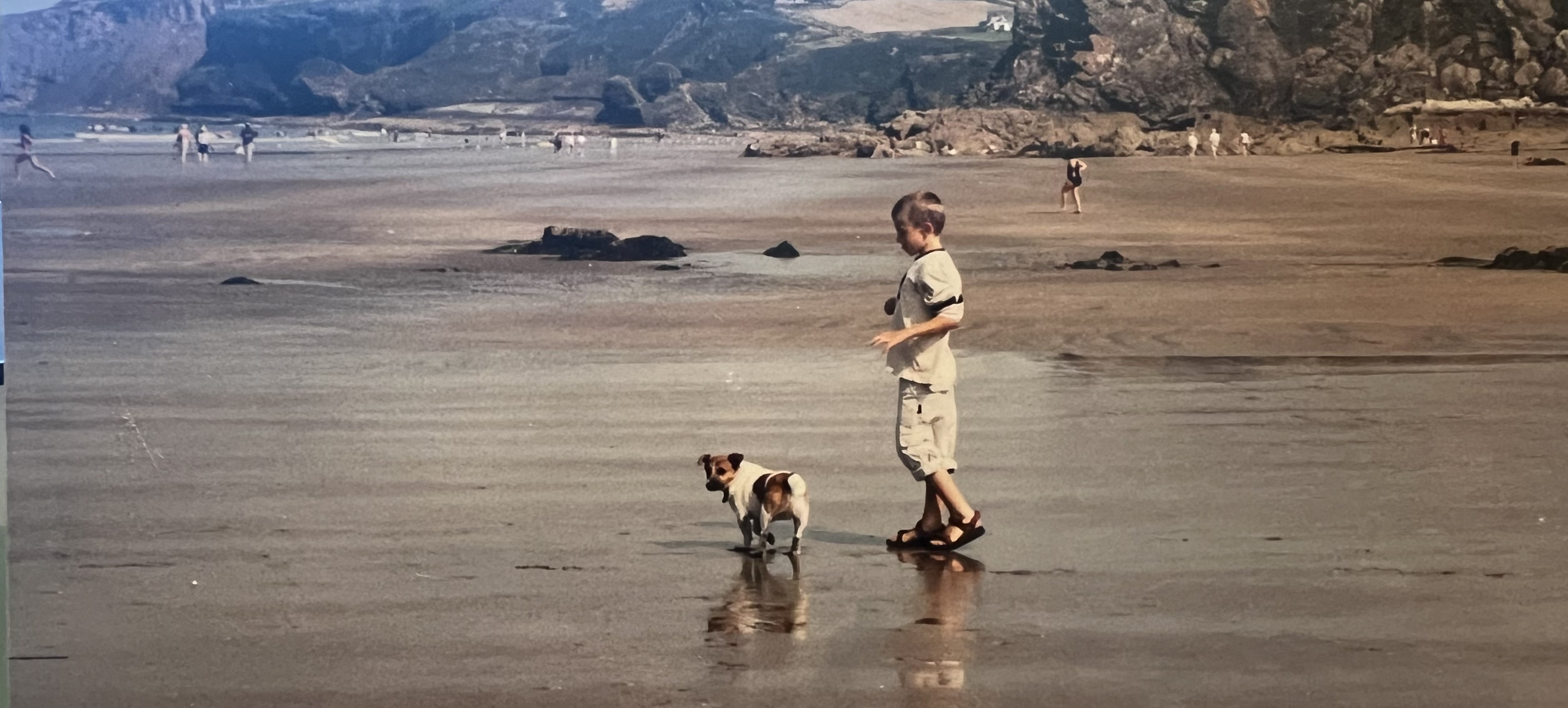
Finally, our Michael. Michael Edwards. President of My Life My Choice. An article I cut out and kept when Connor was walking on Welsh beaches without an inspectorate, quality, standards commission care in the world.

Michael tells the story about sorting plastics in an Oxford centre.
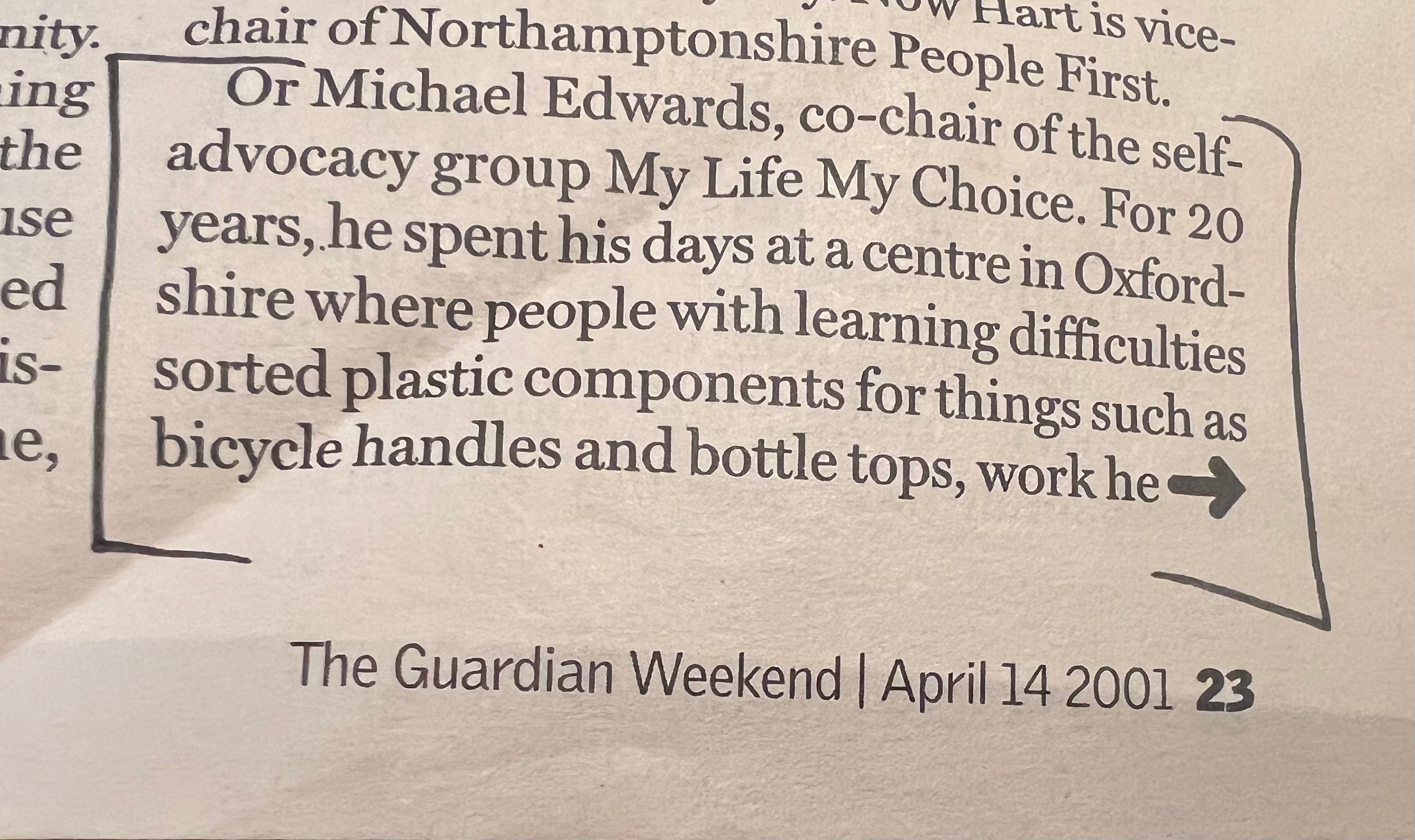
I marked these sections back in the day before I met Michael and My Life My Choice. Reading about the mixing up of plastics cut me to the core before I had the words or even thoughts to make sense of it. Oddly, rightly, this article was instrumental in me getting in touch with My Life My Choice a few years later when I had my first research job. Eventually developing a relationship of friendships, love, laughter, care, commitment, collaboration and activism. Something I treasure beyond words.

It doesn’t take much to join the dots between these stories plotted from randomly stored stuff. People involved/implicated and then absent. Exposing, reporting, ‘leading’, deflecting with little or no sustained thought for the people and their families harmed by these enduring abuses. People who continue to resist and stand taller than that ‘no parking’ sign from back in the day.
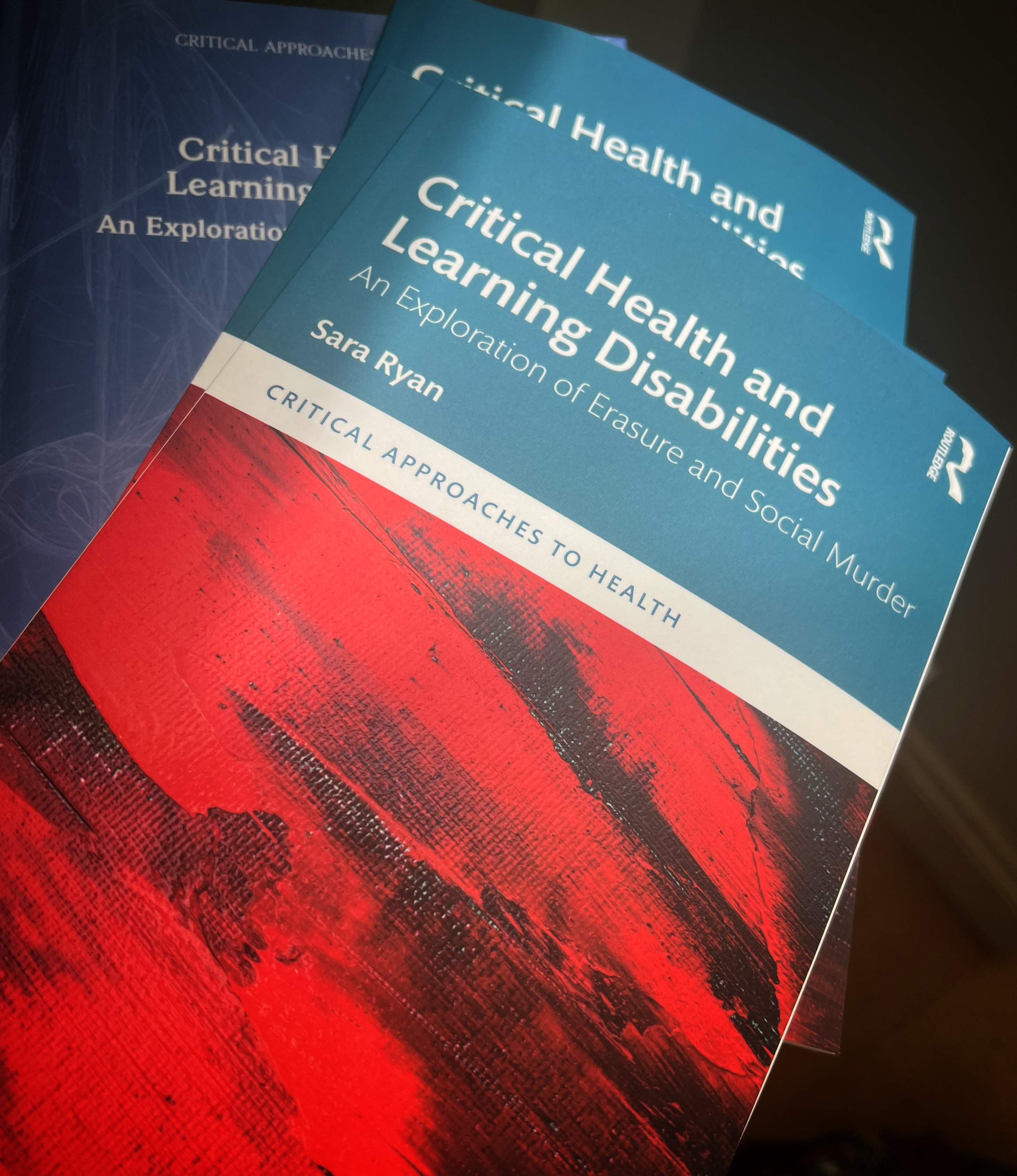
Rethinking and refreshing… a bit of a book update

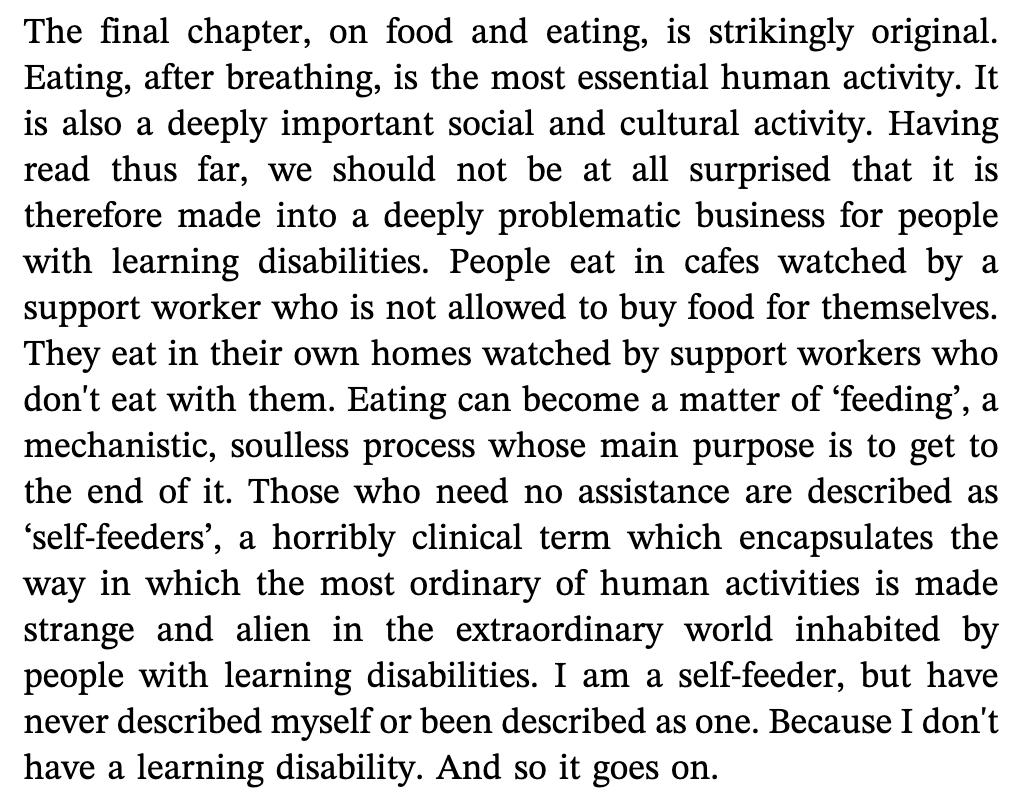
The book. Ah the book…. Six months after publication. A kick ass review from Simon Jarrett here (behind a paywall, sorry, though will share some tasters below). 

There’s been a fair bit of interest and invitations to talk about the book. A keynote talk at the Salford University Learning Disability Nurses day in November, a Social Care Institute for Excellence (SCIE) Roundtable on institutional violence in London in January, a Supported Loving seminar last week, a Wolverhampton Council Lunch and Learn session this week. The annual CANDDID conference in March. Pam Bebbington and I have just recorded a Keynote session for the British Institute of Learning Disabilities (BILD) annual conference in Feb. Audiences include people with learning disabilities, public members, support workers, providers, commissioners, social workers, representatives from NHS England, the Dept of Health and Social Care and the CQC, and academics.

I’ve approached these talks with slight hesitation, apologising for the grimness of the content of the book, and its key messages. I’ve made it clear I didn’t set out to write the book it became, and I don’t take any pleasure in relaying such damning arguments. 

The comments, questions and feedback have been almost universally positive at these events. Perhaps those seated quietly at home or in the room have mentally cussed or bristled out of sight. At a very early event the panel chair stated forcefully they weren’t part of the problem and neither were other psychiatrists they knew. Overall, however, there has been a consistency in response; careful listening, retelling of stories and example offerings to add to the bursting evidence base. 

I’m beginning to sense some relief among some audience members. Possibly because the unsayable is now in book form, legitimatising stuff that has long worried, concerned, agonised and itched. There have also been a few comments (including in Simon’s review) along the lines of ‘some of this stuff is familiar to me but when you view it through a lens of erasure and social murder it’s so blinking grim.’

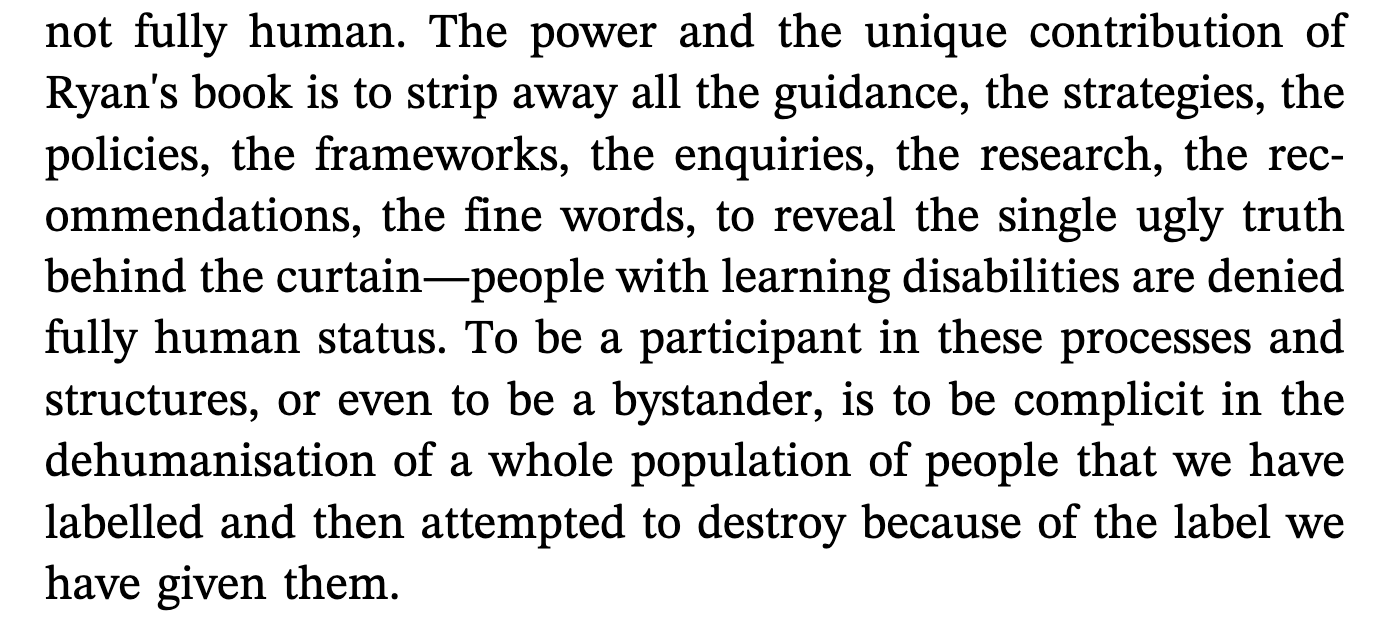
An extract from Simon’s review;

I’m on a train from Bristol to Stockport on Friday afternoon writing this. The train is rammed with the usual scrum over seat bookings and baggings, ever present shitty behaviour. One man was disgruntled someone had taken his booked seat and wouldn’t show his ticket. A young man, on his way to a weekend Hen Party sitting behind me offered his seat. The man declined. This young man during the next 20 mins until Birmingham (when the seat-sitter got off), fetched a drink from the train shop for another passenger sitting next to him with a label pinned to his jumper showing his name and destination. When he got off the train, he scooped up empty cups from the space around Mr Seatless, who is now sitting in his seat playing solitaire on his ipad. Calm, peace and quiet kindness. He said he felt so disrespected by the person refusing to show his ticket.

We’ve really got ourselves into a proper mess over the treatment of people labelled with learning disabilities who should not be living in an extraordinary world. A world replete with disrespect, contempt and worse. We can all do better. In tiny, seemingly inconsequential, or bigger, ways. Listening, offering support and clearing up mess. Repairing disrespect.

I’m not going to apologise for the book any more.

And I’ll end this post with another extract from Simon’s review.