A letter to the Chief Executive of Southern Health

Dear Chief Executive of Southern Health,

In response to the CQC report into the two units at Slade House, Oxford you issued a statement yesterday, reported here. You are quoted as saying “we were most concerned to learn of the issues brought to light by the CQC‘. The press release on the Trust website states; We are concerned the points raised in the report did not come to light sooner and have launched our own internal investigation.

I’m a bit confused about this. You seem to be suggesting that someone should have pointed out these failures to you earlier? I suppose a robust and effective internal quality assurance process would have alerted you to these failings but we now know this was one of the failing areas in the unit. There were other, weighty, indications though.

Our son died unexpectedly in the unit. Around ten weeks before the inspection. A big flag, I would have thought, that some scrutiny was needed urgently. According to the Trust Board minutes (23.7.13) early investigations into LB’s death suggested that appropriate systems and processes were in place. That’s pretty puzzling. How did these early investigations fail to identify at least some of the concerns that leapt out at the inspection team only weeks later?

And then, again in July, only two days after the Trust Board meeting, the Clinical Commissioning Group (CCG) minuted ongoing concerns about the safety culture and quality of patient care in the unit. Apparently these concerns had been allowed to drag on since 2011 but the CCG were working with you to resolve them. Another fairly ‘in your face’ indication that there were issues in the unit.

I’m sure (hope) you understand that the findings of this inspection are harrowing for us. Our son drowned in the bath in an NHS setting which has been judged so poor it’s now effectively closed. It’s safer for patients not to be admitted.

So it would have been more appropriate if you hadn’t ended your statement; “We are pleased to see our actions and plans are already changing the services provided at Slade House and we look forward to welcoming the CQC back for a further inspection in the coming months.” Pretty uncomfortable reading.  A bit of humanity, thought and respect would have perhaps steered you from writing this as if you’re inviting a new mate back for a cup of tea. It’s not really that sort of gig.

LB was a much loved, adored and horribly missed son, brother, grandson, nephew and friend. He died. In a unit run by your organisation in which serious failures in care were identified.

And one last thing. You mention in your statement that staff are being supported through the review process. We hope that the patients were supported through the experience of LB dying on the unit (as well as the changes they’re now experiencing). It must have been an enormously traumatic experience for them.

Yours, sadly,

Sarasiobhan.

CQC Day and reflections

It’s been a long old day. So this will be short. With a photo or two. Probably the best sort of post. I can’t engage with the CQC report right now in any depth. I’m too worn out. Other than to comment on one dimension of it. The lack of ‘performance’ by the staff given they were being inspected. This leapt out at me. Probably tugging at my sociological roots. We all perform. Particularly when we’re being surveilled. I’ve sat in countless meetings with health and social care professionals over the years trying to perform being a ‘good mother’. An exhausting and pretty much thankless task. But one I tried to do (well, until I became jaded and lost patience, probably around 2/3 years ago).

The staff clearly weren’t ‘performing’ ‘good care’ during the inspection. The more senior staff kind of were in places. In their talk. Well they could describe models of care (or something). Whether or not staff knew how to perform basic first aid procedures, you’d kind of imagine they’d (any staff) perform hanging out and interacting with the patients. Because this is central isn’t it? Not the performance, but being social, being sociable, chatting, interacting. Engaging. Being with.

But they didn’t.

Does this (please say it doesn’t) indicate that they felt the ‘care’ they were demonstrating was ‘good enough’? That they didn’t feel any need to engage with the patients as people. People with something to contribute.

I hope not.

Anyway, twitter has been humming with outrage today. Tweets, retweets, despair, disbelief, rage and more. Good. Social media  possibly allows no hiding space, no get out clause for worn out, repetitive excuses when it comes to poor practice.

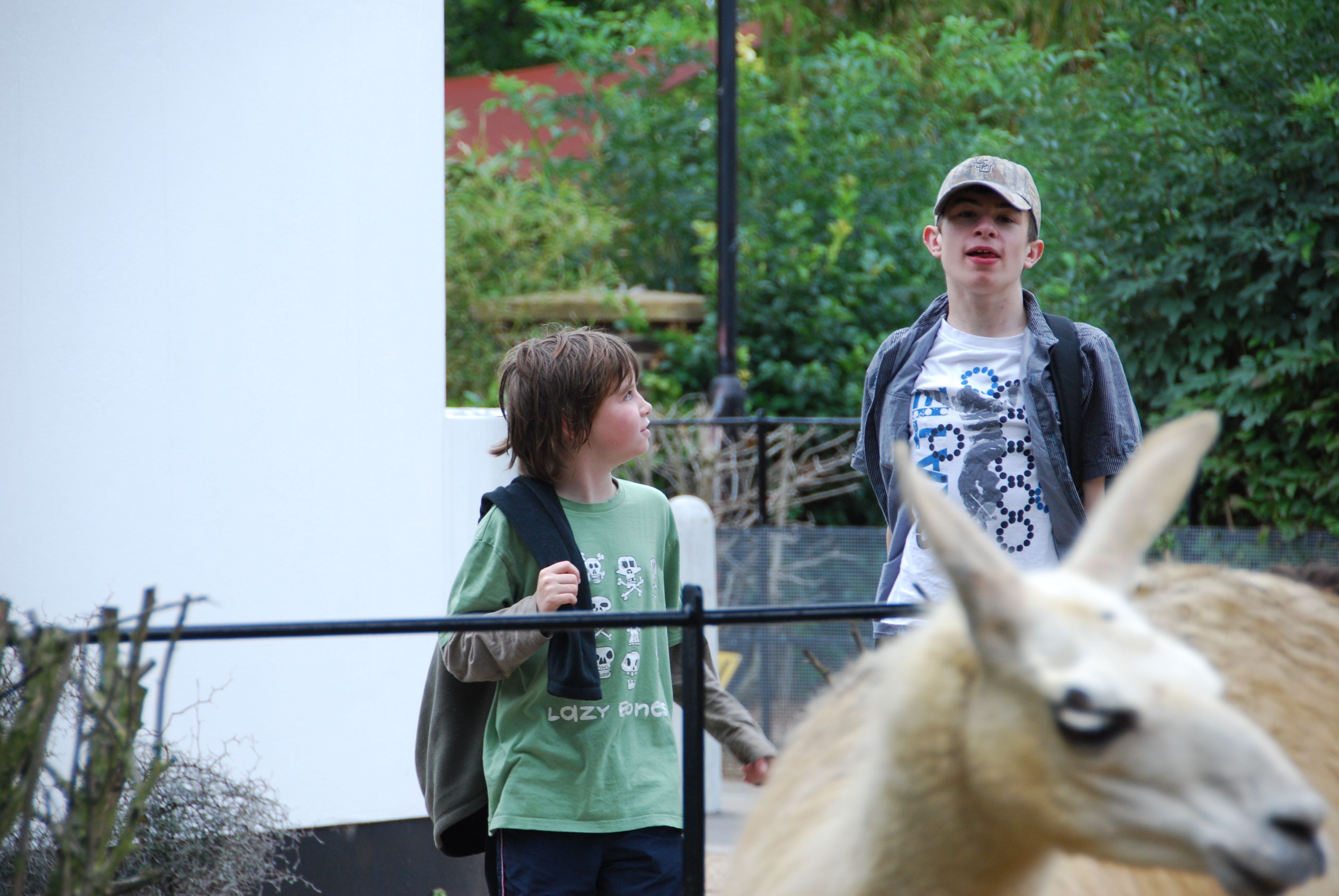
And keeping with a more positive focus here’s a couple of photos I came across today. One from a holiday in Instow, Devon. When it rained every day but we hunkered down and watched the Olympics. The other a trip to London Zoo. Possibly the same outing LB addressed the top floor of the Oxford Tube to London, asking any terrorists on board to make themselves known.

Happy times.

Image

Image

CQC: Selected high(low)lights

Whilst we were there, up to four staff mainly worked on administrative tasks within their office, with one member of staff out on the unit.

Over the course of two days, we saw few social or therapeutic nursing interactions with people who stayed there. There appeared to be an impoverished environment with little therapeutic intervention or meaningful activities to do.

Staff could describe many types of abuse but did not mention neglect or institutional abuse.

There was one person on JSH [John Sharich House] who belonged to an ethnic minority. They were unable to access any specialist food via the in-house food preparation. Staff told us “It is easier to buy ready made meals”.

We noted the two downstairs bathrooms on STATT had missing shower curtains. The nurse in charge told us that the torn shower curtain had been removed at the end of August and new ones ordered. A different member of staff told us they had been removed for cleaning, but they were not in the unit laundry.

A relative told us their son, who was a voluntary patient, had frequently requested to leave. He had been told he many not do so unless he attended specific workshops at STATT which he did not wish to do so. This meant he was illegally deprived of his liberty and had his use of consent withdrawn.

None of the people we spoke with had a copy of their care plan. We asked why this was. Nursing staff told us the electronic care records did not neatly print into a useable document and was not available in an easy read format.

In a 35 minute period, we had not recorded a single interaction between a nurse and the person they were looking after. When the person left their room, the nurse followed behind with no eye contact, no physical contact and no therapeutic intervention.

They (patients) also said “There is a man here who just lies in his bed all day. All day, every day. Sometimes there are dvds to watch”.

We spoke with three nursing staff on STATT to try and understand how they assessed people, provided their care, and monitored progress towards a pre-determined goal. They were unable to describe how they assessed people’s individual needs within a structured framework.

There was also little evidence of imagination, planned purposeful activity or nursing support with a specific end point in sight. There was a lack of engagement and empathy with the people who used the service.

We asked the nursing staff what benefit they thought the STATT gave people who were being treated there. One person said that behaviour modification therapy was used. Another told us that medication regimes were started.  We discussed this further with staff and asked them to describe any appropriate social interactions or interventions, or productive  or appropriate activities for the people living there. They told us “If they don’t want to do something, we might just leave them as we do not want to challenge them.” We asked what would happen if someone chose to stay in bed all day. We did not get a reply.

We asked the nursing staff about their knowledge of physical illness. One person told us if a person had, for example, epilepsy, there was a regional nurse expert who helped them draw up their care plans. We looked at the care plan of a person with epilepsy but were unable to find any documentation relating specifically to the needs and requirements to effectively manage this disease.

We asked about bathing and observation routines of those who may have an epileptic fit on the unit. We heard from two nurses these had recently changed. The senior nurse in charge of the unit described that people with epilepsy were now “routinely observed discreetly” whilst bathing. This had been an organisational response put into place after a death on the unit this summer.

We discussed emergency life support training with nursing staff. They told us they had had  training in the last year. We viewed their training records and found that one third of them had not attended this basic training.

We noted that information regarding advocacy services was on the noticeboard, but was out of date and therefore not appropriate or accessible to those who may have required it.

During our inspection, we saw that this person was allowed to roam unchallenged through the female part of the house. We asked why the nurse did not prevent this from happening. The nurse told us the person may get very agitated, so they just followed him to ensure he was not physically aggressive. We observed no verbal interaction between this person and the nurse. This meant the person in the female part of the house was not kept safe from fear or harm.

A staff nurse told us that one person had not been able to have his family visit him because a more senior nurse had made the decision that it may not be “good” for that person. This senior nurse had told the other staff to always ask the person if they wanted visitors. The nurse said that the person was “given the choice” to say yes or no when relatives arrived, but the nurse could not confirm if the person had understood the implications of this choice as sometimes he had said no, then later asked where they were.This meant we could not be sure that people on the unit were not emotionally harmed by this type of ad hoc decision, as it potentially removed the comfort of a visit from their family and friends.

Whilst safeguarding processes were in place, there was a clear dis-connect between policy and practice. This meant that abuse and neglect was not prevented from taking place.

We found stuck to one medicines cupboard clinical guidelines published in 2005.

There were two fire points for extinguishers at the head of each staircase: this equipment and signage had been removed, and the only fire fighting equipment was locked behind a door at one end of the corridor at the opposite end of the corridor to the occupied bedroom.

The checks of the emergency equipment, such as the cardiac defibrillators and the fire extinguishers, were serially signed as being correct. Our inspection found that the battery was missing from the defibrillator on JSH, the oxygen was out of date on STATT unit.

The provider did not have an effective system in place to identify, assess and manage risks to the health, safety and welfare of people using the services, and others.

Staff described a culture of restrictive supervision practices and lack of support from one senior staff nurse who was “never on the ward, always at meetings somewhere.”

People were not protected from the risks of unsafe or inappropriate care because accurate and appropriate records were not consistently maintained or stored. This meant that people had been placed at risk of harm, because inaccurate or missing records gave false assurance to staff.

The CQC and the unit

The CQC inspection of the unit where LB died is published this morning.

It’s damning. It’s devastatingly heartbreaking. For so many reasons.

It’s also unbelievable.

A bit of context… It’s 2013. Yes. Two thousand and thirteen. 2013. Post Winterbourne, post Francis. Post whatever. (And the Trust Board glibly minuted back in July that LB died of natural causes in a unit where everything was hunky dory.)

LB died. He drowned. Uncared for. Unsupervised. In a bathroom close  to the staff office (where we now know staff hung out, filling in endless forms). In an NHS setting clearly permeated with a dangerous culture. Poorly managed, poorly trained staff. (But plenty of em). A culture of indifference. Disregard. Carelessness. Process stamping out common sense/thought. Not even the most basic level of care provided.

A toxic mix largely ignored (but not unknown about) by the Trust, by the Clinical Commissioning Group, by the Local Authority. And one that would probably have continued if LB hadn’t died.

What a fucking mess.

A unit where most staff didn’t (couldn’t?) interact with patients at a human level. Patients (all four or five of them) left to fester, be fearful, bewildered, bored, unhappy and unoccupied. We already knew from our experience there was nothing approaching happiness in this unit. But we had no idea how poor it was. No different to Winterbourne View really. Just a different type of abuse. This time under the watch of the NHS. With a worse end game. A patient actually died.

How could this be possible?

LB should never have drowned. We all know that. People know that who know next to nothing about epilepsy. It ain’t rocket science. No one should drown in a bath in hospital. Chuck epilepsy into the mix and it’s beyond comprehension. He was 18. A young dude. He’d never lived away from home. And didn’t want to. But he was, through a complete lack of support in the community, pitched into this space. This foul, stinking, failing space.

That he spent 107 days in this hellhole with minimal interaction from staff before dying on his own in the bathroom is something we are left to live with. A constant pain that is indescribable. There ain’t no turning the clock back. He’s dead. End of. A life over. A life completely and carelessly wasted.

But there should be some accountability. For so many reasons. Not least the smashing up of so many lives. His, ours, and others.

And we really need to ask how it is possible that learning disabled people continue to be treated so poorly?

Shameful. Completely shameful.

A story in minutes

I’ve been weaving my way around NHS/social care spaces online where minutes of meetings are tucked away. Safe from view if you don’t know to look for them*. I’ve read the Trust Board Meeting minutes and more Clinical Commissioning Group papers (which I was alerted to a while back because of poor service concerns in the unit since 2011). I drew a blank at uncovering the Adult Safeguarding Board minutes but given their website is fairly archaic, they may still be typing them in duplicate.

It was a fairly informative (depressing) activity.

Back in July, the Trust Board made reference to LB’s death;

A Serious Incident Requiring Investigation (SIRI) occurred in one of the Trust’s Learning Disability in-patient facilities, leading to the unexpected death of a service user. The postmortem indicates the user died of natural causes and early investigations indicate all appropriate systems and processes were in place and being followed leading up to the incident, however a full investigation is underway, in line with the Trust’s agreed policy.

I don’t think they should have drawn these conclusions from what was known at that time really. In a public document. Why make such a jump?

I also don’t think, given these are publicly available documents, they should be so fucking clinical. (On a pedantic note, a SIRI didn’t lead to LB’s death, but hey ho). He was a young man, a young person, even a patient. Someone with his whole life ahead of him. Not a ‘user who died’… What sort of people sit in these meetings?  How would they feel if it was their son, their brother, dad, grandad being dismissed so carelessly? If these documents are publicly available, you really (surely?) have to think about how you discuss/minute things sensitively?

These documents (Trust, CCG, and I’m sure social care if I could find em) are pretty remarkable/astonishing. Consistently diluting, denying, defending, protecting, spinning, reducing and embellishing. With so much jargon I wonder if they use an app to generate large sections on a rotational basis.

But back to the unfolding ‘story in minutes’. By October, the Trust was clearly forced to shift a bit on the whole ‘natural causes’/’everything was done properly’ position. Although spin and dilution continued. Things had got a bit more serious for them. LB became a ‘patient’ and there was a fairly pat, ‘everything is as it should be, following appropriate systems’ type statement about the internal investigation. This included the statement; the patient’s mother is engaged in the process and is identifying an advocacy group for us to work with.

For the record (to redress partial story syndrome), we were on the verge of withdrawing our engagement with the process seconds before the investigation was handed over to an external investigator. We’d been messed around by the Trust to a point that we could no longer realistically engage with them. The nonsense, contradictory, bizarre actions around our advocate (Fran) were unbearable and the attitude of the Trust towards us appalling.

Fran was put in a completely impossible and unworkable position. She received phone messages ordering her not to share the confidentiality agreement she’d been given with anyone (not even a solicitor). The Trust’s solicitor wrote to express concern about my twitter activity. They’d already flagged up they were aware of (monitoring) my social media activity (twitter, facebook and this blog) but I’d gone on to  ‘particularly disappoint’ them around this time.

The pressure and stress of dealing with these hostile, defensive and unnecessary actions was immense.

Because we weren’t sitting quietly and letting things be dictated by the Trust.

Eh, this can’t be right. What about (post) Winterbourne? Francis? Keogh? Berwick?  It’s all about duty of candour now, transparency and patient centredness (or bereaved family-centredness) silly…

Who? What? Post what? Bereaved family? Where?

We feel deeply angered by the way in which the (completely avoidable) death of our beautiful dude has been handled, both in interactions with the Trust and in these online (semi-hidden) records.

The worst happening imaginable has been made so, so much worse.

Classy.

*Google ‘the Trust name/local authority or Clinical Commissioning Group’ and ‘minutes’,’papers’ and/or ‘meetings’

Catching up and can-do

Charlie’s Angels came round after school today. So lovely to see them. Catch up with what’s happening at school and reminisce (sob). As always, they blew me away with their stories. Their memories of LB (always new, hilarious anecdotes). And the lengths they routinely go to provide experiences for a group of kids who too often miss out. Well, unless it’s an experience laid on by the likes of the pity porn brigade which inevitably comes with a price tag attached; compulsory badged t-shirt wearing and organised photo-shoots.

We got chatting about the residential trip to Yenworthy last year. And the day spent surfing. They’d pushed one of LB’s classmates, a wheelchair[bed]-user, miles along the beach, wet-suited him up and got him out in a boat. (Not easy). His first time in the sea. They even managed to get him laying on a surfboard. For the experience.

Everyone had a ball. A day of laughter, sunshine and a good soaking.

OLYMPUS DIGITAL CAMERA ryan5-452

The Angels recount these experiences with humour and an underlying (matter of fact and steely) ‘can do’ attitude. Remarkable. Though it shouldn’t be.

I think of the way in which LB was left to lie around the unit (through ‘choice’) all those months. Doing pretty much nothing. And the other young dudes I know who have hugely expensive ‘care packages’ (around £2000 a week) and yet lead lives of independently supported, er, nothingness. Sterile and non social lives (interacting only with ever-changing, underpaid, bored carers who co-exist in the same space for a set number of hours a day).

There is something horribly wrong about the way so many learning disabled people lead their lives in the UK. And a terrible acceptance that less than good enough is good enough for these dudes. ‘No can do’ is the default position. Endorsed by the (non) actions of policymakers, commissioners, practitioners and regulatory bodies.

If a small group of teaching staff can get a disparate group of dudes into the sea, smashing up the waves and having fun, why can’t expectations of what care providers provide for their (substantial) buck be ramped up?

[Serious question.]

And the bus was full…

It’s LB’s birthday tomorrow. His 19th. The local bus museum he absolutely loved agreed to open especially for us to have a celebration today. Staffed by volunteers. We mentioned it to people if we saw them. Emailed the odd person in a piecemeal way. Kind of left it really. Such a sad thing. This week has been particularly difficult. It’s almost impossible to make sense of a date that’s so hugely symbolic, that holds so many memories over so many years, when your child has died.

A right sad old time.

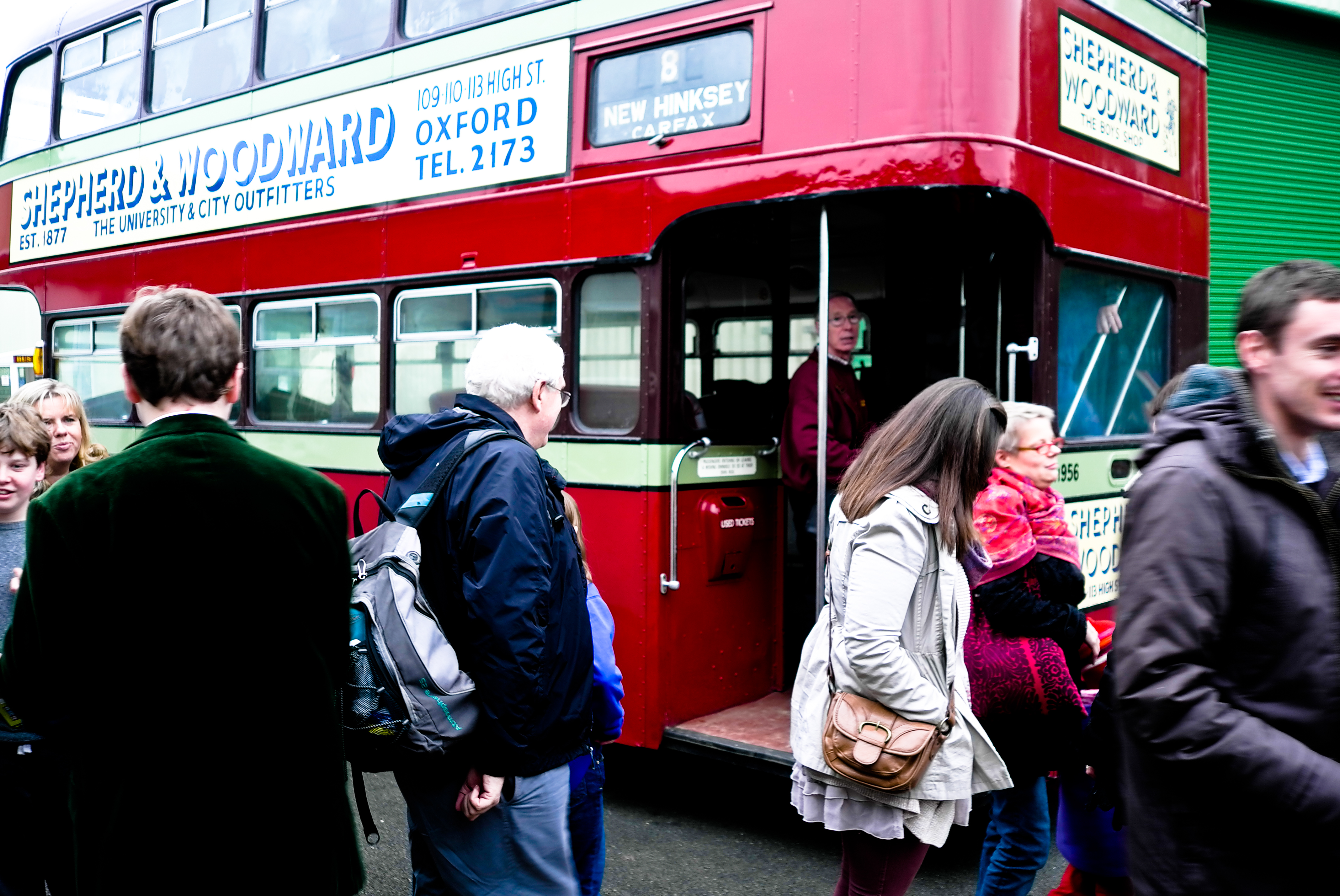
Anyway. My mum and big sis took over the organisation of tea and cakes. People came. They loved the eccentric and quirky museum. And the vintage double decker bus was full for a drive around the countryside. A genuine sense of celebration and fun.

Oh, and we passed the tiny woman with the chair on the bus journey. Yes. Really. Miles from anywhere. Weirdly magical.

So happy birthday matey. We love and miss the socks off you.

ryan5-582

[Unposted 2] Lists. 1. Things I will no longer have to do

6.7.13

[In no particular order..]

    1. Rant about being invoiced by the local authority for ‘fairer charging’ contributions towards care we never received.
    2. Despair about nonsensical, ‘service serving’ discussions about choice, autonomy and learning disabled people.
    3. Attend pointless meetings with numerous professional shapes and types.
    4. Endlessly* worry about the lack of anything resembling appropriate or effective support for learning disabled people to lead productive and meaningful lives.
    5. Manage direct payment returns.
    6. Pretend to engage with the concept of social stories.
    7. Have my mothering smarts surveilled and judged by people who know fuck all about me.

*I’ll still worry about this but not every moment.