Imagination and recognition

Rosie was off to see a mate last night. We found out recently that this mate’s dad was the sleep guy who discharged LB from his sleep study all those years ago when it became apparent LB was not going to respond to the study interventions.

Hey! Can you ask P to let his dad know that LB’s now sectioned, and that he’s part of the collective of health and social care professionals who did zip all for him…? Cheers“, I quipped. Though of course it ain’t funny.

Accountability? I can’t bear to work out the cost of the combined salaries and hours and hours of meetings with H/SC profs [too numerous to remember each and everyone of them] over the years, but for LB to end up sectioned a few months after turning 18, suggests these interactions were largely pointless. Other than sustaining some pretty weighty salaries in some cases, I can’t think of any productive help these meetings generated that couldn’t have been suggested by anyone with a bit of common sense. And LB ain’t alone.  We know of four of his (slightly younger) peers who have been sent out of county in the past 18 months.

It’s as much about recognition as accountability. Recognition that ‘expertise’ in this area is often limited in effect. This is never acknowledged but it would be a lot easier to manage if it was.  With this recognition, we could have saved all that time travelling to, and in, meetings, and muddled along (as we did anyway). This could have been underpinned by the reassurance that if things took a turn for the worse, there is a very local nifty little mental health/learning disability unit. A unit that will take LB in and give him some proper attention.

Mmmm. Slight problem here is that the unit is not widely known about. We found out through a friend of a friend. The profs couldn’t even deliver at the point of crisis. I still can’t quite get my head around the fact that this unit is based about 50 metres from the office of the psychiatrist who discharged him days before he was sectioned.  And that a few weeks earlier, on February 6th, I sent the following email to his Care Manager;

Hi [CM],

Is there a number I should ring in a crisis? [LB] is at home (as it’s Wednesday) and he’s been quite threatening to me and himself.

Thanks,

Sara

The research group I work for focuses on understanding, using and improving people’s experiences of health and social care. I’ve always hoped that this blog offers an insight into what it’s like to be the parent of a disabled child and negotiate the challenges and obstacles created largely by the lack of effective support, services and general attitudes towards difference. I never imagined the direction it would take though.

Right now, in the space that’s left by LB’s removal (which I’m experiencing as a mix of peaceful relaxation and sporadic gut-wrenching memories that are winding in their intensity), I’m struck by the ongoing crapness of H/SC. While LB is being very well cared for in the unit, we haven’t heard a sniff from anyone other than Oxon County Council demanding back contributions of £500 towards LB’s care. Despite some fairly tense phone calls about this (based on the fairly straightforward point that he ain’t had any care, and we just have a unusable glut of direct payments in a bank account), a week or so ago, the letters keep arriving.

I rang the Fairer Charging  [I know] office again to ask them to stop sending these reminders.

Oh, yes, I can see a note on the file, saying this is being looked into.”
Yes, so could you stop sending any reminders about it?
I can’t do that. These letters are automatically generated.”
Spontaneously? With no human involvement in their generation? LISTEN.TO.WHAT. YOU’RE.SAYING
“Well that ain’t good enough.”
“There’s nothing I can do about it. I suggest you ignore them.”
“Could you try and imagine, just for a moment, what it’s like for us, to have our son sectioned partly because we had no support, and then continue to receive demands to contribute towards that non-existent support?”
“I can’t stop the letters but there is a note on the file.”  

This exchange, like so many others, underlines the lack of imagination and empathy, and general crapness within health and social care. Small point, but I would have appreciated some contact from CM since the email I sent on March 15th stating “LB’s punched his teacher. What can we do?” She’s been back off leave for a week now and could have spent a moment sending a brief response. She’s LB’s Care Manager, silly. Nothing to do with you now he’s an adult. I disagree. LB isn’t a discrete entity, disconnected to social networks. He’s part of a family. And that also needs recognition.
The Unit. Day 14

I spoke to the psychiatrist this morning and got a proper update at last. LB has been much calmer since the first week, is undergoing continuous assessment and they are hoping to adjust his environment, rather than change him, to reduce the triggers to his aggression and anxiety. They are planning for him to return to school (for his non-school based week) after Easter and are hoping that he will agree to stay at the Unit, informally, at the end of this section in a couple of weeks time. The core ingredient during this time will be information gathering, past and present, from his family, school and the unit team.

What.a.relief. That sounds a sensible plan. And she sounded lovely.

Ten minutes later, Rich asked if I’d looked at the photography book I’d got for Mother’s Day.

“Eh? What book??” I said, looking over at the shelf he was looking at. WOW!! I’d completely forgotten about it. Mother’s Day was obliterated this year, as I’d scuttled up to Manchester early to get away from a raging LB. A long nine days before he was admitted. “Fab! O.M.G. What day is it????”
“April 3rd. Wednesday.”
OMG!!  I’ve got my hot rock massage today at 10.30!!!! Gotta scoot.”
“So today’s all about you is it Mum?” chipped in Rosie, ‘working’ (Candy *cough* Crush) at the kitchen table.
“Yep, bloody right it is.”

Knitting solutions and sense-making

It’s funny really. You have a (learning) disabled child, the world kind of falls apart and then falls back together, bit by bit. There are unexpected highs, deep lows, challenging times and a backdrop of relentless meetings with professionals. These meetings are sort of necessary (because what else have you got without any reference points?) but pointless because there is a lack of real understanding or engagement with either your child, or your lives as a family.  We eventually shook down, accepted LB’s difference and began to notice his humour, quirkiness and qualities such as generosity, lack of guile, artifice and his honesty. We treated the meetings with gritted teeth. And got on with life.

Then came the recent inpatient assessment and subsequent sectioning. I was tipped into mum redundancy (MR). Suddenly and without warning. The warnings for the impending hospitalisation were flashing brightly since Christmas, that was only really a matter of time (though it could have been circumvented with effective action). The warnings for MR were completely buried.

Call me old fashioned, but it strikes me if you have (not in an ownership way) children, you don’t really stop being their parent. I still tell Rosie what to do. She doesn’t always do it, but I feel I should provide some steer. My mum is still my mum. These are lifelong positions, that shift and change, but (commonly) remain centred on love, responsibility, reciprocity and a gut-wrenching desire for your child/ren to have the happiest, most fulfilling lives, possible. (I realise that this isn’t always the case).

This is confounded when the child is learning disabled and reaches that (constructed) age of adulthood. Necessary changes to the way in which learning disabled people’s lives have been conceptualised and understood, a shift from institution to community living, and the accompanying political call for self advocacy, autonomy and empowerment, has led to a focus on rights. I support this move completely. Learning disabled people, like anyone else, have the right to make decisions and be encouraged to have aspirations and the opportunity to lead fulfilled lives.

At the moment, LB has the right to decide whether he sees us or share his health information with us. The implications of these rights are substantial. The problem for me is, an emphasis on his rights can be misunderstood, misinterpreted, misused or treated as something discrete, outside of the broader family context. I believe, barring some thunderbolt shift in health and social care provision, that LB’s potential to lead a fulfilling and happy life will necessarily involve his family. For us to be sidelined at this point will have a potentially catastrophic effect on his life chances.

‘Eh? What’s that?’
‘He could have an advocate. S/he would look after his best interests.’
‘He turned down the opportunity to have an advocate. He doesn’t know what they are.’
‘With clear explanation, he can decide to have an advocate. He’ll be offered one again in ten days time, by the terms of his section.’
‘That’s great. But they won’t know him. Surely that’s important?’

Does our experience of LB’s family count for nothing?? Should an advocate be a substitute for that understanding, or instead complement it and work with families?

Once again we’re left without any guidance. It’s like being back at those early days when we knew there was something different about LB but given no guidance about what that meant, for him and for us. We’ve re-fallen into an unexpected space in which he is treated as a consenting and competent adult. A space which is so incongruent and so alien to our experiences of the past 18 years.  Maybe it’s a good thing in theory. Maybe LB is at a stage in his life to shake off the confines of his family and do what he wants to do, without dishwasher duties or an expectation that he will join in social obligations. I don’t think so.

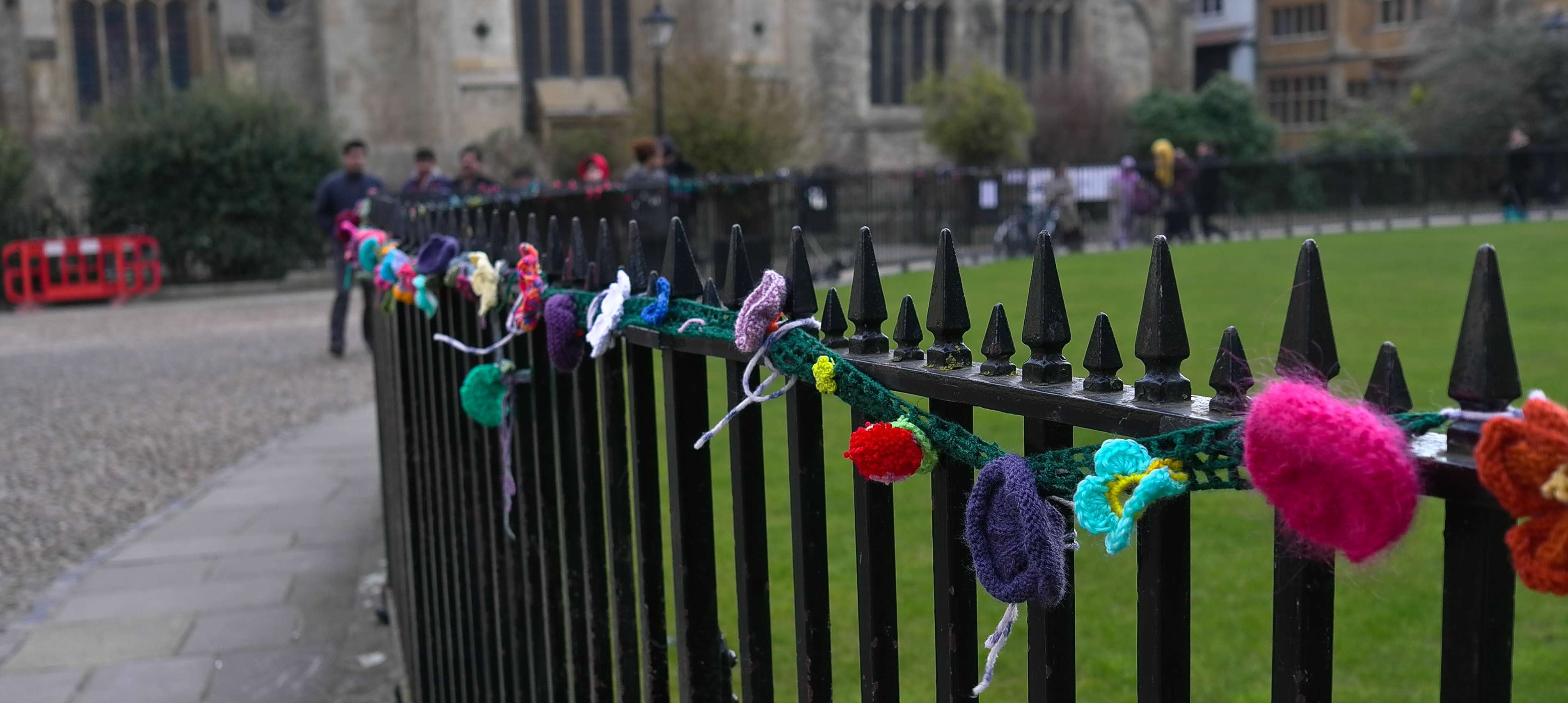
I keep returning to how this idealistic position ignores the current political climate and contraction of support and services for learning disabled people. As a redundant mum, I can use the hours I spent advocating for him (unacknowledged and unrecognised by services) doing something else. Like developing my beginner crochet skills,

Or maybe my/our expertise could be recognised and used to help LB in partnership with those who now (supposedly) help him realise his rights.

ryan5-171

The Unit. Day 12

After a visit on Friday in which LB was bright, engaged and active, the weekend has been about sedation. How much and how often, we have no idea. We can only go on what we see when we visit. Yesterday, drowsy, laying in bed, looking lost, LB asked when he was coming home. And said little else. Today he didn’t say anything. He lay in bed, blinking and looking blank.

Incarceration, a lack of professional attention because of the ‘holiday weekend’, and a continuing information black-out for his family. I’m not sure how we’ll respond when we next get told about  his ‘rights’.

This ain’t right.

The Unit. Day 10

Things have been calm for the last few days. LB’s had daily visits from various people; family, Charlie’s Angels, and friends. Not Tom or Chunky Stan sadly, neither of whom are allowed in (too young or too furry). The staff ask him in advance if he wants to see people and, so far, has said yes to everyone. The cakes have remained in good supply as well as truck/bus magazines, and other treats.

Yesterday afternoon he was lying on his bed, very quiet, after a loud all-night kick off situation that stopped him sleeping. Today it was aunties visiting; Tracey and Sam. We found him in the living room chuckling at Carry on the Revolution. When it finished, he showed T and S round and was quite chatty. They, like most people were surprised (and pleased) that he wasn’t locked in a room, and was able to wander around the unit as he liked. There are lots of very good things like this, including staff and patients eating meals together (if they want to). When we left, LB came with us down the corridor, knocked on the office door and got someone to let us out. Comfortable in the space. And chilled.

I’ve started to re-read Goffman’s Asylums, which takes me back to my undergraduate days. As I’ve banged on about before, I have a total love-in with Goffman’s brilliance. It feels kind of comforting to think of the G-man hanging out in ‘closed communities’, and to reflect on the differences between what he describes and LB’s unit. Differences that partly came about through his work. What a dude.

ryan5-160

Keeping mum, irony and shifting capacity

It’s a tricky one, this capacity business and parenting. I deeply believe that capacity should be presumed and agree (and welcome) that “unwise or eccentric decisions don’t themselves prove lack of capacity”. I also worry that this has led to instances in which the wellbeing of learning disabled adults is compromised because “capacity” is so difficult to demonstrate in practice.

There was a roundtable discussion about Winterbourne yesterday with a range of learning disabled people (I assume/hope there were learning disabled people present), families, community groups, government ministers, policy makers and service providers. This was live tweeted by various people (see #winterbourne to follow the discussion). Families cropped up early in the discussion and there seemed to be a call to involve families rather than treat them as a problem.

winterbourneImportant, much needed discussion, but I was struck by the irony of going to visit LB with the threat of him deciding he no longer wants to see me, hanging over my head. It is quite a blast to go from being the full time carers, with very, very little support over 18 years to suddenly being removed from the equation. We have to ask for any snippet of information. The outcomes of a team meeting on Monday remain unknown to us. Again, ironically, in an attempt to not appear a batty, desperately protective mother, I didn’t ask to attend this first meeting. When the default position is the young person has capacity (without capacity being tested), the positioning of family members within the structure of the mental health service is a bit anomalous. And anomalies are odd and out of place.

Fran came round yesterday afternoon, armed with useful information from a brilliant workshop she’d been to on capacity. It was run by Luke Clements, who is an expert in this area. “He was absolutely brilliant”, she said. “Ah, him? I updated the literature review for his disabled children and the law book a few years ago. My supervisor was the co-author.” Is that ironic? I’m not sure. My research at that time was about mothers and going out in public with dudes like LB. The real irony is that LB can’t go out anymore. And my role as a mother is now contested.

The Unit. Day 6

Crawled back to bed this morning, exhausted, and was kind of slumbering when the phone rang. It was Vicki, LB’s teacher. Charlie’s Angels were going to visit him this afternoon and she’d just had a call from a nurse at the unit. Could they talk about LB returning to school?

WOW. WOW. WOW. That.is.amazing. Back to school????

The highs and lows of the last few weeks are indescribable. Three sections in as many minutes and now back to school??? Fanbloodytastic.  Vicki told the nurse a bit about LB when he was Laughing boy, before he became withdrawn, distressed and eventually aggressive. They’re going to discuss a return to school after Easter.

I rang the nurse. They’d had the team meeting yesterday, done their baseline assessment over the past five days and will now start to get to the root of the problem. In the meantime the team think he needs to get active again, rather lying around all day.

I’m beginning to seriously love that unit.

Time for me to crack on with work now. I’ve got some cakes to bake later. And a load of other stuff to catch up with. Happier times indeedy.

ryan5-151

March 2012. In place of this year’s daffs.

The Unit. Day 5

LB seemed a bit odd when we visited. A mix of unusually cheerful and slightly different mannerisms. He was in his room where he spends his time when he’s not in the bath. His eyes seemed small and his face a bit puffy. I suppose he’s coming up to the best part of a week now without daylight or any exercise.

Rich tidied his room up while I drew him an Irish lorry from County Mayo.

“Where’s County Mayo Mum?”
“I dunno whereabouts it is. Hey, let’s look at the map K brought you and see.”

Silence.

“Where’s your map, LB?”
“I threw it away Mum.”
“Eh??? Why did you throw it away?!”
“I threw it away Mum.”
“Oh. Did it get torn or something?”
“Yes Mum, it got torn.”

Smithy’s father and the large German bear

Tom was chatting this morning about the graphic novel he and LB had produced a while back. LB was the story teller, Tom the illustrator. LB called it Pointbreaker as he’d just read Point Blank and Stormbreaker. Tom and Owen dug it out this afternoon.  Brilliantly random. “Stop, I’ll shoot you like a large german bear”. The names on the gravestones are hilarious; William Blake, John Kelly (Busker John) and Smithy’s father (from Gavin and Stacy)…

ryan5-146 ryan5-145

The Unit. Day 4

After feeling strangely heartened by the reminder that LB had rights, I began to reflect on what this meant in practice.  Who would/should safeguard those rights? He said no to an advocate when he was sectioned, but he doesn’t really know what an advocate is. He’s been in the unit for four days now with rotating staff. What they know about LB you could write on a postage stamp. We’ve hung out with the dude for 18 years and loved the socks off him. If anyone has his best interests at heart, I’d say we probably coast it. I get the arguments about the constraints and limitations parents (particularly mothers ‘cough cough’) can place on disabled kids through an overly developed sense of protection. But I also know how vulnerable these dudes are.

We rang the unit at lunchtime to see how he was. The  phone was passed straight to LB. I just wanted to know if he was OK and having a grunt from him wasn’t really going to answer that. I had a quick chat (not really the right word for a largely one-sided conversation) and asked him to pass the phone back to the nurse.

“We’ll visit this afternoon around 4ish if that’s OK. His sister will be back from university. We’ll ring before we come.”

“Great.”

Later that afternoon I rang. The phone was dead. Oh. Luckily, I’d been given a second unofficial number by someone who recognised how distressing this was for families. That number was eventually answered and with some resistance (all of a sudden bedtime routines happened straight after dinner thereby interfering with visiting hours), we were able to visit.

LB was in his room and seemed pleased with his cakes and bus magazines. We hung out for a bit, and, when we left saw some of the other patients. As usual, they were chilled and said hello.

We haven’t seen any other visitors all week. Despite the extensive visiting hours pinned on the front door, there are no visitor type concessions, like a vending machine, or waiting area. I don’t know if there is an assumption that people won’t visit or that visitors will cause disruption. Or maybe the other patients have exercised their rights and refused visitors. From the interactions I’ve had with them over the last few days, I find that unlikely. It seems desperately sad if there ain’t any. But I can kind of see how it could happen.