
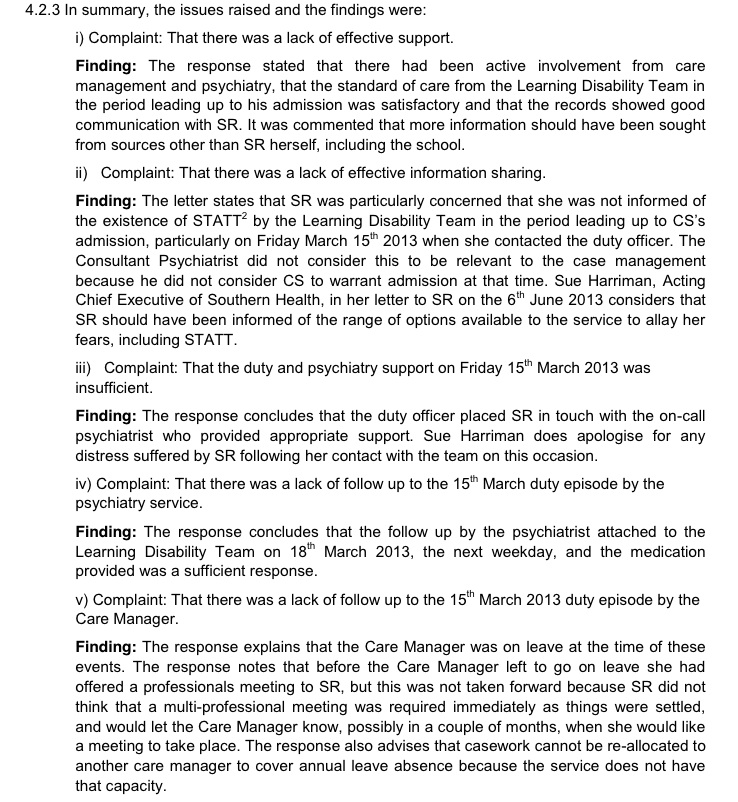
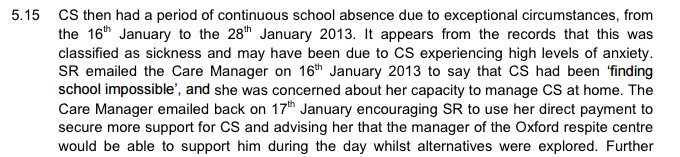
Today has been spent going through the OCC independent investigation. I ended up identifying 61 factual inaccuracies, comments and questions across the 23 pages. A foul, foul way to spend a sunday. For the diehard among you, the full list can be read here. Some summary thoughts (produced with George Julian) here:
Funnily enough (not funny really), the defence letter we received from OCC’s legal department presents spurious arguments like “this would seem to be an entirely reasonable response given the Council’s very high expectations…” throughout. This makes my internal organs fold in on themselves and turn to liquid.
SIX. Why does everything take so long, and need to be so bad before anyone steps up? It feels like the report paints a picture of failing parent, challenging son, and dedicated and compassionate staff who are constantly rebutted. Why is there no recognition or understanding of what we were experiencing? And why? And why the apparent surprise that we suddenly had LB admitted to STATT? Why did no one involved at the time listen to what we were saying?
SEVEN. What relevance is A4e support to this review? The focus on this in the report either indicates the independent reviewer’s (mis)understanding of Direct Payments and/or is another attempt to pass the buck away from OCC and paint me in a negative light. My refusal to use their ‘service’ is mentioned in at least three places in the report. In some detail. Why? I’m left wondering if my refusal to use their ‘service’ was a financial? political? problem. An additional bit of card marking. Adding to the rest.
EIGHT. Verita 1 was clear that discharge planning was not advanced (by any reasonable person’s standards) and yet this review suggests it was almost complete (largely through the efforts of the Care Manager who, as we are told in two places, came back off annual leave in April and got straight on with organising the professionals meeting). Well she didn’t. And I’d probably have felt more disposed towards her if she’d seen LB more than once while he was in the unit and attended more than two of the weekly meetings across the 107 days he was there really. Again, whose truth counts?
NINE. Perhaps the most disturbing element of this report is the undercurrent of parent blame. Implicitly and explicitly blame permeates the report. Well it’s drenched in it. It reads less as an investigation of OCC’s processes and involvement in what happened to LB and more an attempt to paint a picture of a flaky parent who repeatedly refused countless offers of support and help and forged a resolutely independent (and flawed) path down direct payment alley. In the vein of “there’s always something or other with Mr Neary”.
George commented; “The reference to Direct Payments and choices, pretty much could have been written as ‘Inspector shrugs shoulders and says in a loud disgruntled voice: “Well, they wanted a Direct Payment, they made their bed so let them lie in it”; OCC 1 and OCC 2 hug and all three leave stage right’.”
Possibly (though it’s impossible to really judge given the number of contenders) the most damning statement in the review comes towards the end;
I consider it important to note that this [families choosing to use direct payments] also means that those families then have responsibility for the choices they make.
Ah. It was the mother what done it. In the kitchen. With the direct payment and a full time job.
Classy.














 mydaftlife