Pick n’ mix on the 280

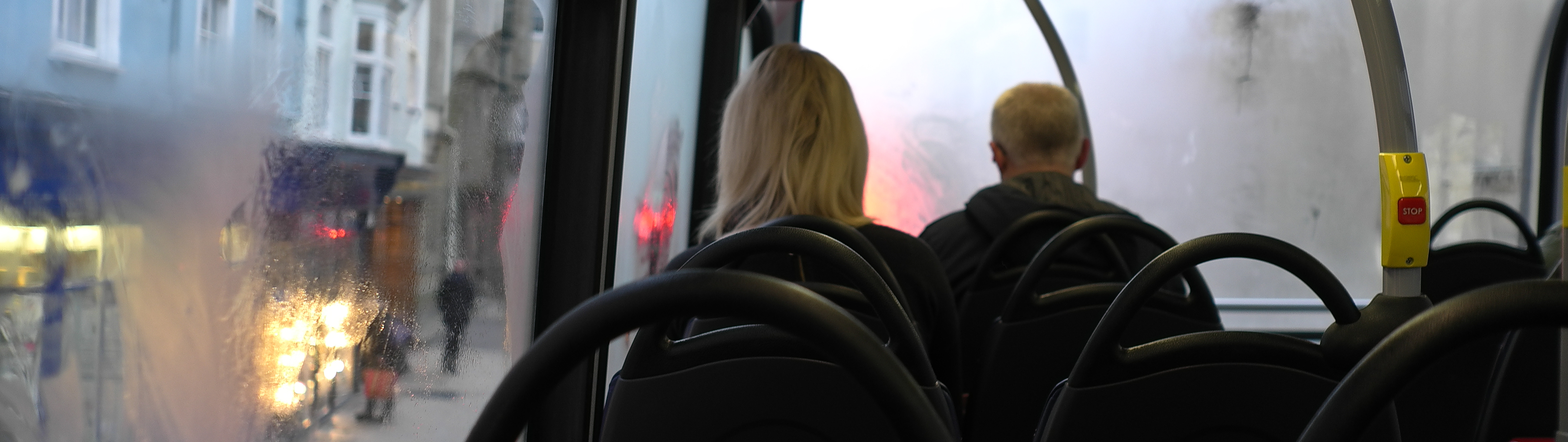
Not a good day for LB related reasons. But caught the 280 home from work and had the following encounter with a geezer dude. Kind of cheering…

“I went to Smithers ya’know? Smithers?”
“Eh?”
W.H.Smiths?”
“Ah, yeah.. W.H.Smiths…”
“Yeah. I picked up a newspaper, tucked it under my arm. £2.60 it was. £2.60. I thought I’m gonna walk out with this. Without paying like.”
“Ah.”
“Yeah. But then I saw the man with sweets and I thought YES! I want some sweets! So I got some and thought well I’ll pay for the sweets but then walk out with the paper under my arm… You know, as if I’d already paid for it…? But then I thought Don’t.be.so.childish. Do you know what I mean??? So I paid for the paper too.”
“Cool.”
“Do you want a sweet? There’s jelly beans and all sorts…”
“Nah, I’m fine thanks…”
“Ahhhh. Fuck!! Dropped em! [….] I’m just gonna eat them anyway. Well these ones. Not that one. Look. It’s rolled in some squishy stuff. Yuk. Look at it..  I’ll eat these though. I love jelly beans.”
“Yeah, me too…”
“Funny. Jelly beans still taste good, but other sweets from when I was a kid. They just don’t taste so good now. They put other stuff in them I think. Not nice. When I was a kid, I’d eat some sweets then do twenty laps of the room. Like round and round and round! My mum used to say ‘You ain’t having any more sweets!’ Sent me hyper they did. But I like to get sweets now and again. And like scoff em all.”
“Ha! Me too…!”
“Yeah! Maybe I need that energy rush.. Every now and again. I dunno…”
“Maybe.. Nice to meet you, I’m getting off now…”
“Well a happy Christmas to you missus!! And don’t eat too much chocolate!”

ryan5-14

Carers Assessment? No. Groundhog day

This weekend is officially a catch up weekend. Beyond boring but necessary. I started this afternoon with a mountain of paperwork and a canny system of ‘bin it’, ‘deal with it’, ‘park it’. The ‘deal with it’ pile had the carers assessment form on the top. Oh dear. Regular readers will know that this (mythical???) assessment has been dragging on for years. The form in front of me was different to the version I failed to fill in before (because it was beyond inadequate). I sat at the kitchen table, determined to fill it in.

So ‘caring’ is divided into ‘practical tasks’, ‘personal tasks’, ‘mobility’, ‘getting around’, ‘health’, ‘communication’ and ‘other issues’ (including mood swings, anxiety, aggression and so on). Each section includes a list of things to tick (‘communication’ has support with socialising, advocating, and interpreting) and a section for ‘carer’s views’. I ticked all the relevant boxes (most of em) but wasn’t sure where to start with my views. What does it mean?

“I’d hoped LB would be able to go out and about by himself but now, but suspect he ain’t gonna be able to do that for the forseeable future.”

“I find it pretty rubbish supervising an 18 year old boy in the bath.”

“It’s all pretty fucking shit really but it could be so much better if I knew that adult services wasn’t a big hole of crap-all.”

Anyway, I left the ‘carer’s views’ sections and got to the end of the form. Only to find this little beauty:

This form is the first part of a Carer’s Needs Assessment. Would you like a full carer’s assessment to be undertaken?  Yes?  No?

Now I don’t know who is coming up with this crap, and I don’t know what the intention is behind it. It’s obstructive, ill thought out, insensitive, meaningless and time consuming. I don’t know how many meetings I’ve attended thinking I’m ‘doing’ a carers assessment. Or having a carers assessment done to me.

When I started sorting through paperwork today, I was struck by how LB had his own folder of paperwork bursting at the seams. No one else in the family has a file really. Just general stuff. Why is there so much paperwork around certain children/adults when the outcome is less than acceptable? A ‘special needs industry’ exists in the UK with a wasteful, usually ineffectual and pointless focus. But embedded within that industry is a level of tyranny. That these are hoops that parents, carers and disabled people have to jump through. Regardless of outcome.

Over 15 years into this gig now, I’m going to say now, I seriously hate it.

Can we have  transparency, honesty and realism about what is what? And what is likely to be what in the future?

Celebrating segregation?

I ain’t surprised that only 35/1000 ex-Remploy workers have found new jobs, despite the 18 months of ‘individualised support’ offered to them by Maz Miller. I can’t imagine the impact on those 965 unemployed people (and, as importantly, their families). Of losing that structure, social dimension, coherence, and wage. I dread to think how it will affect their sense of self worth, isolation and health. Especially with alternative employment looking an impossibility. Anyone who talks about ‘benefit scroungers’ is talking crap. Apart from a small minority, work is a central focus of human/social life. End of.

I don’t support (or celebrate) the idea of segregated employment at all. I support the right for people to work, regardless of their ability, and this work should be mainstream (whatever that means).  But I know that’s an idealistic and, in the current UK economic environment, totally unrealistic position.

Closing the Remploy factories was a financially driven decision. While throwaway and meaningless statements about decreasing segregation were made, it was about saving money. We are no nearer to an ‘inclusive society’ than landing on the moon, finding out what ’causes’ autism, or whether there is life on Mars. Shedloads of money are thrown at the latter two but very little is invested in workable solutions to increase and support learning disabled people in mainstream work.

Until people (learning disabled people, carers/family members, general public, policy makers, practitioners, government ministers) start to talk openly and realistically about the issues involved, nothing will change. It reminds me of my early research looking at the experiences of mothers, learning disabled children and going out in public places. I found there were limits to the tolerance you could expect from other people. The bar is commonly set way too high (for prissy reasons) but, even when lowered, some things ain’t gonna be acceptable. Until we engage with these (sometimes awkward, uncomfortable?) issues, and have some open, creative and realistic thinking about what can work and how, why force (longterm) unemployment on hundreds of Remploy workers?

The school play

LB, Rich and I went to watch Tom in his school’s production of The Wizard of Oz. It was deliciously brilliant and the hours and hours of practice the cast had put in shone through. LB started muttering to himself about 50 minutes in. Stamping on the floor of the tiered seating. People started surreptitiously looking. Curious.

Disruption of public space has long been an interest of mine. Through years of experience and studying it. How much ‘disruption’ is acceptable and why? In what contexts? My bar is set fairly low so I didn’t mind LB chittering on too much. Either people accept unusual behaviour in public, or certain people who can’t conform to (often spurious) normative standards can’t join in. Uncomfortable discussions around ‘what about people who buy expensive opera tickets and expect to be able to watch it without disruption?’ (as Len Davis once discussed at a memorable keynote talk) weren’t relevant here. I thought.

It got hotter and hotter in the hall and LB got increasingly agitated. Clenching his whole body and shuddering.

“WHAT.EVER!” he finally shouted out when the Good Witch told Dorothy to follow the yellow brick road.

“I’d better take him out,” whispered Rich, who was sitting nearest the aisle.
“Let’s wait and see,” I said. “It must be the interval soon…”

The songs continued, the heat rose and LB was tipping into full blown agitation gesticulating at the ceiling, bouncing on his seat and full body clenching. It was time to go. Rich manoeuvred him out and took him home, after a teacher brought him some water. He did well really at keeping a lid on it.

I stayed for the second half. Enjoying watching Tom and his mates singing, acting and dancing their socks off. With niggles about what had happened. The enjoyment was great.  The niggles were a bit more complicated. It’s upsetting having that kind of experience. For all sorts of reasons. There are going to be enduring tensions between us (and others) making LB do (some) ‘typical’ things that he doesn’t want to do. Sometimes these things will be necessary, sometimes because we want him to.  He should have been able to sit through the performance, as he sits through other things he enjoys. I was reminded of a friend’s husband saying to her in frustration “When are you going to realise our lives are less than straightforward?” after their son, one of LB’s classmates, had to leave a candlelight carol service at Christchurch College after repeatedly trying to blow the candles out.

I  think LB (and other dudes) should be able to attend events with a leniency allowance. They may not sit quietly for the duration. LB gets very involved in things and the audience could suck it up really… within reason. And they seemed to in this context. In the interval and later people (friends, parents and teachers) asked after LB with genuine concern/interest without being intrusive.  But there were the performers to consider here, too. A dose of ‘heckling-type’ behaviour could throw ’em right off track. Which ain’t ideal.

I collected Tom at the end of the show. A mix of excitement, exhaustion and smudged face paint.

“When did dad and LB leave?” he asked.

Crispy duck, buses and Tulisa

LB’s 18th birthday. As usual, he only wanted to open one present. The thing he’d asked for (little mechanic/bus guys). Then off to London for crispy duck in Chinatown. The trip involved a bus journey, a walk from Baker Street to Chinatown and a constant backdrop of London buses (and statements.)

“Mum. I wish I was a Londoner Mum..” “Mum. I wish I was a Londoner Mum..” “Mum. I wish I was a Londoner Mum..”…. “Mum. I wish I was a Londoner Mum..”
Then out of the blue, crossing Oxford Street, “MUM. WHERE’S ROSIE MUM?

Wow! How cool is that??? (First time he’s asked since she started university over a year ago). I said we’d skype her when we got home.

The food was good and then it was back to Marble Arch to wait for the bus home. Big Bus Tour buses stopped at the same stop which was great. An added layer of deliciousness for the birthday boy.

After we’d been home a while, I found LB sitting in the kitchen on his own. He was waiting to skype Rosie. Sob.

Later, after a big fun filled skype session with everyone pitching in, we all (apart from Rosie) sat squashed on the settee, with crisps and pop, watching X Factor. LB loves Tulisa. She’s a Londoner.

“Mum, I wish Tulisa was my sister Mum.”
“Eh?”
“I wish Tulisa was my sister.”

Football club

“Hey LB! Did you go to football club after school?”
“Yes Mum.”
“What was it like?”
“Fine Mum.”
“Cool. Did you score any goals?”
“No Mum. I was the goalie Mum.”
“Very cool! Did you save lots of goals?”
“No Mum.”
“Oh, did you let many goals in?”
“Yes Mum.”
“Oh. How many did they score?”
“Hundreds Mum.”
“Oh. Never mind. Do you like playing football?”
“No Mum. Not really.”

Another day, another cone…

Went to a meeting yesterday where I ended up wearing a cone of shame once it became apparent how I’ve largely ignored sexuality in my research. Evidence highlights differential health and social care outcomes for lesbian, gay, bisexual, transsexual, transgender, intersex peeps (LGBT) and yet, despite making a claim for ‘diversity’ in my sampling, I haven’t actively recruited LGBT participants.

My cone of shame was a bit bigger than usual as I’ve been looking at ways of making research more inclusive recently.  I’ve written and ranted about how we exclude certain ‘groups’ of people from studies, only actively seeking their involvement if the research is focusing on their ‘group’. We ascribe people in these groups a kind of meta-status that obscures other dimensions to their identity. Learning disabled peeps are an obvious example here. The learning disabled identity is so all encompassing that researchers (or others) would rarely think to recruit learning disabled people to a broader study about relationships or cancer or living in a rural area. (And if they do think about it, that thought can be dealt with neatly and speedily by a throwaway statement in the methods justifying their exclusion on ‘ethical’ grounds.)

So, the research community is sustaining and reinforcing exclusion through research practice. ‘Specialist’ research focusing on learning disabled people (or sex workers or asylum seekers or traveller communities or homeless people – the list is pretty extensive) can be ignored by the mainstream world cos it ain’t relevant. Instead, what is considered mainstream should be challenged through more inclusive research practice.The concept of ‘ableism’ offers some tasty insights here, as Fiona Kumari Campbell asks how the fiction of “the able bodied person” has been sustained over time when there is such variation among people? (see a chirpy and stimulating interview with FKC about this here).

Of course you can ask the same question of the dominance of heterosexuality. Discussing the current cone with a couple of people the challenges raised were about disclosure and relevance. ‘People may feel uncomfortable disclosing their sexuality to a researcher…‘ Well we ask ’em to state other ‘personal’ details so not sure why sexuality is any different. They don’t have to tick any boxes if they don’t want to. It ain’t going to be a deal breaker. ‘Sexuality may be less relevant in some health conditions than others…‘ Er, that is missing the point.  And so on.

But then I got to thinking that maybe cones of shame aren’t cones of shame at all. They’re cones of reflexivity which will inevitably involve uncomfortable feelings at times. It’s all part of the gig.